


die Veranlagung
predisposition
An innate or natural tendency, trait, or susceptibility to something, often genetically determined.
Er hat eine genetische Veranlagung für hohen Blutdruck.
He has a genetic predisposition to high blood pressure.
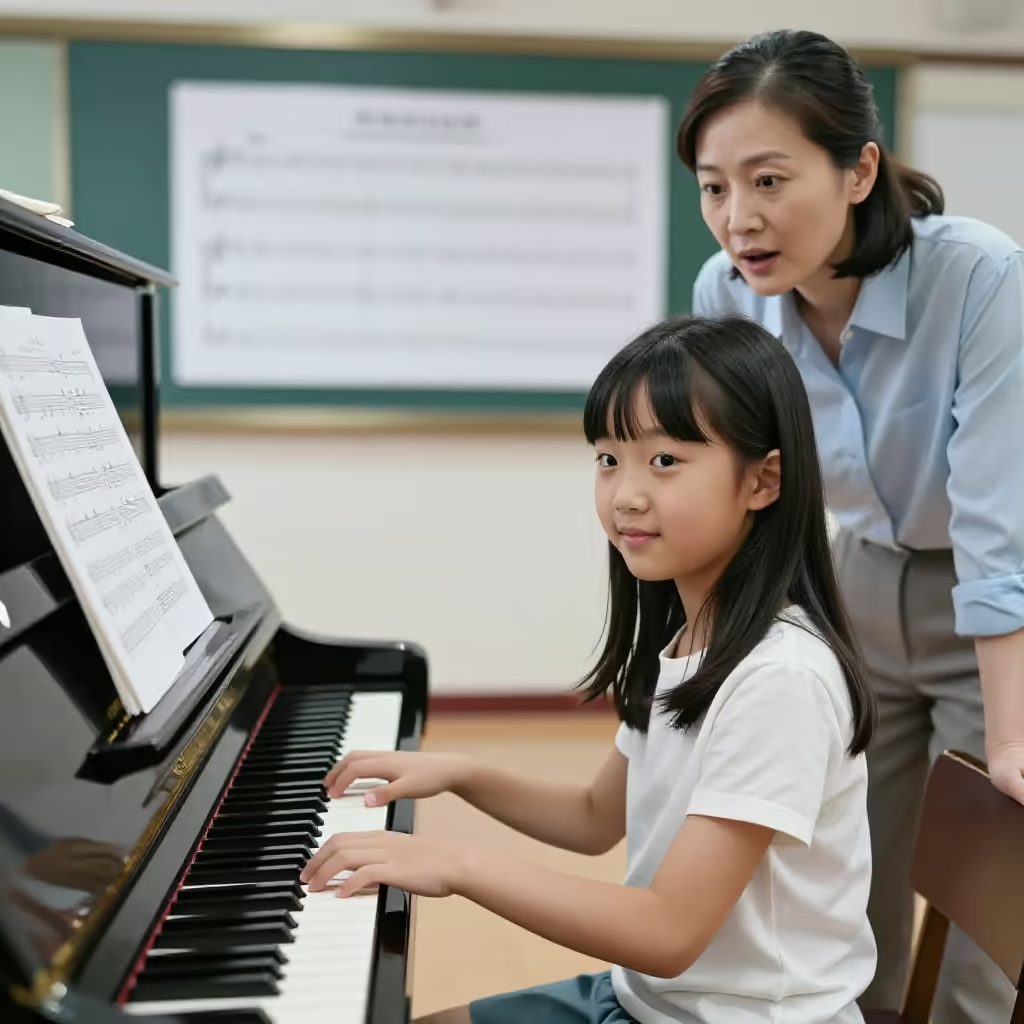

predisposition / talent / assessment
Loading your saved state.
predisposition
An innate or natural tendency, trait, or susceptibility to something, often genetically determined.
Er hat eine genetische Veranlagung für hohen Blutdruck.
He has a genetic predisposition to high blood pressure.
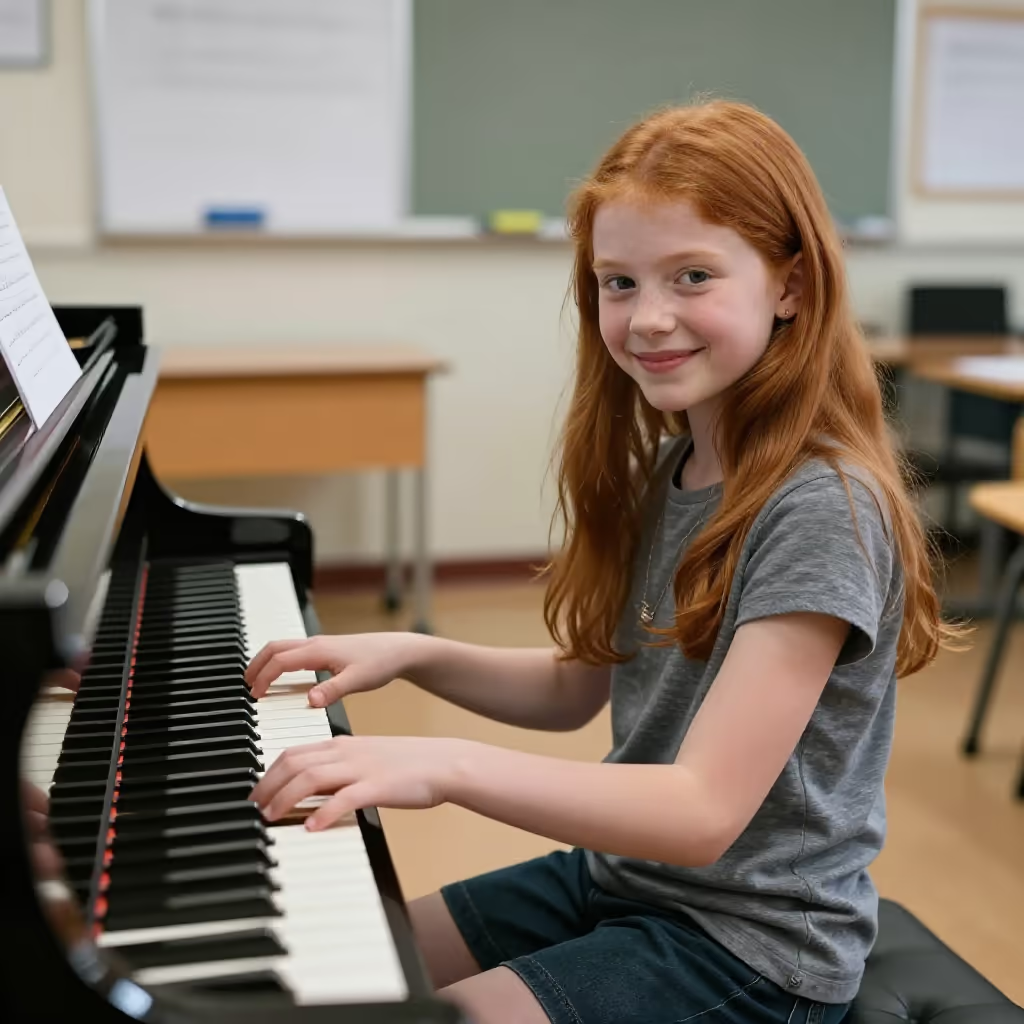
'Veranlagung' is a noun derived from the verb 'veranlagen' (to assess for tax purposes; to invest). The ending '-ung' here signals a state, a characteristic, or a process.
Seine gute Veranlagung hilft ihm, schnell Muskeln aufzubauen.
His good predisposition helps him build muscle quickly.
In the meanings 'Neigung' (tendency) and 'Talent' (talent), 'Veranlagung' is almost always used with the preposition 'zu' (+ dative) or, less commonly, 'für' (+ accusative). This pattern helps you form the sentence correctly.
Sie hat eine Veranlagung zu Migräne.
She has a predisposition to migraines.
The meaning 'Steuerfestsetzung' (tax assessment) is very specific and is used only in financial and tax contexts. If you see words like 'Finanzamt' (tax office), 'Steuer' (tax), or 'Einkommen' (income), this meaning is always intended.
Die jährliche Veranlagung der Einkommensteuer steht wieder an.
The annual income tax assessment is coming up again.
In a medical or biological context, people often speak of a 'genetische Veranlagung' (genetic predisposition) or 'erbliche Veranlagung' (hereditary predisposition).
Leider liegt in meiner Familie eine erbliche Veranlagung für diese Krankheit vor.
Unfortunately, there is a hereditary predisposition to this disease in my family.
When it is about talent, 'Veranlagung' is often combined with adjectives such as 'künstlerisch' (artistic), 'musikalisch' (musical), or 'sportlich' (athletic).
Schon als Kind zeigte sich seine sportliche Veranlagung.
Even as a child, his athletic talent was evident.
nature
'die Natur' and 'die Veranlagung' can both have to do with innate qualities. 'Natur' is more about the general nature of a person or thing. 'Veranlagung' more specifically means a natural tendency, a susceptibility, or a talent for something particular. The words can be confused because both explain why someone is a certain way on their own or is good at something. 'Natur' is broader; 'Veranlagung' usually needs a specific area, for example music, sports, or an illness.

Schon als Kind hatte sie eine starke Veranlagung zur Musik.
Even as a child, she had a strong talent for music.
Es ist seine Natur, ruhig zu bleiben, auch wenn alle anderen nervös werden.
It is his nature to stay calm, even when everyone else gets nervous.