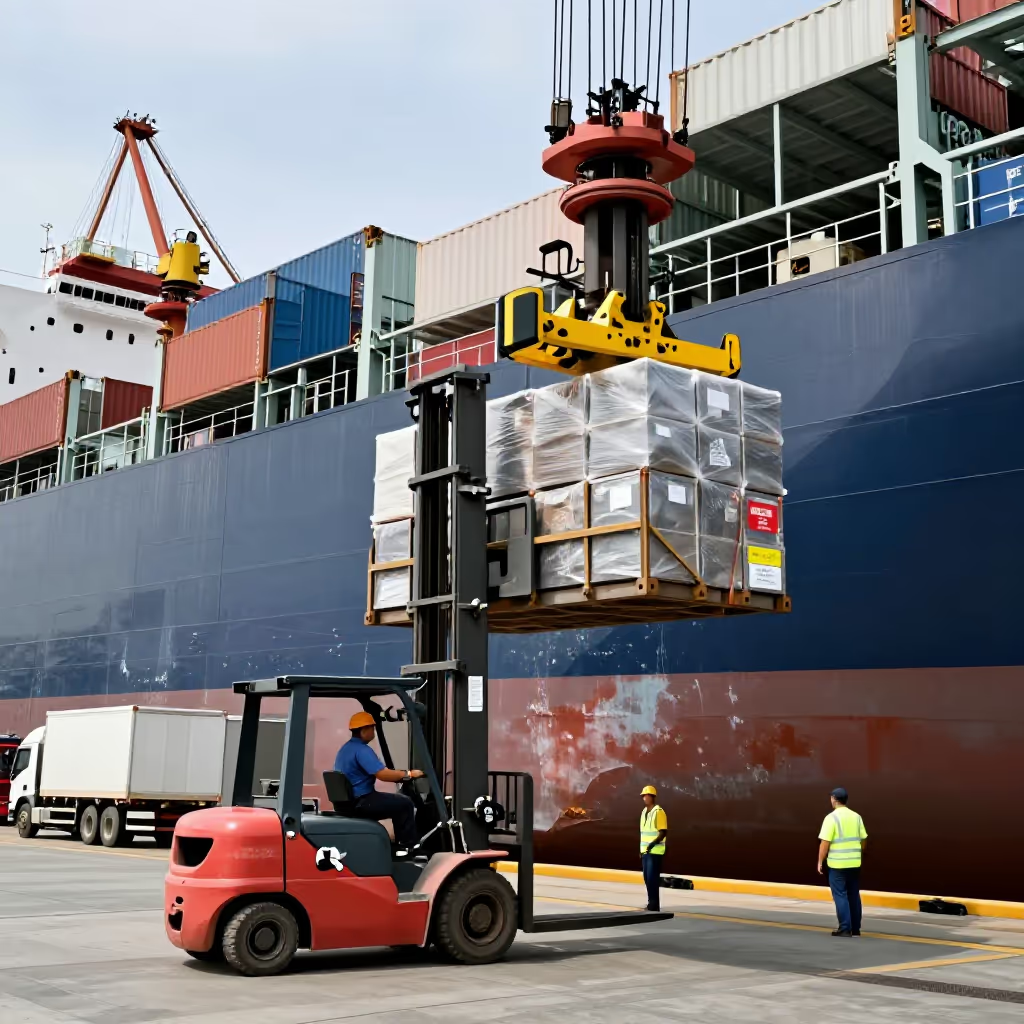
To load goods or cargo as freight and have them transported by ship, train, or truck.
example
Die Container wurden im Hafen auf ein Schiff verfrachtet und nach Asien geschickt.
The containers were freighted onto a ship at the port and sent to Asia.

Usage tips
Word structure
The verb is derived from the noun 'die Fracht' (freight, transported goods). The inseparable prefix 'ver-' here suggests movement or transport from one place to another.
EXAMPLE
Die Firma verfrachtet ihre Produkte in die ganze Welt.
The company freights its products all over the world.
Sentence structure with direction
'Verfrachten' is an inseparable verb and requires an accusative object (what is being freighted/loaded?). Usually, a direction is also given, often with prepositions such as 'nach' (to), 'in' (into), or 'auf' (onto).
EXAMPLE
Die Möbel wurden auf einen LKW verfrachtet und nach Berlin gebracht.
The furniture was loaded onto a truck and taken to Berlin.
Colloquial use
The second meaning is colloquial and often slightly negative or disrespectful. It is used to express that someone or something is brought somewhere without much care.
EXAMPLE
Er hat seine schmutzige Wäsche einfach in die Ecke verfrachtet.
He simply hauled his dirty laundry into the corner.
Context clue
You can recognize the literal meaning from logistics-related words such as 'Container' (container), 'Waren' (goods), 'Hafen' (port), or 'Schiff' (ship). The colloquial meaning usually refers to everyday objects or people in informal situations.
EXAMPLE
Könntest du bitte die Kisten in den Keller verfrachten?
Could you please haul the boxes into the basement?
Compare with
near_synonym
verfrachten vs befördern
to transport / promote
'befördern' and 'verfrachten' can both mean that someone or something is brought to another place. 'befördern' is neutral and works well for people, animals, or goods, especially with means of transport or transport services. 'verfrachten' is used more for goods as freight, for example on a truck, ship, or train. Colloquially, 'verfrachten' can also mean that someone or something is moved somewhere rather roughly or without much care. For normal, factual transport, 'befördern' therefore usually sounds more appropriate.
verfrachten
Die Möbel wurden in einen LKW verfrachtet und zur neuen Wohnung gebracht.
The furniture was loaded onto a truck and brought to the new apartment.
befördern
Der Bus befördert jeden Morgen viele Schüler in die Stadt.
The bus transports many students into town every morning.