

vergraben
to bury
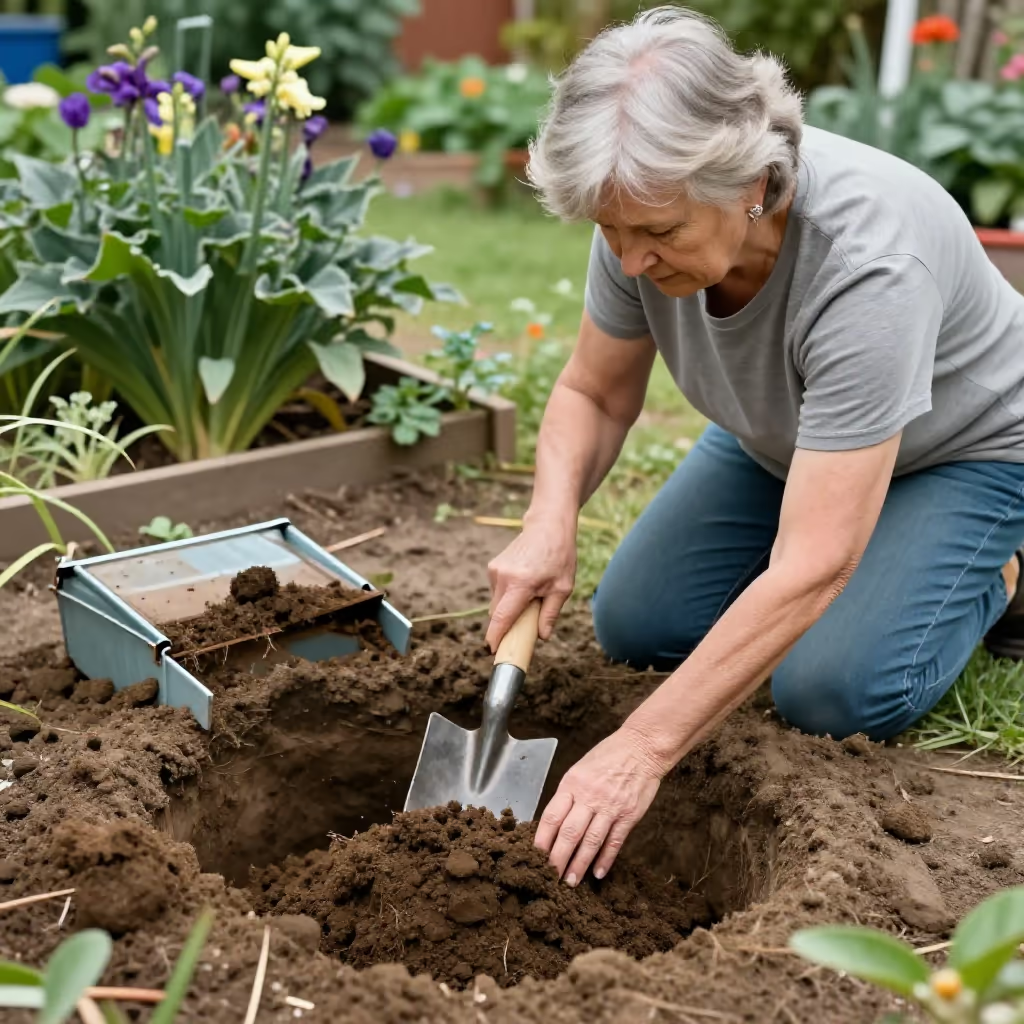
To dig something into the ground or under something else so that it is no longer visible.
EXAMPLE
Der Hund hat seinen Knochen im Garten vergraben.
The dog buried his bone in the garden.
to bury
Loading your saved state.
to bury
To dig something into the ground or under something else so that it is no longer visible.
Der Hund hat seinen Knochen im Garten vergraben.
The dog buried his bone in the garden.

to bury oneself in
To become completely absorbed in an activity, topic, or work and neglect the outside world in the process.
Vor der Prüfung hat sie sich tagelang in ihren Büchern vergraben.
Before the exam, she buried herself in her books for days.

to bury one's face
To hide one's face in something, often out of shame, grief, or tiredness.
Er vergrub sein Gesicht in den Händen und wollte mit niemandem sprechen.
He buried his face in his hands and didn't want to talk to anyone.
'Vergraben' (to bury) is an inseparable verb with the prefix 'ver-'. The prefix remains firmly attached to the verb 'graben' (to dig) in all sentence forms and is not separated.
Der Pirat hat die Schatzkarte auf der Insel vergraben.
The pirate buried the treasure map on the island.
This verb can be used reflexively or non-reflexively. Non-reflexively, it means to bury an object. Reflexively ('sich vergraben'), it means to immerse oneself in an activity or to hide one's face.
Die Eichhörnchen vergraben im Herbst Nüsse für den Winter.
Squirrels bury nuts in autumn for the winter.
In the literal meaning, 'vergraben' (to bury) is often used with objects that one wants to hide. Typical examples are 'einen Schatz vergraben' (to bury a treasure), 'Beweise vergraben' (to bury evidence), or 'eine Zeitkapsel vergraben' (to bury a time capsule).
Die Kinder haben eine Zeitkapsel im Schulhof vergraben.
The children buried a time capsule in the schoolyard.
In the figurative meaning 'to immerse oneself', the verb is used reflexively with the preposition 'in' and the dative. You bury yourself in something.
Am Wochenende vergrabe ich mich am liebsten in einem guten Buch.
On the weekend, I like nothing better than to bury myself in a good book.
When hiding one's face, the phrase 'das Gesicht in den Händen vergraben' (to bury one's face in one's hands) is often used. Here, 'in' takes the accusative because it describes a movement.
Aus Scham vergrub sie ihr Gesicht im Kissen.
Out of shame, she buried her face in the pillow.
to bury
Begraben and vergraben can both mean putting something in the ground. Begraben here refers to the body of a person or animal and emphasizes burial. Vergraben is used when something is meant to be hidden or simply deposited in the ground.

Der Junge vergrub die alte Schachtel im Garten, damit niemand sie fand.
The boy buried the old box in the garden so that no one would find it.
Nach dem Tod des Hundes begrub die Familie ihn im Garten.
After the dog died, the family buried it in the garden.