

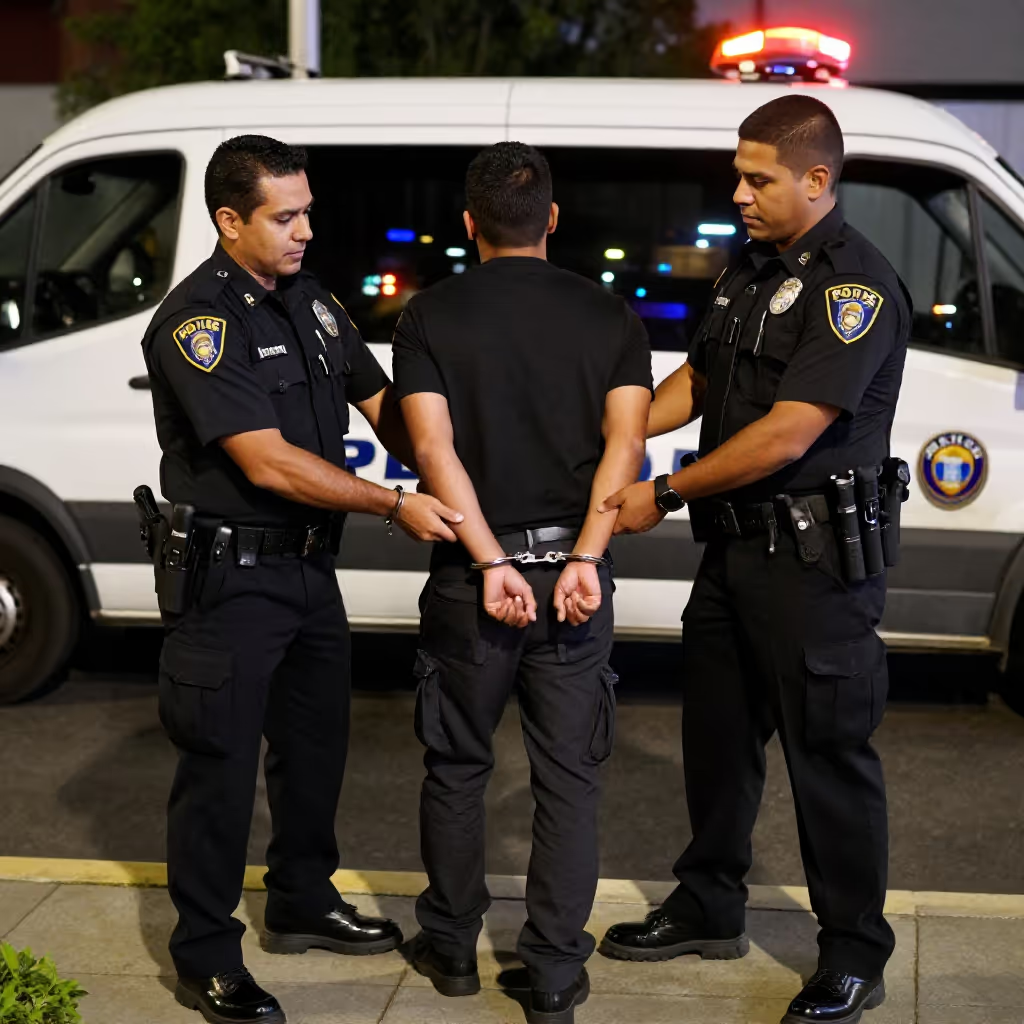
verhaftet
arrested
Describes the state of having been detained and taken into custody by the police.
EXAMPLE
Der Verdächtige wurde gestern Abend verhaftet.
The suspect was arrested yesterday evening.
arrested / attached
Loading your saved state.
arrested
Describes the state of having been detained and taken into custody by the police.
Der Verdächtige wurde gestern Abend verhaftet.
The suspect was arrested yesterday evening.

attached to something
A figurative expression meaning that someone strongly clings to old ideas, traditions, or patterns of thought and cannot break away from them.
Er ist immer noch den alten Vorstellungen von Familie und Arbeit verhaftet.
He is still attached to old ideas about family and work.
'Verhaftet' is the past participle of the verb 'verhaften' (to arrest). It is very often used like an adjective to describe the state of a person or a characteristic.
Der verhaftete Mann durfte einen Anwalt anrufen.
The arrested man was allowed to call a lawyer.
You can recognize the meaning from the context. If it is about the police, crimes, or laws, the literal meaning 'festgenommen' (detained/arrested) is intended. If it is about ideas, traditions, or the past, the figurative meaning 'festhalten an' (to cling to) is intended.
Der Dieb wurde auf frischer Tat verhaftet.
The thief was arrested in the act.
In the figurative meaning, 'verhaftet' is always used with the preposition 'in' and the dative. The structure is: 'in etwas (Dativ) verhaftet sein' (to be attached to/stuck in something).
Sein Denken ist noch stark dem 19. Jahrhundert verhaftet.
His thinking is still strongly attached to the 19th century.
detained / imprisoned
Both words describe a person whose freedom has been taken away by the police. Verhaftet focuses more on the process and the state after the arrest, while inhaftiert emphasizes the continued stay in a detention facility. Use verhaftet for the arrest and inhaftiert for the person’s continued detention.

Die Polizei hat den Verdächtigen gestern Abend verhaftet.
The police arrested the suspect yesterday evening.
Der Angeklagte blieb bis zum Prozess inhaftiert.
The defendant remained detained until the trial.