

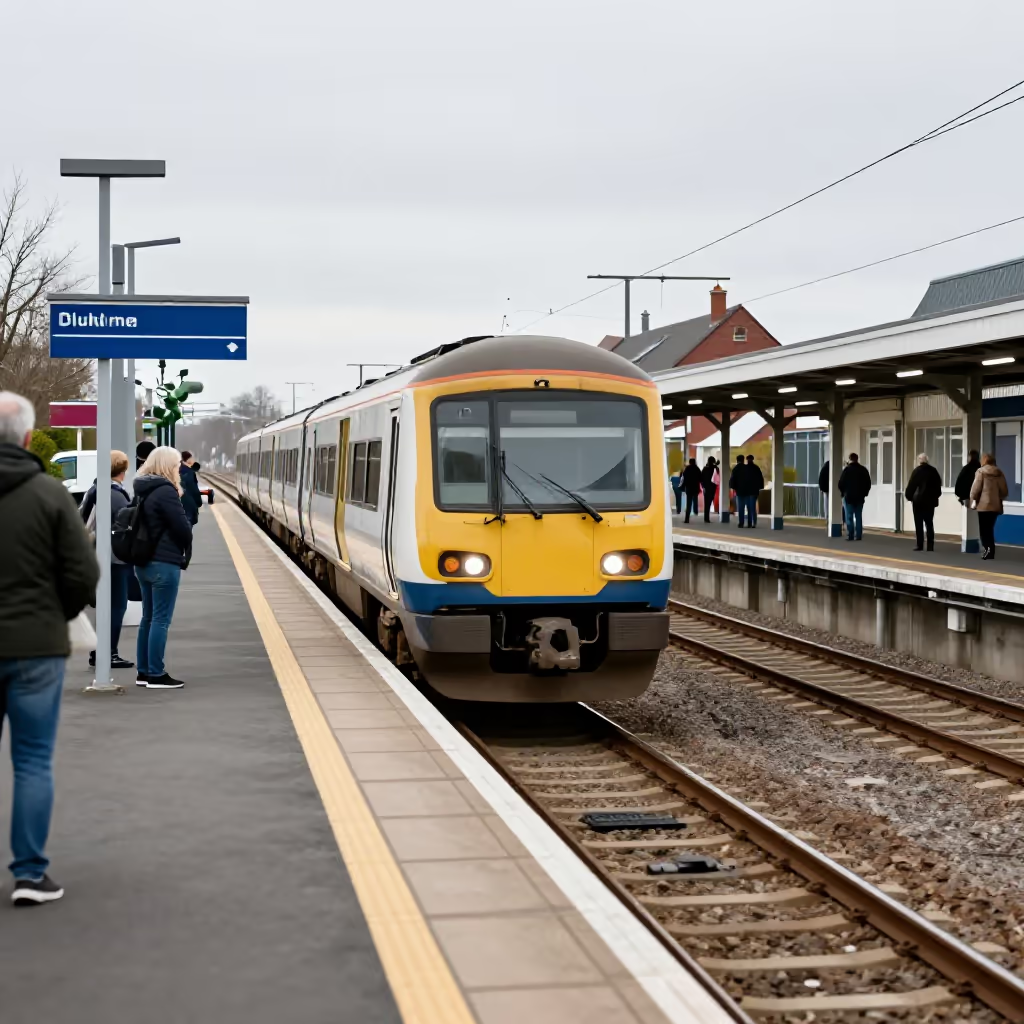
verkehren
to run
Refers to public transport such as buses or trains that regularly travel along a particular route.
EXAMPLE
Zwischen den beiden Städten verkehren stündlich Züge.
Trains run hourly between the two cities.
to run / associate / turn into
Loading your saved state.
to run
Refers to public transport such as buses or trains that regularly travel along a particular route.
Zwischen den beiden Städten verkehren stündlich Züge.
Trains run hourly between the two cities.

to associate with
To have regular social contact with someone or to visit a place frequently.
Seit seinem Aufstieg verkehrt er nur noch in den besten Kreisen der Stadt.
Since his rise in status, he only associates with the best circles in the city.

to turn into
To change or transform into the opposite.
Seine anfängliche Freude verkehrte sich bald in Enttäuschung.
His initial joy soon turned into disappointment.

to have intercourse
An outdated or very formal term for sexual intercourse.
Das Gesetz bestrafte Paare, die vor der Ehe miteinander verkehrten.
The law punished couples who had intercourse with each other before marriage.
The verb contains the stem 'kehren' (to turn), which can mean 'wenden' (to turn) or 'drehen' (to rotate). This idea of turning and movement appears in the meanings: means of transport 'turn' along their route, and a situation can 'sich ins Gegenteil verkehren' (turn into the opposite).
Seine gute Laune verkehrte sich plötzlich in Wut.
His good mood suddenly turned into anger.
'Verkehren' is an inseparable verb. The prefix 'ver-' remains firmly attached to the verb stem in all tenses and sentence constructions.
Der Bus verkehrt hier nur morgens und abends.
The bus runs here only in the mornings and evenings.
The perfect tense is formed with different auxiliary verbs. For the movement of public transport (meaning 1), you use 'sein' (to be); for social contact (meaning 2), you use 'haben' (to have).
Früher ist hier eine Straßenbahn verkehrt.
A tram used to run here.
When the subject is a form of public transport (e.g., 'der Bus' (the bus), 'die Bahn' (the train/railway), 'Züge' (trains)), the meaning is almost always 'to travel along a route'.
Auf dieser Strecke verkehren nur noch Regionalzüge.
Only regional trains still run on this route.
In the meaning 'to have social contact', 'verkehren' is always used with the preposition 'mit' and the dative. You 'verkehren mit' (associate with) someone.
Sie verkehrt nicht mehr mit ihren alten Schulfreunden.
She no longer associates with her old school friends.
When something changes into its opposite, 'verkehren' becomes reflexive and is used with the preposition 'in' plus the accusative: 'sich in etwas verkehren' (to turn into something).
Sein anfänglicher Vorteil verkehrte sich schnell in einen Nachteil.
His initial advantage quickly turned into a disadvantage.
This meaning for sexual intercourse is very outdated and formal. Today it is found almost only in historical, legal, or biblical texts.
In dem alten Roman wurde beschrieben, wie die Hauptfiguren heimlich miteinander verkehrten.
In the old novel, it was described how the main characters secretly had intercourse with each other.
to drive / ride
With public transportation, both fahren and verkehren can describe regular service. verkehren puts more emphasis on the scheduled service along a route and sounds more formal. fahren is more general and also works for a simple timetable statement.
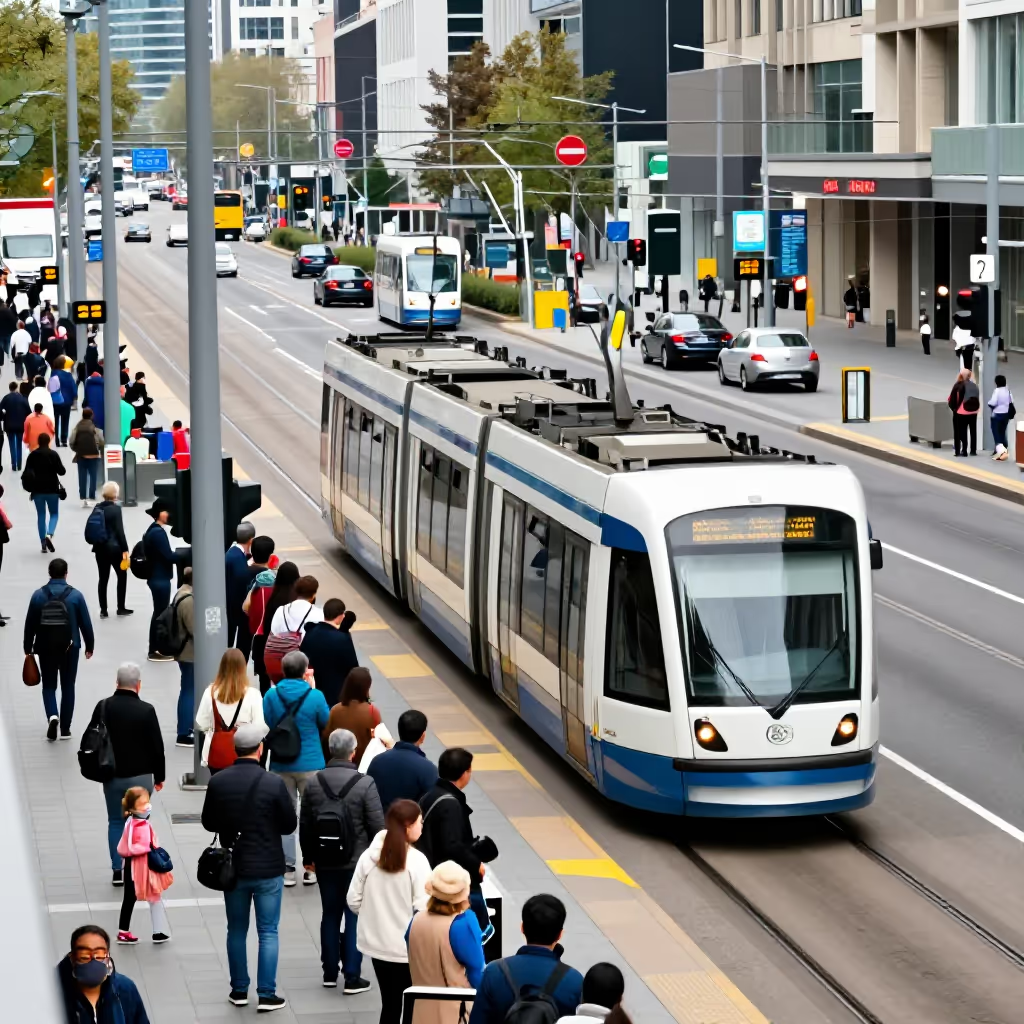
Die Busse verkehren auf dieser Strecke alle dreißig Minuten.
The buses run every thirty minutes on this route.
Der letzte Bus fährt heute um Mitternacht.
The last bus runs at midnight today.