


fahren
to ride / go
To move by means of a vehicle such as a car, bus, train, or bicycle.
EXAMPLE
Ich fahre jeden Morgen mit dem Bus zur Arbeit.
I take the bus to work every morning.
to drive / ride
Loading your saved state.
to ride / go
To move by means of a vehicle such as a car, bus, train, or bicycle.
Ich fahre jeden Morgen mit dem Bus zur Arbeit.
I take the bus to work every morning.
to travel
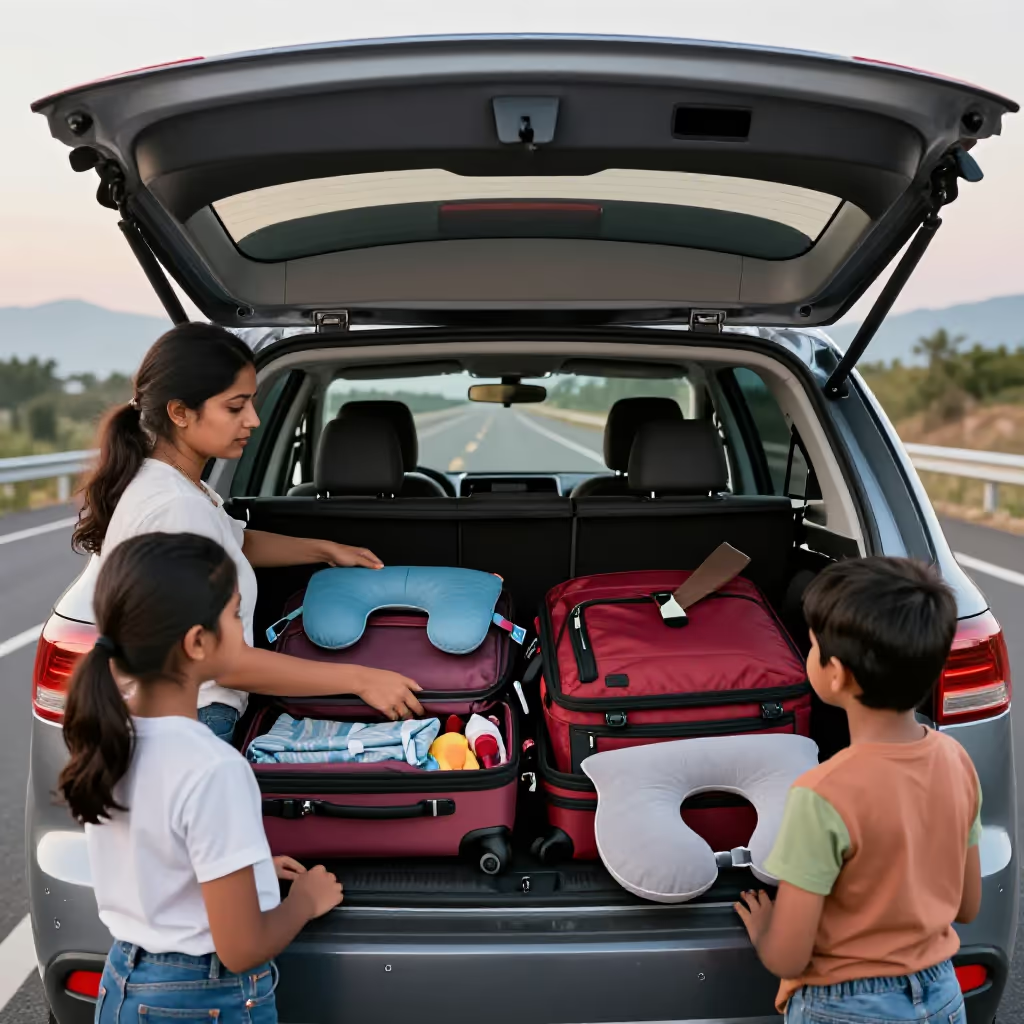
To travel to a specific place, especially over a longer distance.
Diesen Sommer fahren wir in den Urlaub ans Meer.
This summer we are traveling to the seaside for vacation.
to drive
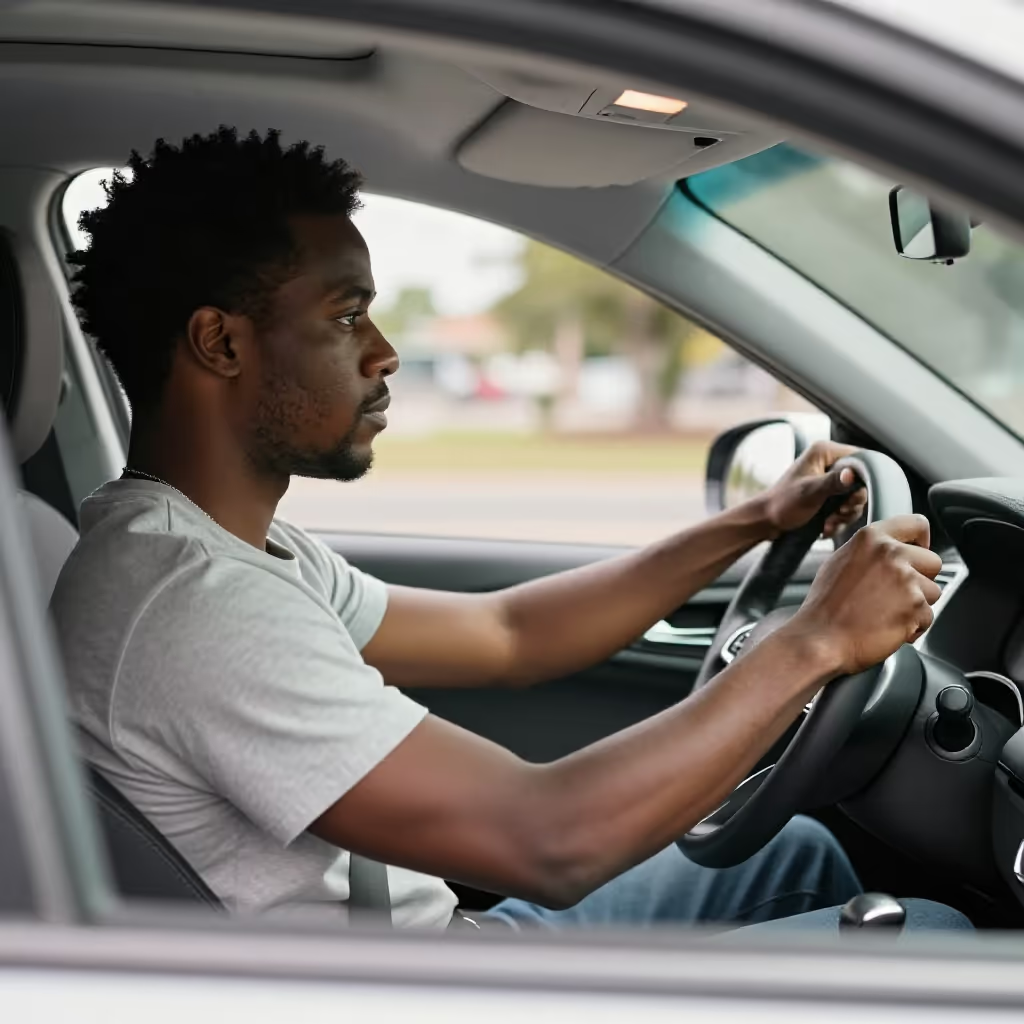
To steer and operate a vehicle yourself.
Seit ich den Führerschein habe, fahre ich sehr gerne Auto.
Since I got my driver's license, I really enjoy driving.

to run
To be in regular service, referring to public transportation.
Die U-Bahn fährt alle zehn Minuten.
The subway runs every ten minutes.

to run over
To glide or move one's hand or an object over a surface.
Sie fuhr sich nachdenklich mit der Hand über die Stirn.
She thoughtfully ran her hand over her forehead.

to shock someone
To suddenly frighten someone badly or give them a shock.
Der laute Knall fuhr mir gehörig in die Glieder.
The loud bang gave me quite a shock.
As a verb of movement from one place to another, 'fahren' forms the perfect tense with the auxiliary verb 'sein'. This is a common source of mistakes for learners.
Wir sind letztes Jahr nach Italien gefahren.
We went to Italy last year.
The perfect tense is formed with 'haben' when 'fahren' describes driving a vehicle without a change of location, or when the activity itself is the focus. 'Haben' is also used when transporting someone.
Er hat seinen Sohn zur Schule gefahren.
He drove his son to school.
The word family of 'fahren' includes important nouns like 'die Fahrt' (the trip), 'der Fahrer' (the person driving), and 'das Fahrzeug' (the means of transport/vehicle).
Die Fahrt von Hamburg nach München dauert mit dem Zug etwa sechs Stunden.
The trip from Hamburg to Munich takes about six hours by train.
The vehicle is indicated with 'mit' (+ dative). The destination is often indicated with 'nach' (cities, countries without an article), 'in' (+ accusative, countries with an article, buildings), or 'zu' (+ dative, people, places).
Fährst du mit dem Auto oder mit dem Zug?
Are you going by car or by train?
The sentence 'Ich fahre Auto' means that you are sitting behind the wheel yourself. 'Ich fahre mit dem Auto' can mean that you are driving yourself or simply riding as a passenger.
Ich kann nicht telefonieren, ich fahre gerade Auto.
I can't talk on the phone; I'm driving right now.
In the meaning 'to travel', 'fahren' is often combined with typical vacation destinations, such as 'in den Urlaub fahren' (to go on vacation), 'ans Meer fahren' (to go to the seaside), or 'in die Berge fahren' (to go to the mountains).
Fahren wir dieses Wochenende an einen See?
Shall we go to a lake this weekend?
In this meaning, the subject of the sentence is the means of transportation itself, not a person. It describes the regular schedule.
Der letzte Bus fährt um 23:30 Uhr.
The last bus runs at 11:30 p.m.
The idiom 'jemandem in die Glieder fahren' means that someone gets a sudden fright. The person who is frightened is in the dative.
Der plötzliche Schrei fuhr mir durch Mark und Bein.
The sudden scream chilled me to the bone.
to go
Gehen and fahren can both express going to a destination. Gehen primarily emphasizes heading to the destination without specifying the means of transportation; fahren emphasizes traveling in a vehicle. When travel by a vehicle is explicitly mentioned, fahren is more precise.

Heute Abend fahren wir mit dem Auto ins Kino und treffen uns dort um acht Uhr.
We’re driving to the cinema tonight and will meet there at eight.
Heute Abend gehen wir ins Kino und treffen uns dort um acht Uhr.
We’re going to the cinema tonight and will meet there at eight.