

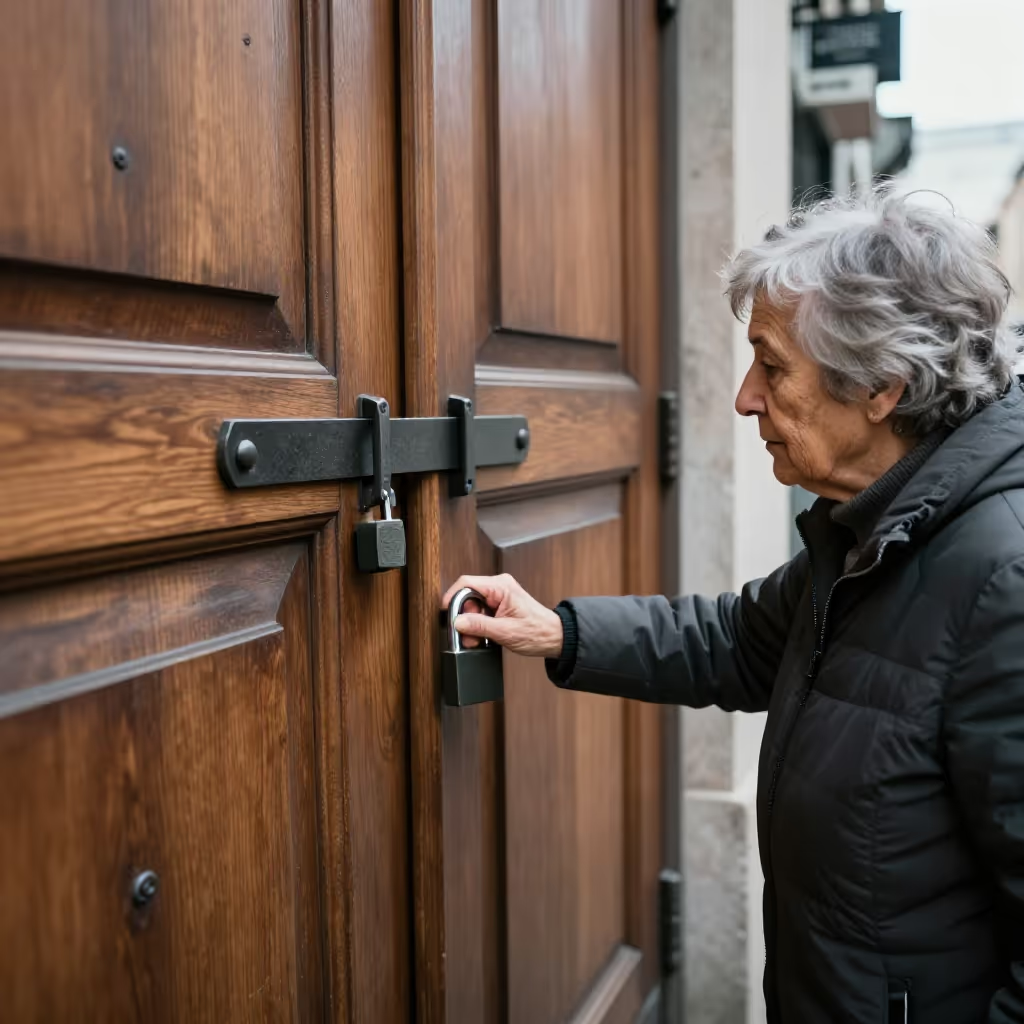
verschlossen
locked
Secured by a lock or bolt so that it cannot be opened; locked shut.
EXAMPLE
Die Tür zum Archiv war fest verschlossen.
The door to the archive was firmly locked.
locked / reserved
Loading your saved state.
locked
Secured by a lock or bolt so that it cannot be opened; locked shut.
Die Tür zum Archiv war fest verschlossen.
The door to the archive was firmly locked.

reserved
Referring to a person: introverted, reserved, and not willing to talk about feelings or thoughts.
Seit dem Vorfall ist er sehr verschlossen und redet kaum noch.
Since the incident, he has been very reserved and hardly talks anymore.
'Verschlossen' is the past participle of the verb 'verschließen' (to lock, to bolt). Here it is used as an adjective to describe a state.
Der Briefumschlag war bereits fest verschlossen.
The envelope was already firmly sealed.
The meaning is easy to recognize from the subject. If 'verschlossen' refers to an object (door, box, bottle), it means 'zugesperrt' (locked). If it refers to a person, it means 'introvertiert' (introverted) or 'zurückhaltend' (reserved).
Die Schatzkiste war seit Jahrhunderten verschlossen.
The treasure chest had been locked for centuries.
The meaning 'introvertiert' (introverted) is a metaphor. A reserved person is like a locked door: they do not let anyone in to see their thoughts or feelings.
Er wirkt oft verschlossen, aber eigentlich ist er nur schüchtern.
He often seems reserved, but actually he is just shy.
closed
With a door or window, both words can describe the lack of access. Geschlossen only indicates that it is not open, whereas verschlossen emphasizes that it is secured with a lock or bolt. When the locking is important, verschlossen is more precise.
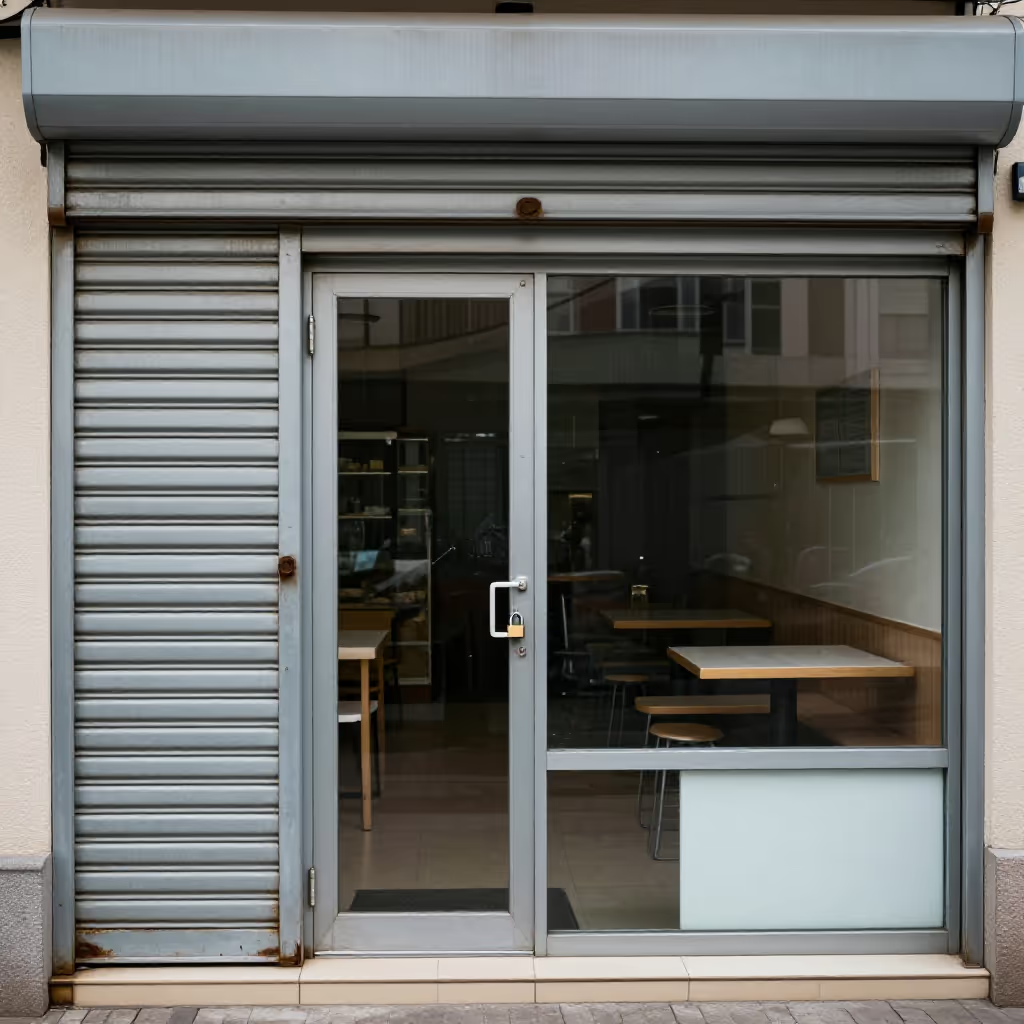
Das Fenster ist verschlossen, deshalb kann ich es nicht öffnen.
The window is locked, so I cannot open it.
Das Fenster ist geschlossen, aber ich kann es von innen öffnen.
The window is closed, but I can open it from the inside.