

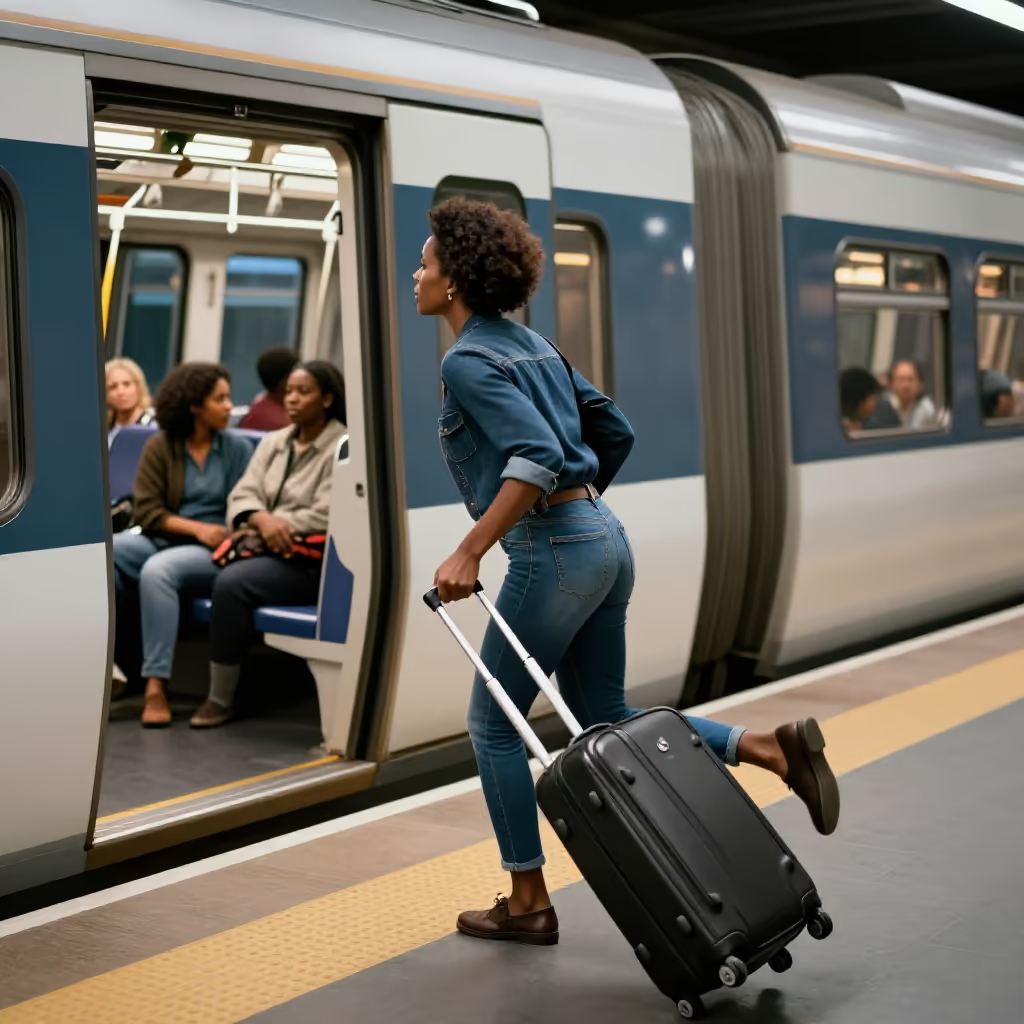
die Verspätung
delay
The state of arriving, taking place, or being completed later than planned or expected.
Wegen eines technischen Problems hat der Zug 30 Minuten Verspätung.
Because of a technical problem, the train is delayed by 30 minutes.

delay
Loading your saved state.
delay
The state of arriving, taking place, or being completed later than planned or expected.
Wegen eines technischen Problems hat der Zug 30 Minuten Verspätung.
Because of a technical problem, the train is delayed by 30 minutes.

'Die Verspätung' (the delay) belongs to the word family of 'spät' (late). It is the nominalization of the verb 'sich verspäten' (to be late / to be delayed) and describes the state of being late.
Ich muss mich beeilen, um eine Verspätung zu vermeiden.
I have to hurry to avoid a delay.
The most common and important construction is 'Verspätung haben' (to be delayed / to have a delay). The subject is always the thing or person that is late, e.g. the train, the bus, or a person.
Entschuldigung, mein Bus hatte Verspätung.
Sorry, my bus was delayed.
Two important prepositions are 'mit' (with) and 'wegen' (because of). You say 'mit Verspätung ankommen' (to arrive late / with a delay), but 'wegen einer Verspätung' (because of a delay) to miss something.
Der ICE aus Berlin kam mit 20 Minuten Verspätung an.
The ICE from Berlin arrived with a 20-minute delay.
To state the duration of the delay, use the structure '[number] Minuten/Stunden Verspätung haben' (to be [number] minutes/hours late) or 'eine Verspätung von [number] Minuten/Stunden' (a delay of [number] minutes/hours).
Wir hatten auf dem Hinflug eine Verspätung von über einer Stunde.
We had a delay of over an hour on the outbound flight.
delay
'Verspätung' and 'Verzögerung' both mean that something happens later than planned. 'Verspätung' is used especially for people, trains, buses, flights, or appointments when they are not on time. 'Verzögerung' sounds more general and fits well with procedures, projects, or processes that take longer than expected. Learners may confuse the words because both have to do with a later start or a later end. When someone or a means of transport arrives late, 'Verspätung' is usually more natural. When a process slows down, 'Verzögerung' is more precise.

Nico ruft im Büro an, weil sein Zug Verspätung hat.
Nico calls the office because his train is delayed.
Durch ein technisches Problem gibt es bei der Lieferung eine Verzögerung.
Because of a technical problem, there is a delay with the delivery.