


die Verspannung
muscle tension
Persistent, often painful tension or stiffness in the muscles.
Die Physiotherapeutin löste die Verspannungen in meinem Nacken durch eine Massage.
The physiotherapist relieved the tension in my neck with a massage.
tension / bracing
die Verspannung, die Verspannungen
Loading your saved state.

muscle tension
Persistent, often painful tension or stiffness in the muscles.
Die Physiotherapeutin löste die Verspannungen in meinem Nacken durch eine Massage.
The physiotherapist relieved the tension in my neck with a massage.

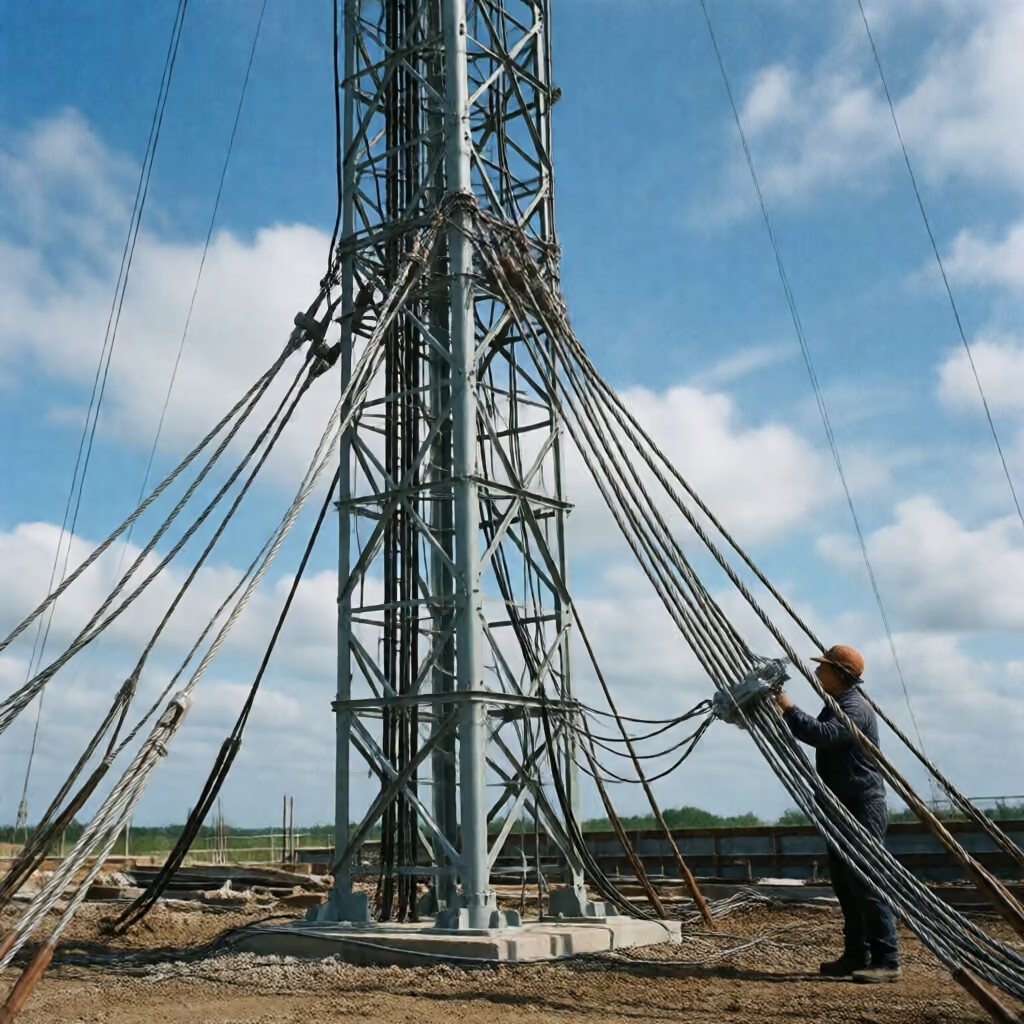
bracing
The fastening or stabilizing of a component using tightly stretched ropes, wires, or similar parts; also the device used for this purpose.
Die Verspannung aus Stahlseilen hält den Mast auch bei starkem Wind aufrecht.
The steel-cable bracing keeps the mast upright even in strong winds.

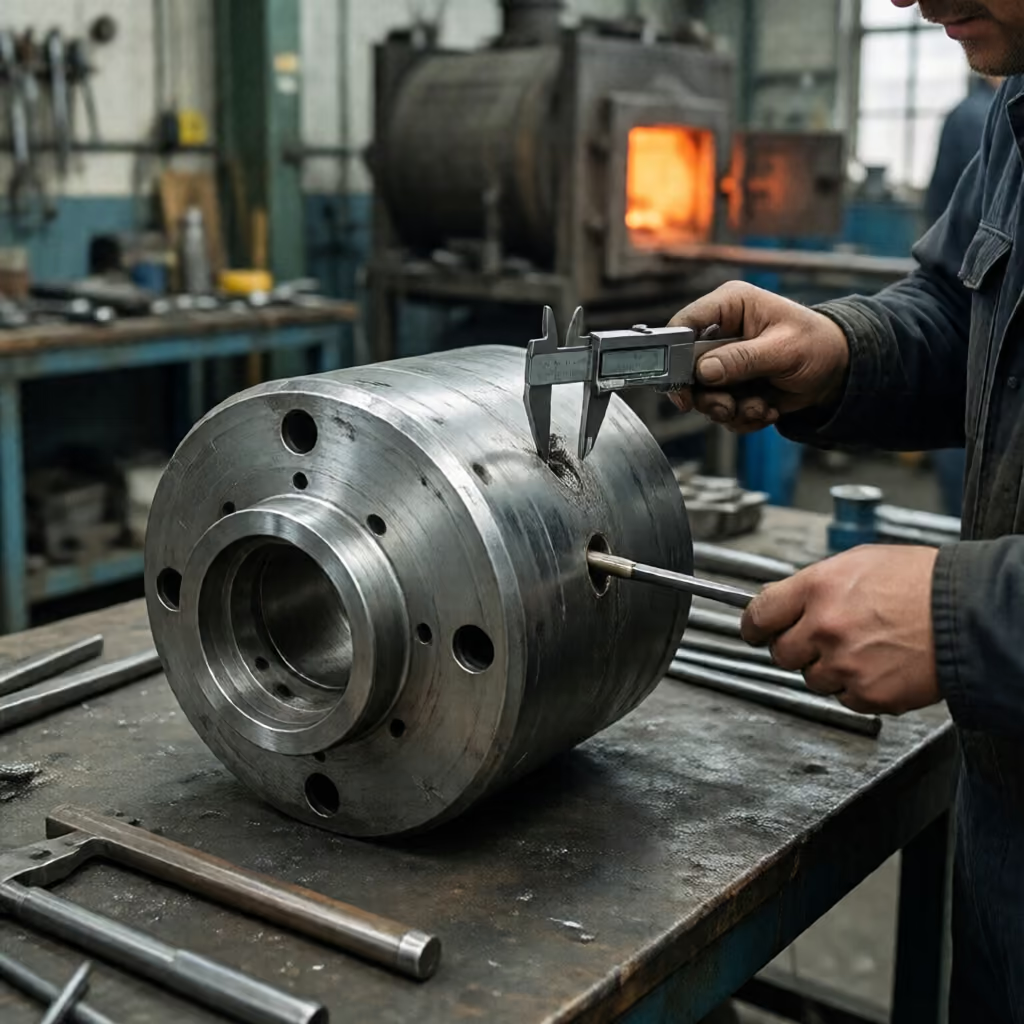
internal stress
A condition in which internal mechanical stresses are present in a material or component. These can arise, for example, from uneven heating or fastening that is too tight.
Durch das ungleichmäßige Abkühlen entstanden Verspannungen im Metall.
Uneven cooling caused internal stresses in the metal.
| gender | feminine die |
|---|---|
| plural | die Verspannungen |
| genitive | der Verspannung |
| singular | plural | |
|---|---|---|
| nominative | die Verspannung | die Verspannungen |
| accusative | die Verspannung | die Verspannungen |
| dative | der Verspannung | den Verspannungen |
| genitive | der Verspannung | der Verspannungen |
The article changes with the case; it is shown in colour.
The affected body part is often mentioned with „in“ and the dative, for example „Verspannungen im Nacken“ (muscle tension in the neck) or „im Rücken“ (in the back). In this meaning, the word is often used in the plural.
Seit einigen Tagen habe ich Verspannungen im Rücken.
I’ve had muscle tension in my back for several days.
Common collocations include „Verspannungen lösen“ (to relieve muscle tension), „Verspannungen lindern“ (to alleviate muscle tension), and „Verspannungen vorbeugen“ (to prevent muscle tension). With „vorbeugen“ (to prevent), „Verspannungen“ is in the dative.
Mit regelmäßigen Bewegungspausen kannst du Verspannungen vorbeugen.
You can prevent muscle tension by taking regular movement breaks.
Words such as „Seile“ (ropes), „Drähte“ (wires), „Mast“ (mast), and „Konstruktion“ (structure) point to fastening technology. „Eine Verspannung anbringen“ (to install bracing) is a typical collocation when the device itself is meant.
Zur Sicherung des Mastes wurde eine zusätzliche Verspannung angebracht.
An additional brace was installed to secure the mast.
In technical texts, „thermische Verspannungen“ (thermal stresses) and „Verspannungen im Material“ (stresses in the material) are typical collocations. Verbs such as „entstehen“ (to arise) and „auftreten“ (to occur) often indicate that a condition in the component is meant, rather than a fastening device.
Bei starken Temperaturunterschieden können thermische Verspannungen im Bauteil auftreten.
Strong temperature differences can cause thermal stresses in the component.