


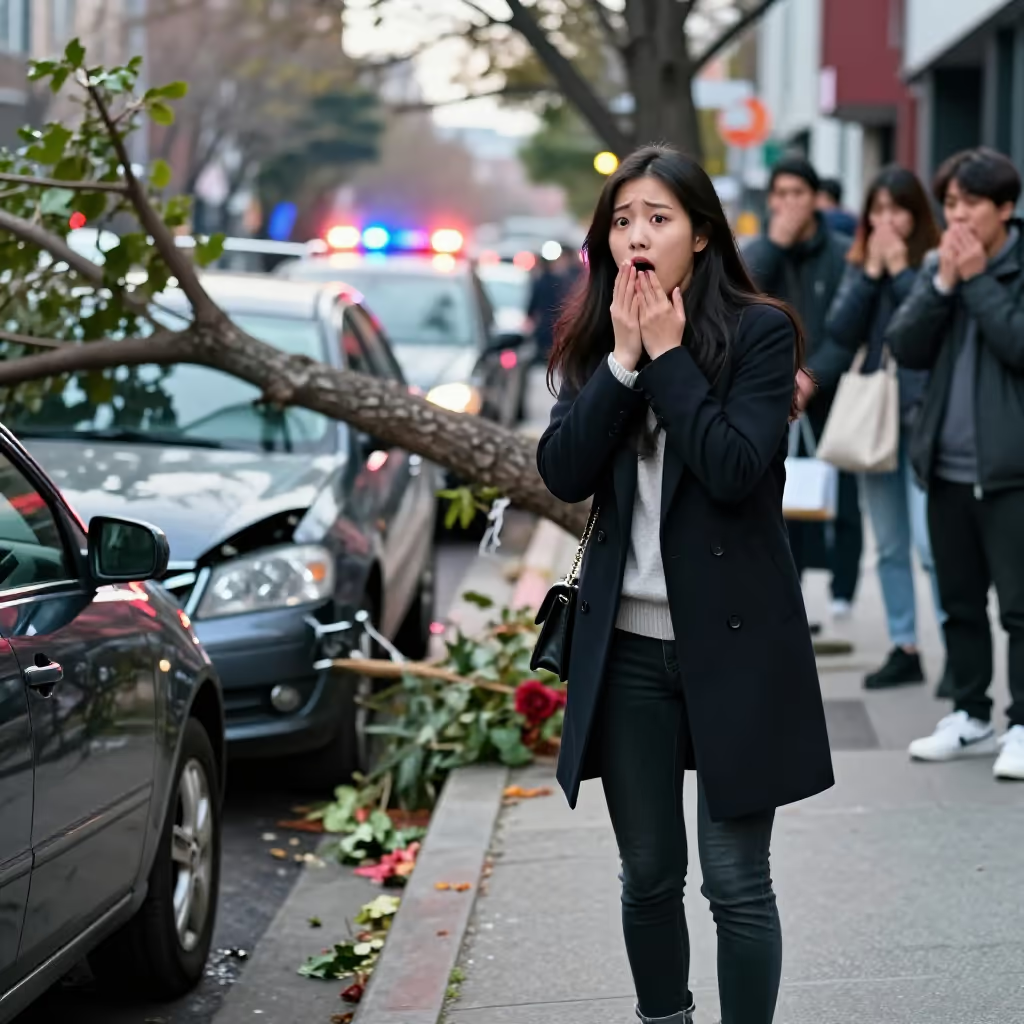
A quality of something that triggers strong negative feelings such as unease, shock, fear, or emotional unrest and deeply unsettles someone.
example
Die Nachrichten zeigten verstörende Bilder aus dem Kriegsgebiet.
The news showed disturbing images from the war zone.
Usage tips
Word structure
'Verstörend' (disturbing) is the present participle of the verb 'verstören' (to disturb/unsettle). The verb consists of the prefix 'ver-' and 'stören' (to disturb). The prefix intensifies the meaning and describes a deep inner disturbance.
EXAMPLE
Der Anblick der Unfallstelle hat mich tief verstört.
The sight of the accident scene deeply disturbed me.
Use as an adjective
As an adjective, 'verstörend' (disturbing) describes something that actively has an unsettling effect on a person. The ending '-end' signals this active process.
EXAMPLE
Die plötzliche Stille in dem großen Haus war verstörend.
The sudden silence in the large house was disturbing.
Typical collocations
The adjective is often used to describe media content, art, or experiences. Typical combinations are 'verstörende Bilder' (disturbing images), 'ein verstörender Film' (a disturbing film), 'eine verstörende Nachricht' (a disturbing piece of news), or 'eine verstörende Erfahrung' (a disturbing experience).
EXAMPLE
Viele Zuschauer fanden die letzte Szene des Films verstörend.
Many viewers found the final scene of the film disturbing.
Sentence structure
'Verstörend' (disturbing) can appear before a noun (attributive), after a verb such as 'sein' (to be) or 'wirken' (to seem/appear) (predicative), or as an adverb.
EXAMPLE
Das ist eine verstörende Entwicklung.
That is a disturbing development.
Compare with
near_synonym
verstörend vs erschreckend
frightening
'erschreckend' and 'verstörend' both describe something that can trigger strong negative feelings. 'erschreckend' fits when something causes fear, shock, or horror, often immediately and clearly. 'verstörend' goes more inward: something stays with you, creates unease, or unsettles you emotionally. An accident report can be 'erschreckend', while a strange or cruel image can seem 'verstörend'. If the reaction is mainly fear or fright, people are more likely to say 'erschreckend'. If something upsets you inwardly, 'verstörend' fits better.
verstörend
In der Dokumentation gab es eine verstörende Szene, über die Hannah noch lange nachdachte.
There was a disturbing scene in the documentary that Hannah thought about for a long time.
erschreckend
Die Nachricht vom Einsturz der Brücke ist erschreckend.