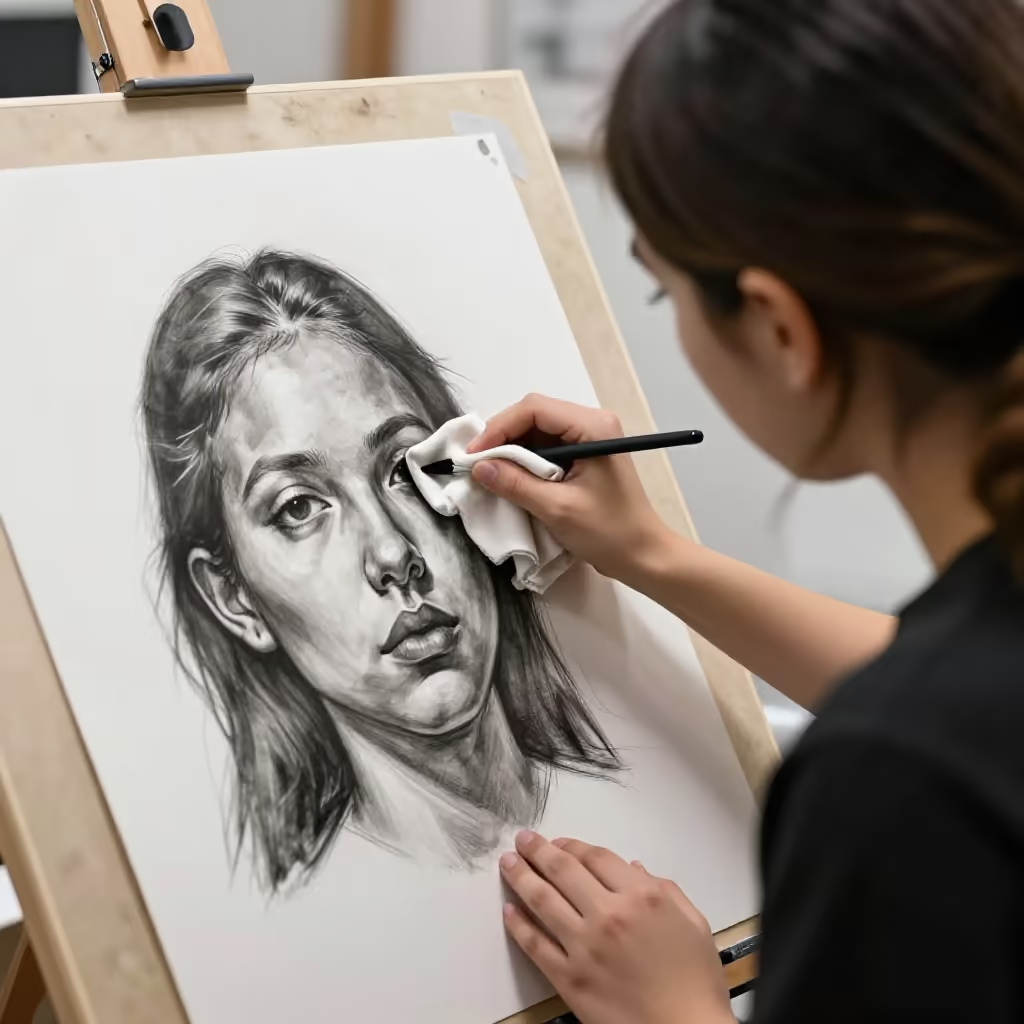
To make something, such as writing, a drawing, or paint, unclear or illegible by rubbing or wiping.
example
Die Tinte war noch nicht trocken und ich habe den letzten Satz mit der Hand verwischt.
The ink was not dry yet, and I smudged the last sentence with my hand.
Usage tips
Inseparable verb
'Verwischen' (to smudge / blur) is an inseparable verb. The prefix 'ver-' here often indicates an unclear or negative result of wiping and always remains attached to the verb.
EXAMPLE
Ich habe aus Versehen deine Notizen verwischt.
I accidentally smudged your notes.
Typical collocations
In the figurative sense, 'verwischen' (to blur) is often used with abstract nouns. The most common expressions are 'Spuren verwischen' (to cover one's tracks), 'Grenzen verwischen' (to blur boundaries), and 'Unterschiede verwischen' (to blur differences).
EXAMPLE
Durch die Globalisierung verwischen die kulturellen Grenzen immer mehr.
Because of globalization, cultural boundaries are becoming more and more blurred.
Reflexive use
When something becomes unclear on its own, the reflexive form 'sich verwischen' is used. The subject is then the thing that becomes indistinct, for example 'Erinnerungen' (memories) or 'Konturen' (outlines).
EXAMPLE
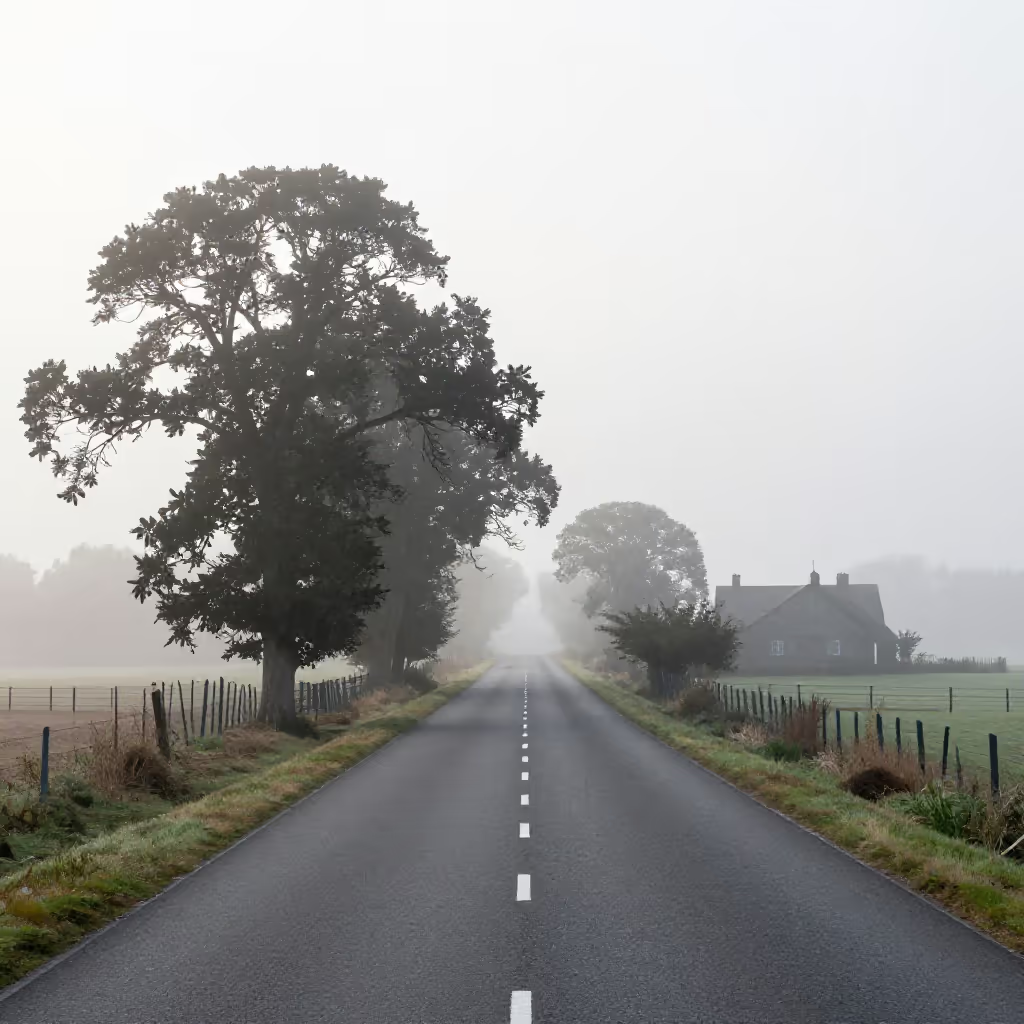
Im Nebel verwischten sich die Konturen der Häuser.
In the fog, the outlines of the houses became blurred.
Compare with
near_synonym · confusable
verwischen vs verlaufen
to get lost / to proceed
'verlaufen' and 'verwischen' can both have to do with something no longer looking clear. 'verlaufen' is used especially for paint, ink, or liquid when it spreads uncontrollably or flows into something else. 'verwischen' means that something becomes blurry or illegible through wiping or rubbing. It can also describe something becoming less clear on its own. Learners may confuse the words because in both cases, outlines or writing end up unclear. The important difference is the cause: paint can 'verlaufen' because of water, but writing is 'verwischt' by a hand movement or rubbing.
verwischen
Meine Freundin verwischt die Kreide an der Tafel mit dem Ärmel.
My friend smudges the chalk on the board with her sleeve.
verlaufen
Der Regen kam plötzlich, und die Farbe auf dem Schild ist verlaufen.
The rain came suddenly, and the paint on the sign ran.