

beschmieren
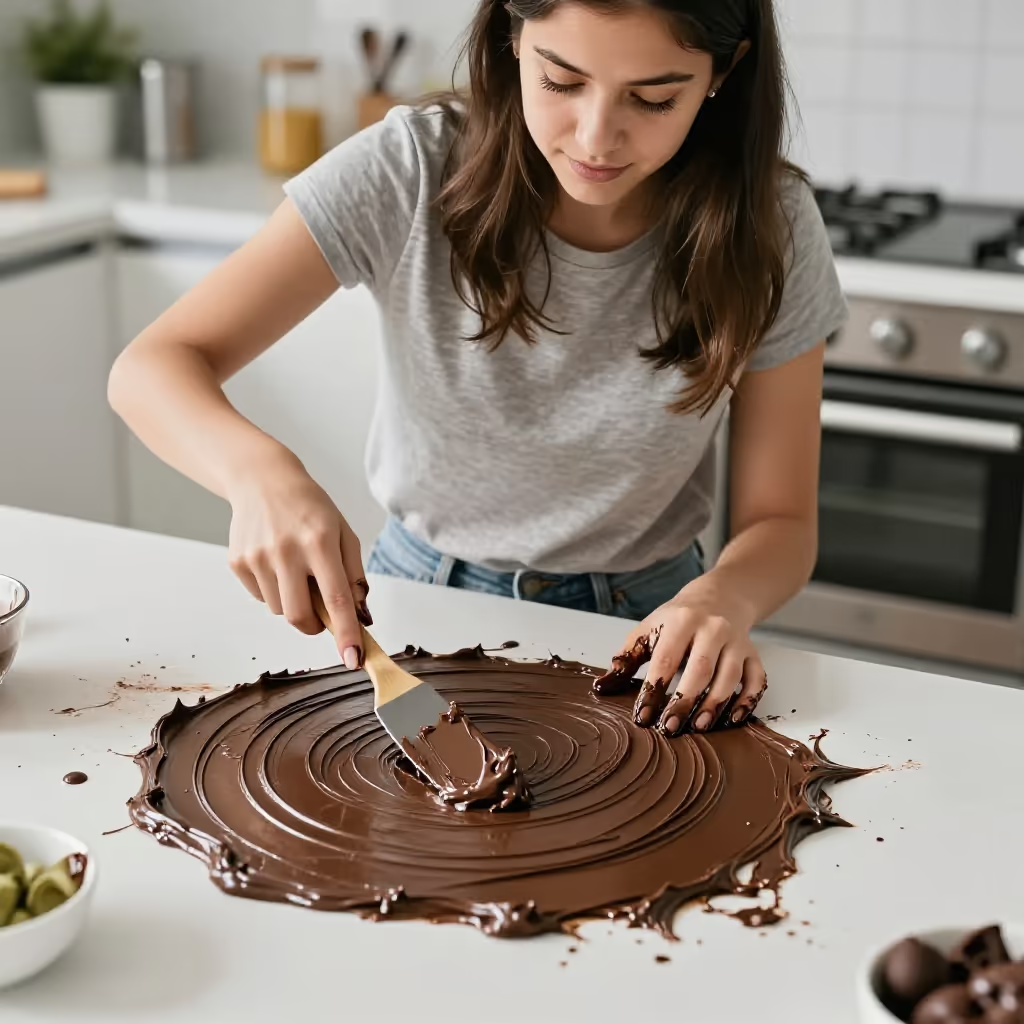
to smear
To apply or spread something, often a sticky, dirty, or colored substance, messily and over a surface.
EXAMPLE
Das Kind hat die Wand mit Schokolade beschmiert.
The child smeared chocolate on the wall.
to smear / deface
Loading your saved state.
to smear
To apply or spread something, often a sticky, dirty, or colored substance, messily and over a surface.
Das Kind hat die Wand mit Schokolade beschmiert.
The child smeared chocolate on the wall.
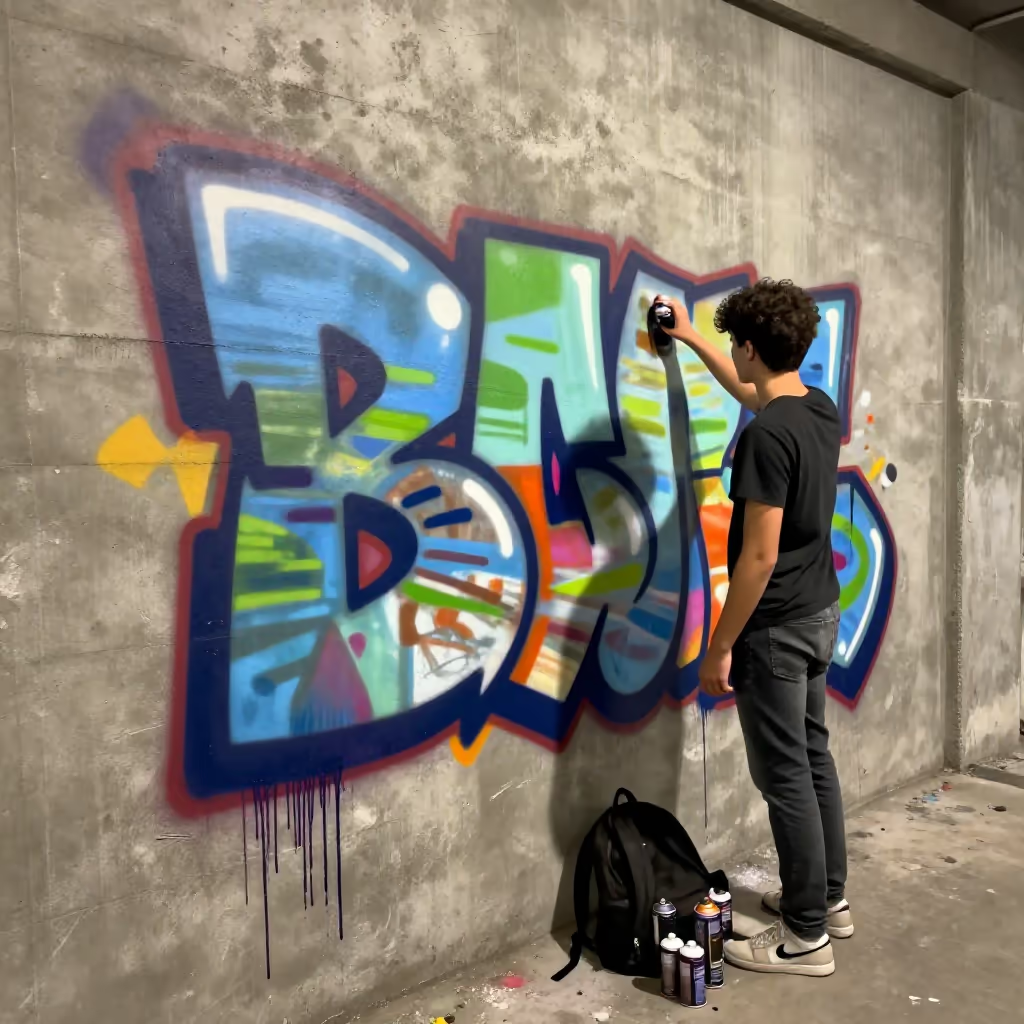
to deface
To spoil the appearance of a surface, especially a wall, through unwanted scribbling or spraying, for example with graffiti.
Unbekannte haben die Hausfassade mit Parolen beschmiert.
Unknown individuals defaced the house facade with slogans.
'Beschmieren' (to smear / deface) is an inseparable verb with the prefix 'be-'. The prefix remains firmly attached to the verb 'schmieren' (to smear) in all tenses and sentence types.
Er hat die ganze Tischdecke mit Marmelade beschmiert.
He smeared the entire tablecloth with jam.
The construction is always: someone 'beschmiert' (smears) SOMETHING (accusative) 'mit' SOMETHING (dative). The surface is the accusative object, and the substance is attached with 'mit' + dative.
Die Kinder haben den Spiegel mit Zahnpasta beschmiert.
The children smeared the mirror with toothpaste.
The word 'beschmieren' (to smear / deface) always has a negative connotation. It means making something messy, dirty, or ugly.
Nach dem Spiel war sein Trikot komplett mit Schlamm beschmiert.
After the game, his jersey was completely smeared with mud.
In this meaning, the substance usually refers to paint, spray paint, or writing. Typical objects are walls, outer walls, trains, or monuments.
Leider wurde die frisch gestrichene Wand über Nacht mit Graffiti beschmiert.
Unfortunately, the freshly painted wall was defaced with graffiti overnight.
to paint
Bemalen refers to deliberately applying paint, often in the form of pictures or patterns. Beschmieren, by contrast, emphasizes that paint or another substance is applied messily or that a surface is undesirably defaced. Use bemalen for planned decoration and beschmieren for a dirty or disruptive effect.

Unbekannte beschmieren die frisch gestrichene Wand mit roter Farbe.
Unknown people are defacing the freshly painted wall with red paint.
Die Kinder bemalen die erlaubte Wand mit bunten Blumen.
The children are painting colorful flowers on the wall they have been allowed to use.