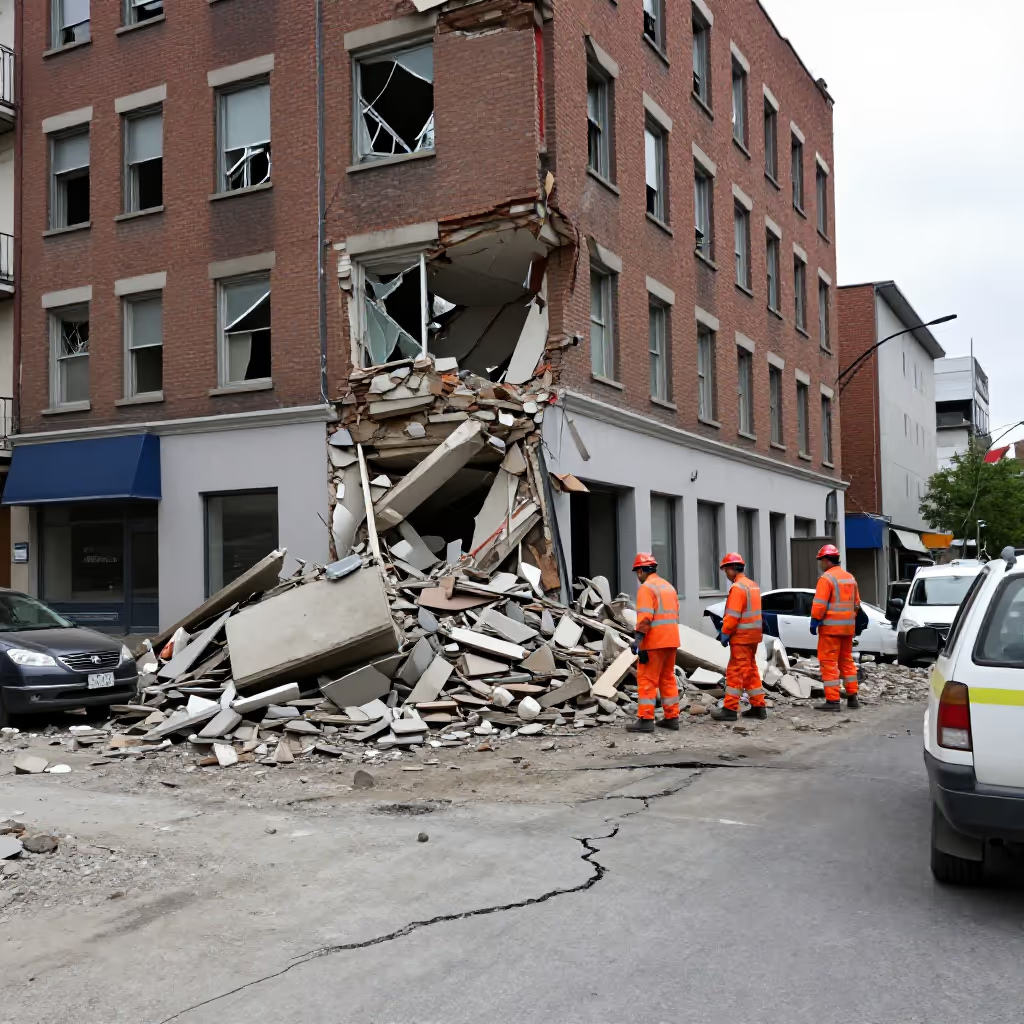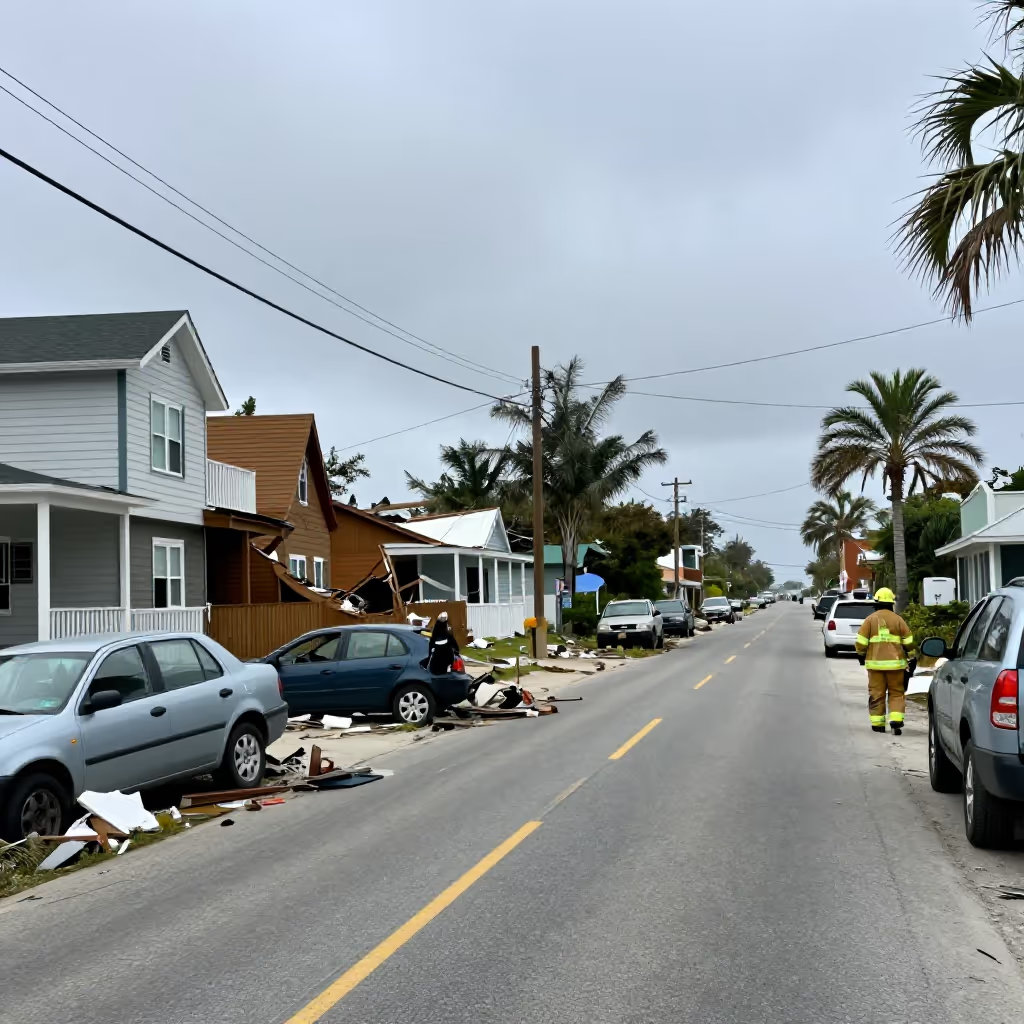
Large-scale destruction that leaves an area in a state of chaos and ruins. It is often caused by natural disasters, wars, or fires.
example
Der Tornado hinterließ eine Schneise der Verwüstung.
The tornado left a trail of devastation.

Usage tips
Word structure
The noun 'Verwüstung' (devastation) comes from the verb 'verwüsten' (to devastate). The word stem is 'wüst' (desolate), meaning 'öde' (barren/desolate) or 'leer' (empty), like a desert. 'Verwüstung' (devastation) therefore describes the process or result of completely destroying a place.
EXAMPLE
Der Brand hat den ganzen Wald verwüstet.
The fire devastated the entire forest.
Strong, vivid word
'Verwüstung' (devastation) is a very strong word that creates an image of total destruction. It is not used for minor damage, but for catastrophic events such as wars, natural disasters, or severe emotional trauma.
EXAMPLE
Der Krieg hinterließ nichts als Tod und Verwüstung.
The war left nothing but death and devastation.
Typical collocations
In connection with destruction, 'Verwüstung' (devastation) is often used with certain verbs. Typical phrases are 'Verwüstung anrichten' (to cause devastation) and 'Verwüstung hinterlassen' (to leave devastation behind). A very common fixed expression is 'eine Schneise der Verwüstung' (a trail/path of devastation).
EXAMPLE
Das Hochwasser hat im ganzen Tal schwere Verwüstungen angerichtet.
The flood caused severe devastation throughout the valley.
Emotional destruction
When 'Verwüstung' (devastation) refers to feelings, it describes a sense of emotional chaos and emptiness. In this case, it often appears with adjectives like 'innere' (inner) or 'seelische' (psychological/emotional).
EXAMPLE
Nach dem Verrat spürte er eine tiefe innere Verwüstung.
After the betrayal, he felt a deep inner devastation.
Compare with
near_synonym · confusable
Verwüstung vs Zerstörung
destruction
'die Zerstörung' and 'die Verwüstung' both describe severe damage. 'Zerstörung' mainly says that something has been broken or destroyed. 'Verwüstung' emphasizes the large scale and the chaotic state afterward: an area looks empty, broken, or like a ruin. The word is especially suitable for wars, fires, storms, or other disasters. Learners may confuse the words because devastation always contains a lot of destruction. But not every case of destruction is devastation: a single broken house is more likely 'Zerstörung', while an entire destroyed area is more likely 'Verwüstung'.
Verwüstung
Nach dem Hochwasser sah man die Verwüstung in vielen Straßen.
After the flood, the devastation could be seen in many streets.
Zerstörung
Die Zerstörung der Maschine stoppte die Arbeit in der Fabrik.
The destruction of the machine stopped work in the factory.