

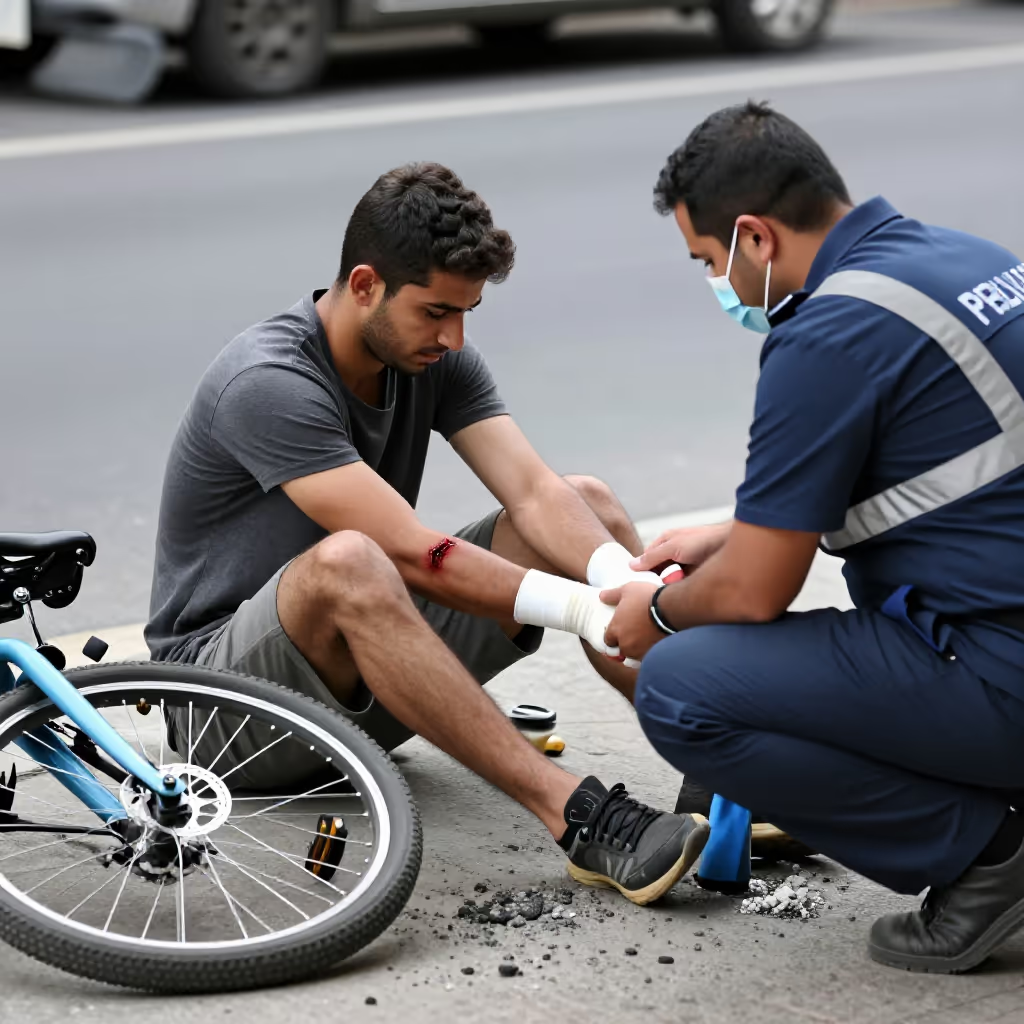
die Verwundung
wound
A physical injury caused by an external force such as an accident, a fight, or a weapon.
EXAMPLE
Der Soldat erlitt im Gefecht eine schwere Verwundung am Arm.
The soldier suffered a serious wound to his arm in combat.
wound / injury
Loading your saved state.
wound
A physical injury caused by an external force such as an accident, a fight, or a weapon.
Der Soldat erlitt im Gefecht eine schwere Verwundung am Arm.
The soldier suffered a serious wound to his arm in combat.

emotional wound
A deep mental or emotional injury caused by an insult, betrayal, or loss.
Die ungerechte Kündigung war für sie eine tiefe persönliche Verwundung.
The unfair dismissal was a deep personal wound for her.
The noun 'Verwundung' (wound/injury) is derived from the verb 'verwunden' (to wound). The ending '-ung' forms nouns from verbs that describe an action or its result. The prefix 'ver-' often indicates a negative change here.
Der Arzt behandelte die Verwundung des Patienten.
The doctor treated the patient's wound.
The word 'Verwundung' (wound/injury) is often used in a more formal, official, or literary context. It sounds stronger and more serious than more everyday terms for injuries.
In dem Bericht des Militärs wurden alle Verwundungen detailliert aufgelistet.
All wounds were listed in detail in the military report.
When it refers to a physical injury, there are often clues in the sentence about the location of the injury or the cause. Typical adjectives are 'leicht' (minor), 'schwer' (serious), or 'tödlich' (fatal).
Er hatte eine leichte Verwundung an der Schulter.
He had a minor wound on his shoulder.
For an emotional injury, the word is often combined with adjectives such as 'tief' (deep), 'persönlich' (personal), or 'emotional' (emotional). The context usually describes feelings, relationships, or psychological states.
Diese abfällige Bemerkung war für ihn eine tiefe persönliche Verwundung.
That derogatory remark was a deep personal wound for him.
injury / violation
Die Verletzung and die Verwundung both refer to physical harm caused by an external force. Verletzung is the general term and can also be used for illnesses. Verwundung places more emphasis on the external, often violent cause. Use Verletzung in general and Verwundung when there is such a cause.

Nach dem Kampf behandelte die Ärztin seine Verwundung am Knie.
After the fight, the doctor treated the wound on his knee.
Nach dem Unfall behandelte die Ärztin seine Verletzung am Knie.
After the accident, the doctor treated his knee injury.