


die Beleidigung
insult
A statement or action intended to injure or demean another person's honor or dignity.
EXAMPLE
Er empfand die unfaire Kritik als persönliche Beleidigung.
He took the unfair criticism as a personal insult.
insult
Loading your saved state.
insult
A statement or action intended to injure or demean another person's honor or dignity.
Er empfand die unfaire Kritik als persönliche Beleidigung.
He took the unfair criticism as a personal insult.

insult
The legal offense of insulting someone; the act of insulting someone.
Wegen der Beleidigung des Polizisten musste er eine Geldstrafe zahlen.
Because of the insult to the police officer, he had to pay a fine.
The noun 'die Beleidigung' (the insult) is derived from the verb 'beleidigen' (to insult). The ending '-ung' turns the verb into a feminine noun that describes the action or its result.
Er wollte dich mit seiner Aussage nicht beleidigen.
He didn't mean to insult you with his statement.
Common adjectives are 'persönliche' (personal), 'schwere' (serious), or 'grobe Beleidigung' (gross insult). Typical verbs are 'etwas als Beleidigung auffassen' (to take something as an insult) or 'empfinden' (to perceive/feel).
Das war eine schwere Beleidigung für die ganze Familie.
That was a serious insult to the whole family.
You can recognize the legal meaning from words such as 'Anzeige' (criminal complaint), 'Gericht' (court), or 'Strafe' (penalty). The preposition 'wegen' (because of/on account of) is often used to state the reason for a lawsuit or complaint.
Er hat eine Anzeige wegen Beleidigung erstattet.
He filed a criminal complaint for insult.
injury / violation
Verletzung and Beleidigung can both refer to a demeaning remark. Verletzung emphasizes the emotional effect on the person affected; Beleidigung refers to the remark or action intended to injure or demean that person's honor.
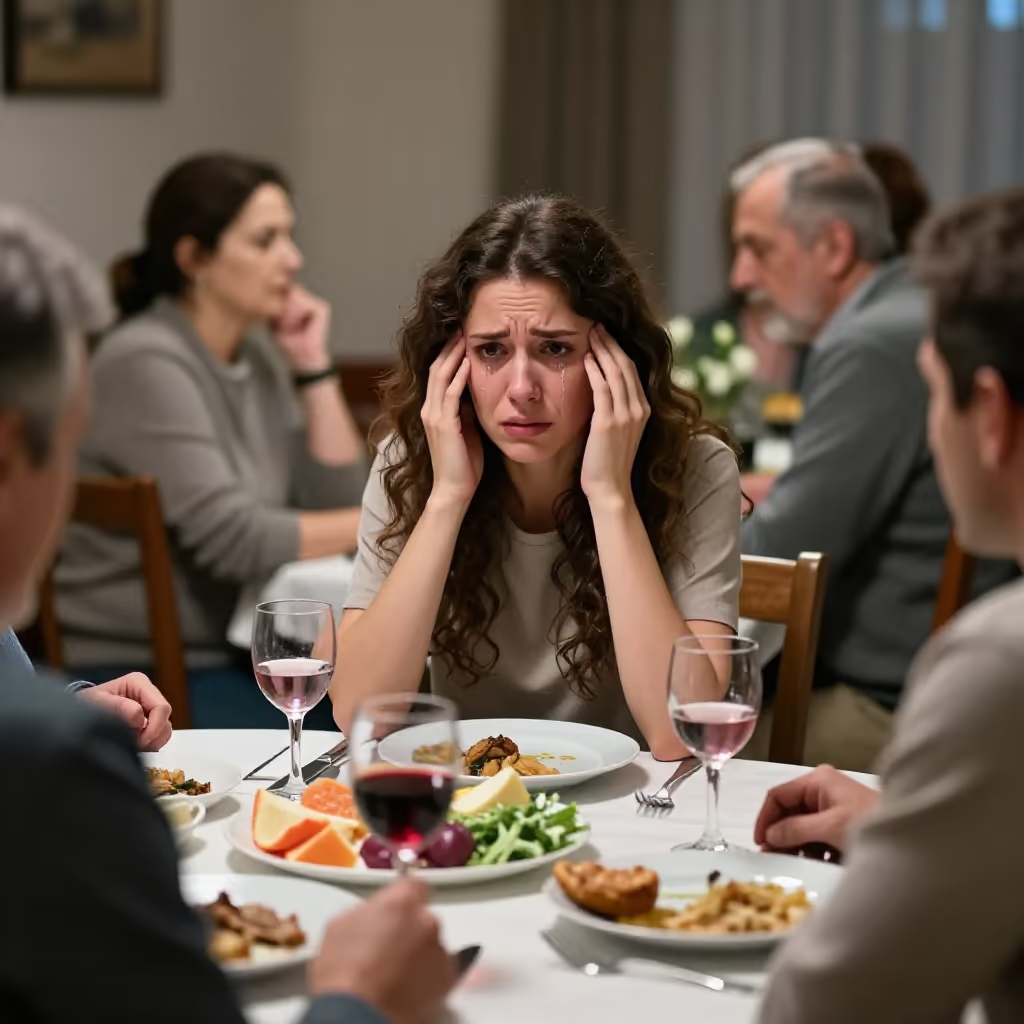
Seine bewusst abwertende Bemerkung war eine Beleidigung.
His deliberately disparaging remark was an insult.
Seine abwertende Bemerkung verursachte bei ihr eine tiefe Verletzung.
His disparaging remark caused her deep emotional pain.