

die Viper
viper
A venomous snake from the viper family.
EXAMPLE
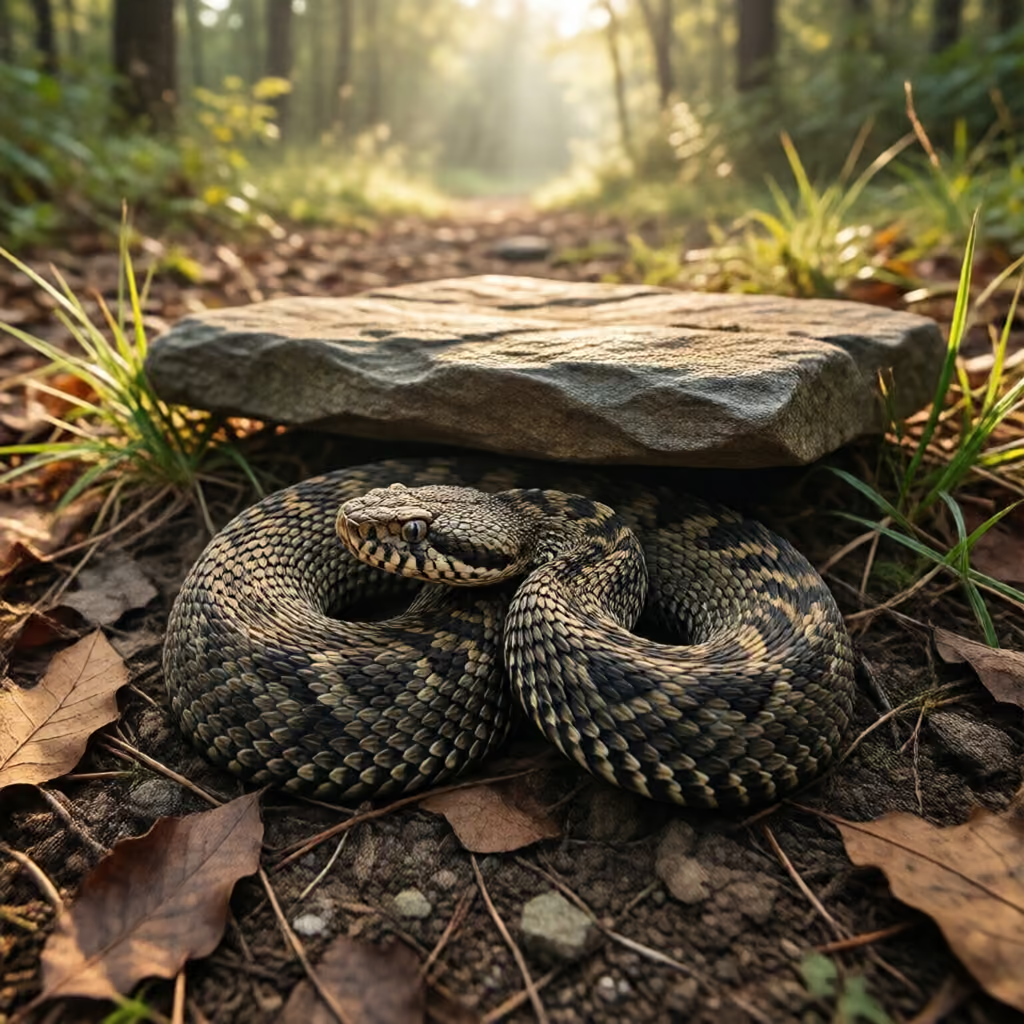
Die Viper lag zusammengerollt unter einem Stein.
The viper lay coiled beneath a stone.
viper
die Viper, die Vipern
Loading your saved state.
viper
A venomous snake from the viper family.
Die Viper lag zusammengerollt unter einem Stein.
The viper lay coiled beneath a stone.
| gender | feminine die |
|---|---|
| plural | die Vipern |
| genitive | der Viper |
| singular | plural | |
|---|---|---|
| nominative | die Viper | die Vipern |
| accusative | die Viper | die Vipern |
| dative | der Viper | den Vipern |
| genitive | der Viper | der Vipern |
The article changes with the case; it is shown in colour.
“Viper” is often used with adjectives such as “giftig” (venomous) or “gefährlich” (dangerous). “Viperngift” (viper venom) and “Vipernbiss” (viper bite) are also common compounds associated with this snake.
Die Forscher untersuchten eine besonders giftige Viper.
The researchers studied a particularly venomous viper.
Der Vipernbiss musste sofort medizinisch behandelt werden.
The viper bite had to be treated medically immediately.
In reports about animals and nature, “Viper” is often used with verbs related to seeing and observing. Typical patterns include discovering, observing, or photographing a viper.
Wanderer entdeckten eine Viper am Rand des Weges.
Hikers discovered a viper at the side of the trail.
Words such as “Reptil” (reptile), “Schlangengift” (snake venom), “Biss” (bite), “Zunge” (tongue), and “Lebensraum” (habitat) often occur around “Viper”, especially in informational texts about animals.
Im Informationszentrum erfuhren wir viel über den Lebensraum der Viper.
At the information center, we learned a lot about the viper’s habitat.