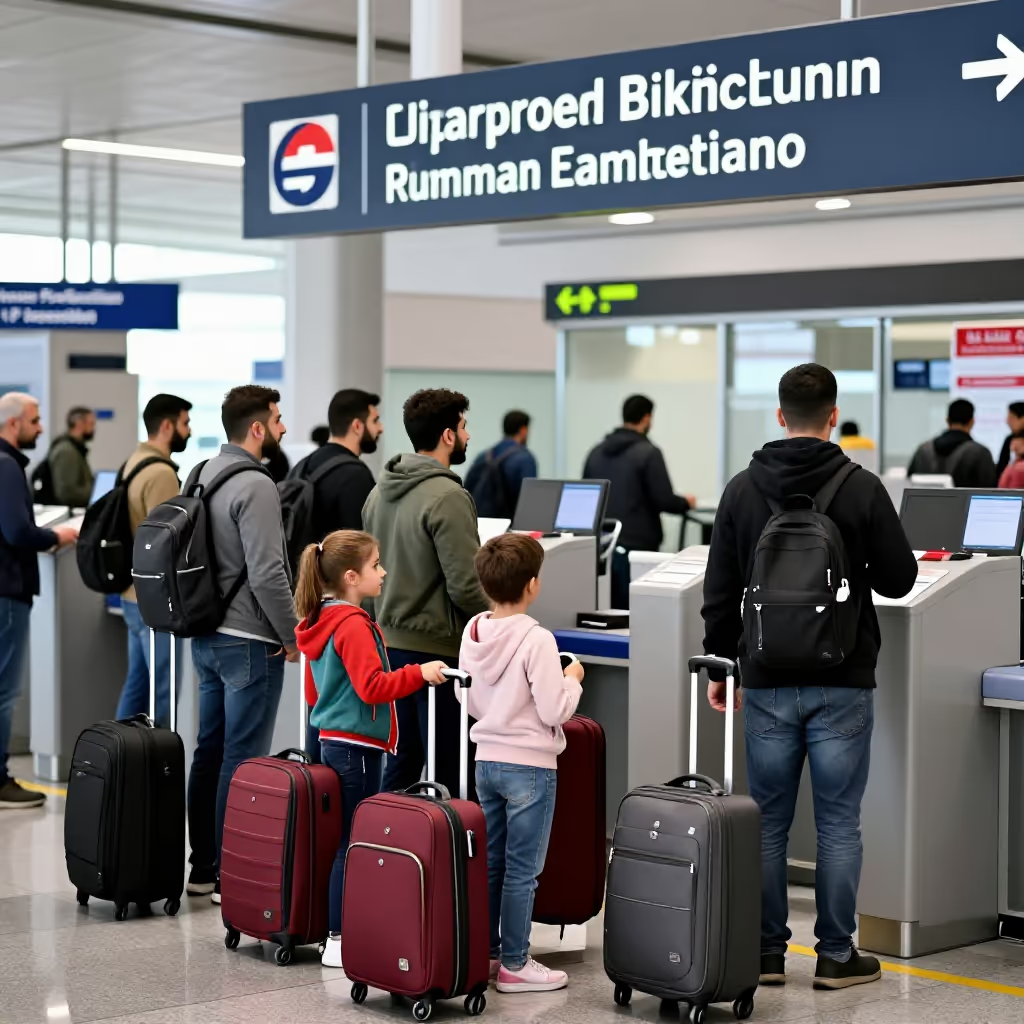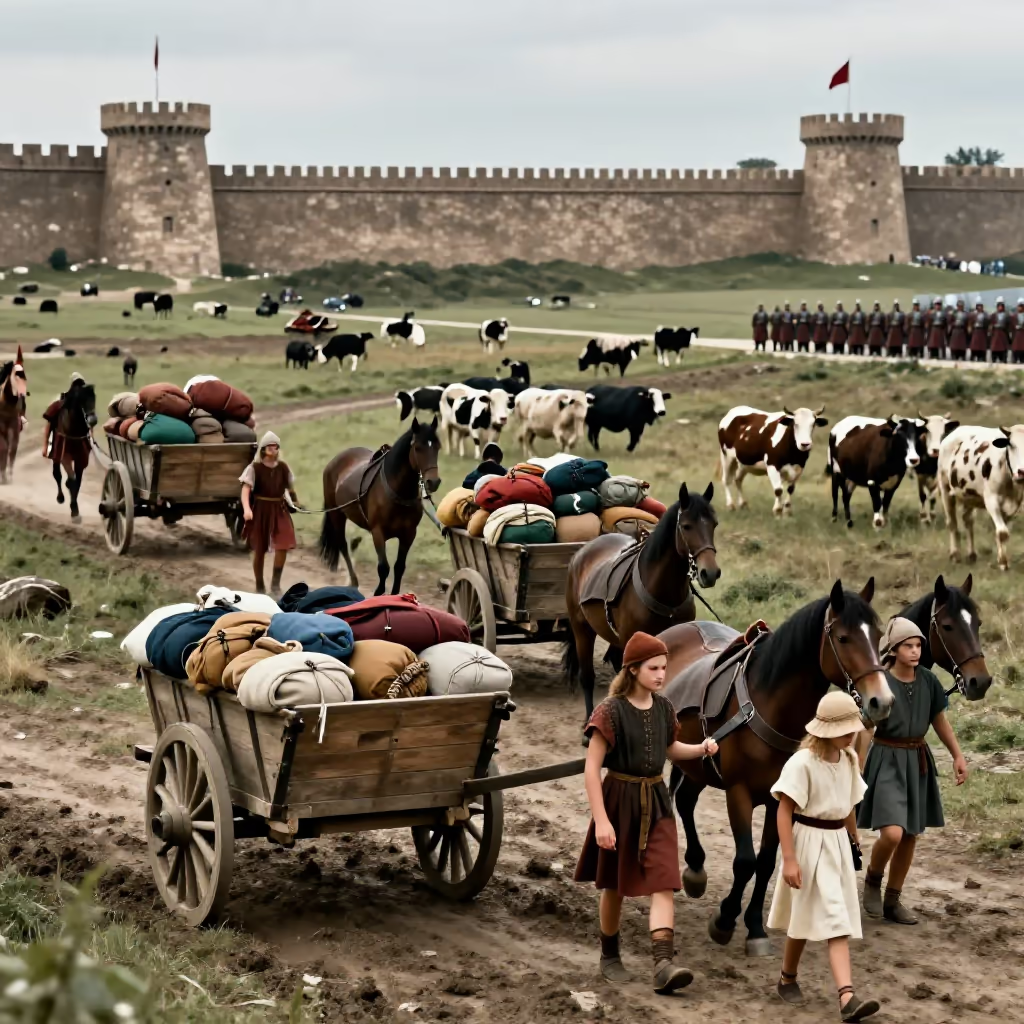
Refers to the historical period of migratory movements by Germanic and other peoples in Europe from the late 4th to the 6th century, which contributed significantly to the fall of the Western Roman Empire.
example
Im Geschichtsunterricht haben wir über die Ursachen und Folgen der Völkerwanderung gesprochen.
In history class, we talked about the causes and consequences of the Migration Period.
Usage tips
Compound word
The word consists of 'Völker', the plural of 'das Volk' (people/nation), and 'Wanderung' (migration/hike). So it literally describes a wandering or migration of peoples.
EXAMPLE
Die Völkerwanderung führte zu großen Veränderungen in der europäischen Bevölkerung.
The Migration Period led to major changes in the European population.
Historical term
In its main meaning, 'die Völkerwanderung' (the Migration Period) is a fixed historical term that refers to a specific era in Late Antiquity. In texts, it is often treated like a proper name.
EXAMPLE
Die Völkerwanderung gilt als eine Übergangszeit zwischen Antike und Mittelalter.
The Migration Period is considered a transitional period between antiquity and the Middle Ages.
Context clue
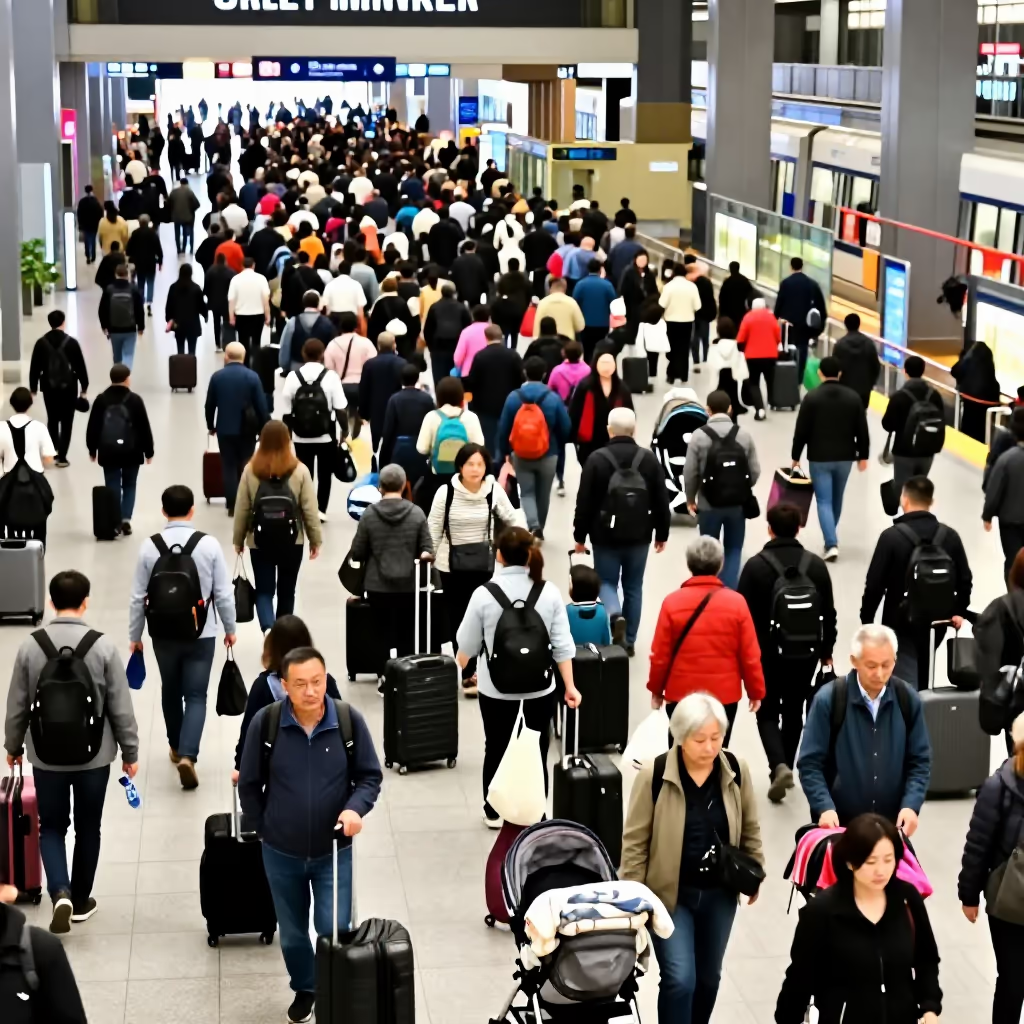
You can recognize the figurative meaning from the context. If it is not about history, but about large crowds in everyday life (e.g., after a soccer game, during rush hour), the figurative meaning is intended.
EXAMPLE
Jeden Morgen um acht Uhr beginnt die tägliche Völkerwanderung zur Arbeit.
Every morning at eight o'clock, the daily mass migration to work begins.
Figurative use
In the figurative meaning, the word is often used with slight exaggeration or humor. It frequently appears with adjectives such as 'eine wahre' (a true/real) or 'eine regelrechte' (an outright) Völkerwanderung.
EXAMPLE
Am ersten warmen Wochenende des Jahres gab es eine wahre Völkerwanderung an die Seen.
On the first warm weekend of the year, there was a real mass migration to the lakes.
Compare with
near_synonym · confusable
Völkerwanderung vs Migration
migration
'die Migration' and 'die Völkerwanderung' can both describe large movements of people. 'Migration' is the normal, general term for moving away or immigrating long-term. 'Völkerwanderung' is used especially for a specific historical period in Europe, the Migration Period. The word can also be used figuratively for a very large migratory movement. The words are easy to confuse because both have to do with people changing where they live. For current social or political topics, 'Migration' is usually more natural. 'Völkerwanderung' is more suitable in history class, or when you want to describe a movement as very large and vivid.
Völkerwanderung
Im Geschichtsunterricht lernen wir, welche Folgen die Völkerwanderung für Europa hatte.
In history class, we learn what consequences the Migration Period had for Europe.
Migration
Viele Städte planen neue Angebote, weil Migration ihren Alltag verändert.
Many cities are planning new services because migration is changing everyday life there.