

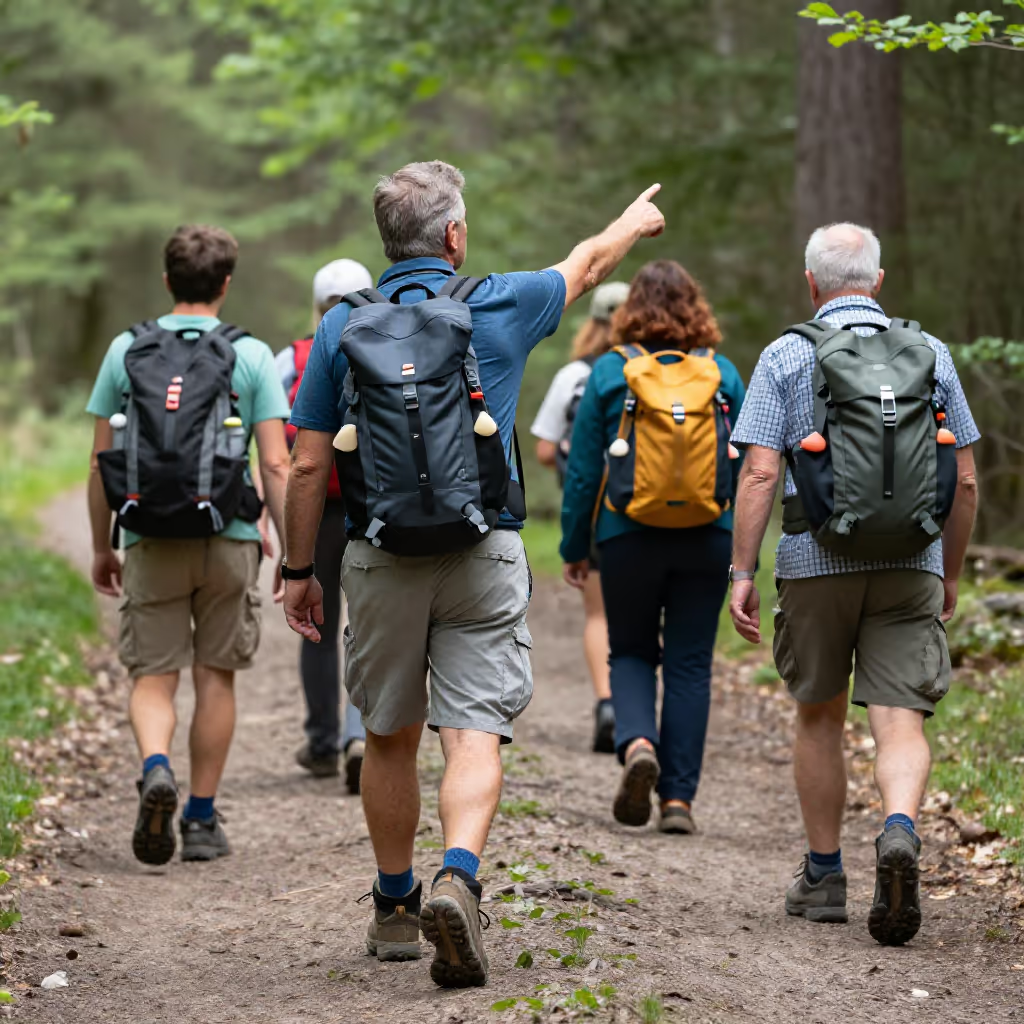
vorausgehen
to go ahead
To walk or drive ahead of someone or something else in a spatial sense.
EXAMPLE
Gehen Sie nur voraus, ich kenne den Weg und folge Ihnen.
Go ahead, I know the way and will follow you.
to precede / go ahead
Loading your saved state.
to go ahead
To walk or drive ahead of someone or something else in a spatial sense.
Gehen Sie nur voraus, ich kenne den Weg und folge Ihnen.
Go ahead, I know the way and will follow you.

to precede
To take place or happen before another event in time.
Dem Streit war eine lange Phase der Unzufriedenheit vorausgegangen.
The argument had been preceded by a long period of dissatisfaction.
'Vorausgehen' (to precede / go ahead) is a separable verb. In a main clause, the prefix 'voraus' (ahead / in advance) comes at the end. In subordinate clauses and in the infinitive with 'zu', the verb stays together.
Der Guide ging der Gruppe im Museum voraus.
The guide went ahead of the group in the museum.
The verb is made up of the directional particle 'voraus' (ahead, in advance) and the verb 'gehen' (to go). This structure helps you understand both the spatial and the temporal meaning: something goes or happens before something else.
Bitte geh schon mal voraus und reserviere einen Tisch.
Please go ahead and reserve a table.
The perfect tense of 'vorausgehen' (to precede / go ahead) is always formed with the auxiliary verb 'sein' (to be), since it describes a movement or a process. This applies to both the spatial and the temporal meaning.
Er ist uns vorausgegangen, um den Weg zu prüfen.
He went ahead of us to check the route.
In the temporal meaning, the event that takes place later is in the dative. The sentence structure is often: subject (what happens beforehand) + verb + dative object (what happens afterward).
Dem Finale ging ein spannendes Halbfinale voraus.
The final was preceded by an exciting semifinal.
to go ahead / progress / happen
Vorausgehen and vorangehen can both mean that someone walks physically ahead of others. Vorausgehen mainly describes this position, while vorangehen can also emphasize leading or guiding a group. Use vorausgehen for a neutral sequence and vorangehen when the person is more clearly leading from the front.
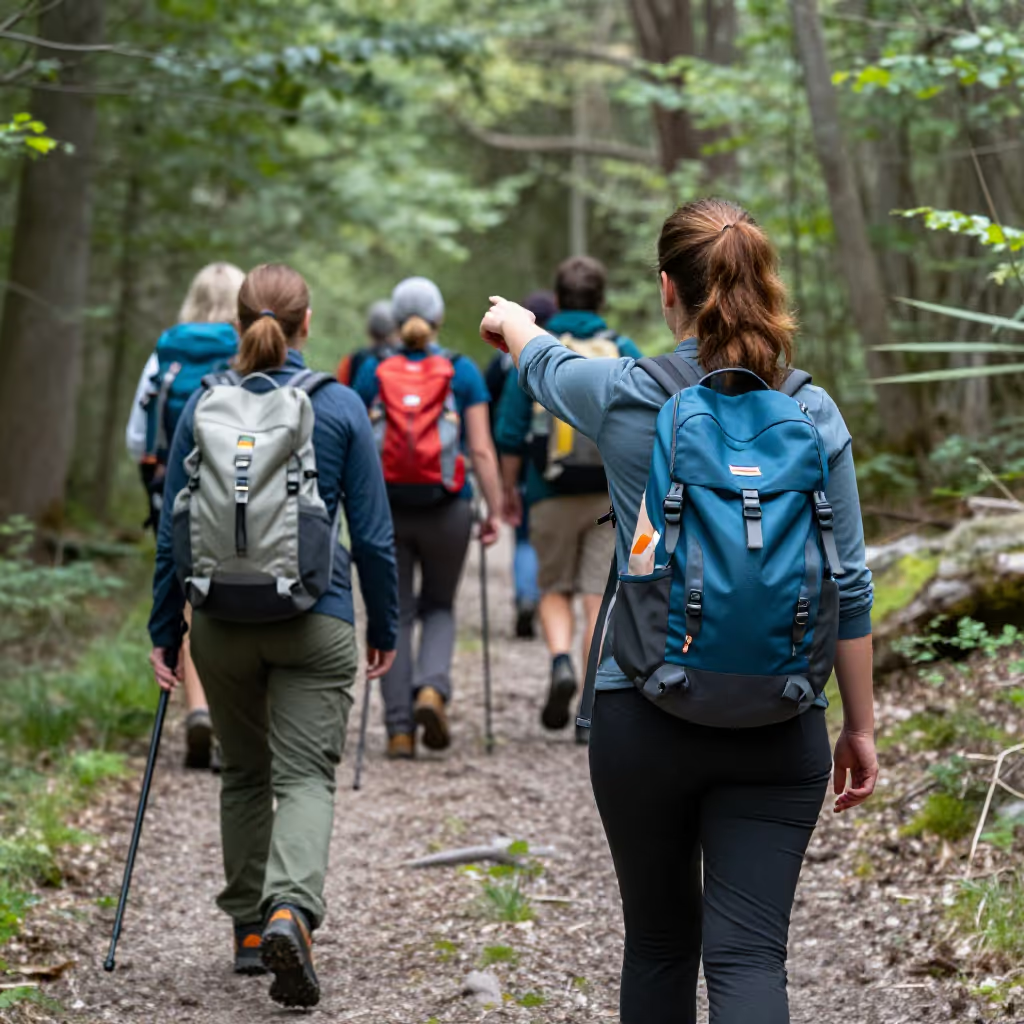
Der Sicherheitsmann ging der Gruppe voraus und prüfte den Weg.
The security guard went ahead of the group and checked the route.
Die erfahrene Bergführerin ging der Gruppe voran und bestimmte das Tempo.
The experienced mountain guide led the group and set the pace.