

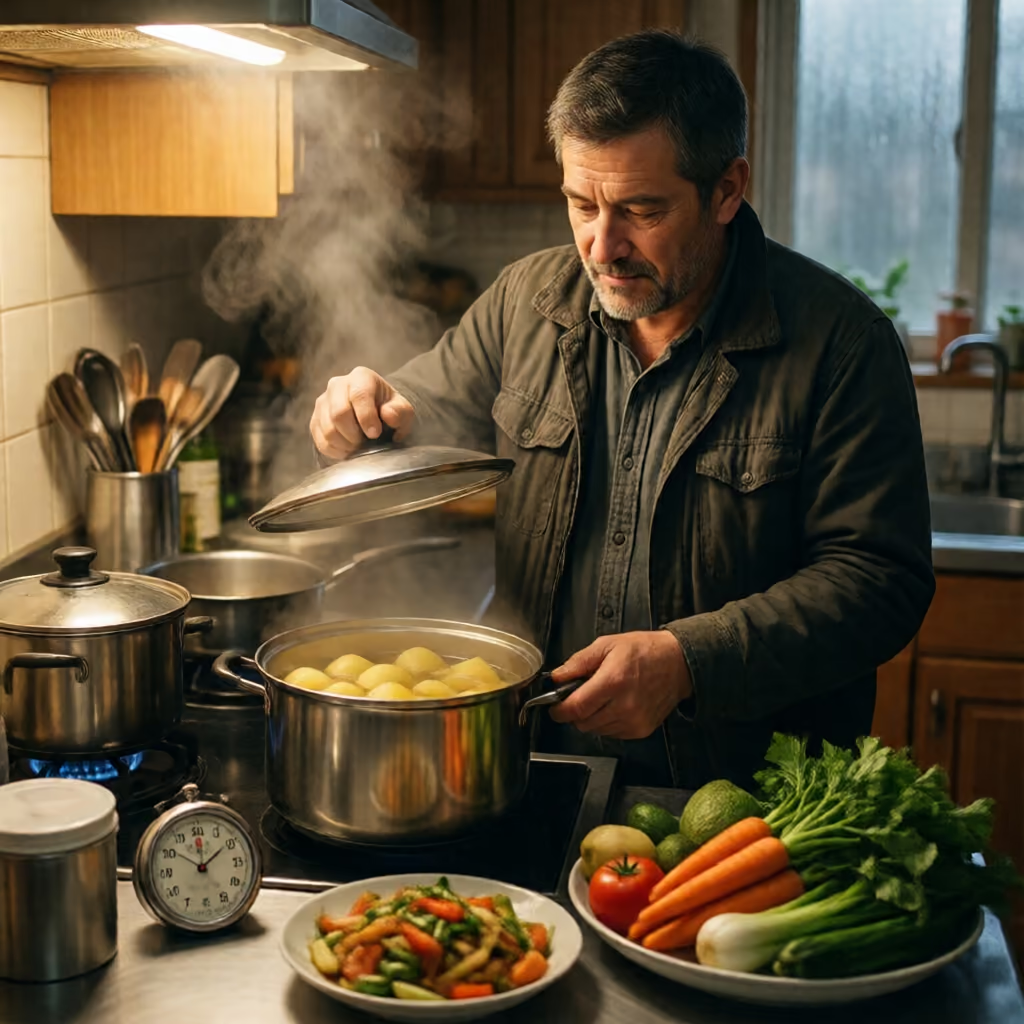
vorkochen
to cook in advance
To cook food partially or fully before it is prepared further or eaten later.
Ich koche die Kartoffeln vor, damit das Abendessen schneller fertig ist.
I cook the potatoes in advance so that dinner is ready sooner.
to cook in advance
vorkochen – kochte vor – hat vorgekocht
Loading your saved state.

to cook in advance
To cook food partially or fully before it is prepared further or eaten later.
Ich koche die Kartoffeln vor, damit das Abendessen schneller fertig ist.
I cook the potatoes in advance so that dinner is ready sooner.
| ich | koche vor |
|---|---|
| du | kochst vor |
| er/sie/es | kocht vor |
| wir | kochen vor |
| ihr | kocht vor |
| sie | kochen vor |
| ich | kochte vor |
|---|---|
| du | kochtest vor |
| er/sie/es | kochte vor |
| wir | kochten vor |
| ihr | kochtet vor |
| sie | kochten vor |
| ich | habe vorgekocht |
|---|---|
| du | hast vorgekocht |
| er/sie/es | hat vorgekocht |
| wir | haben vorgekocht |
| ihr | habt vorgekocht |
| sie | haben vorgekocht |
| du | koch vor! koche vor! |
|---|---|
| ihr | kocht vor! |
| Sie | kochen Sie vor! |
| ich | hatte vorgekocht |
|---|---|
| du | hattest vorgekocht |
| er/sie/es | hatte vorgekocht |
| wir | hatten vorgekocht |
| ihr | hattet vorgekocht |
| sie | hatten vorgekocht |
| ich | werde vorkochen |
|---|---|
| du | wirst vorkochen |
| er/sie/es | wird vorkochen |
| wir | werden vorkochen |
| ihr | werdet vorkochen |
| sie | werden vorkochen |
| ich | koche vor |
|---|---|
| du | kochest vor |
| er/sie/es | koche vor |
| wir | kochen vor |
| ihr | kochet vor |
| sie | kochen vor |
Used for reported speech.
| ich | kochte vor |
|---|---|
| du | kochtest vor |
| er/sie/es | kochte vor |
| wir | kochten vor |
| ihr | kochtet vor |
| sie | kochten vor |
Used for wishes and “would”.
| infinitive | vorkochen |
|---|---|
| with zu | vorzukochen |
| present participle | vorkochend |
| past participle | vorgekocht |
'Vorkochen' (to cook in advance) consists of 'vor-' and 'kochen' (to cook); here, 'vor-' indicates preparation ahead of time. In a main clause, 'vor' separates from the verb; in a subordinate clause with the verb at the end, the verb stays together. In the infinitive with 'zu', 'zu' goes between 'vor' and 'kochen'.
Am Sonntag koche ich das Mittagessen für Montag vor.
On Sunday, I cook Monday's lunch in advance.
Unter der Woche spare ich Zeit, weil ich sonntags vorkoche.
I save time during the week because I cook in advance on Sundays.
Ich habe vor, nächste Woche öfter vorzukochen.
I plan to cook in advance more often next week.
You can use 'für' (for) plus the accusative to specify the future period or occasion you are cooking in advance for. You do not have to name the dish.
Heute koche ich für die nächsten drei Tage vor.
Today, I'm cooking in advance for the next three days.
Common phrases include 'auf Vorrat vorkochen' (to cook in advance to have food in reserve) and 'in größeren Mengen vorkochen' (to cook in advance in larger quantities). They are particularly useful when planning several meals.
Wir kochen Suppen in größeren Mengen vor und frieren einen Teil ein.
We cook soups in advance in larger quantities and freeze some of them.