


der Vormittag
morning
The time of day between early morning and noon, roughly from 9 a.m. to 12 p.m.
EXAMPLE
Ich habe am Vormittag einen wichtigen Termin beim Zahnarzt.
I have an important dentist appointment in the morning.
morning
Loading your saved state.
morning
The time of day between early morning and noon, roughly from 9 a.m. to 12 p.m.
Ich habe am Vormittag einen wichtigen Termin beim Zahnarzt.
I have an important dentist appointment in the morning.
The word is structured very logically: it consists of 'vor' (before) and 'Mittag' (noon). So it simply describes the time before noon.
Lass uns die Besprechung auf den Vormittag legen.
Let's schedule the meeting for the morning.
To indicate a point in time, you use 'am Vormittag' (in the morning). To describe a regular action, you use the adverb 'vormittags' (in the mornings), written with a lowercase letter.
Ich gehe am Vormittag einkaufen.
I go shopping in the morning.
'Vormittag' (morning) is often combined with adverbs such as 'heute' (today), 'gestern' (yesterday), or 'morgen' (tomorrow) to specify the time more precisely.
Morgen Vormittag habe ich leider keine Zeit.
Unfortunately, I don't have time tomorrow morning.
morning
“Der Morgen” refers to the first part of the day up to noon and can also include the early hours. “Der Vormittag” refers more specifically to the time between morning and noon, roughly from nine to twelve. For a precise time before noon, “Vormittag” is therefore often suitable, while “Morgen” has a broader meaning.
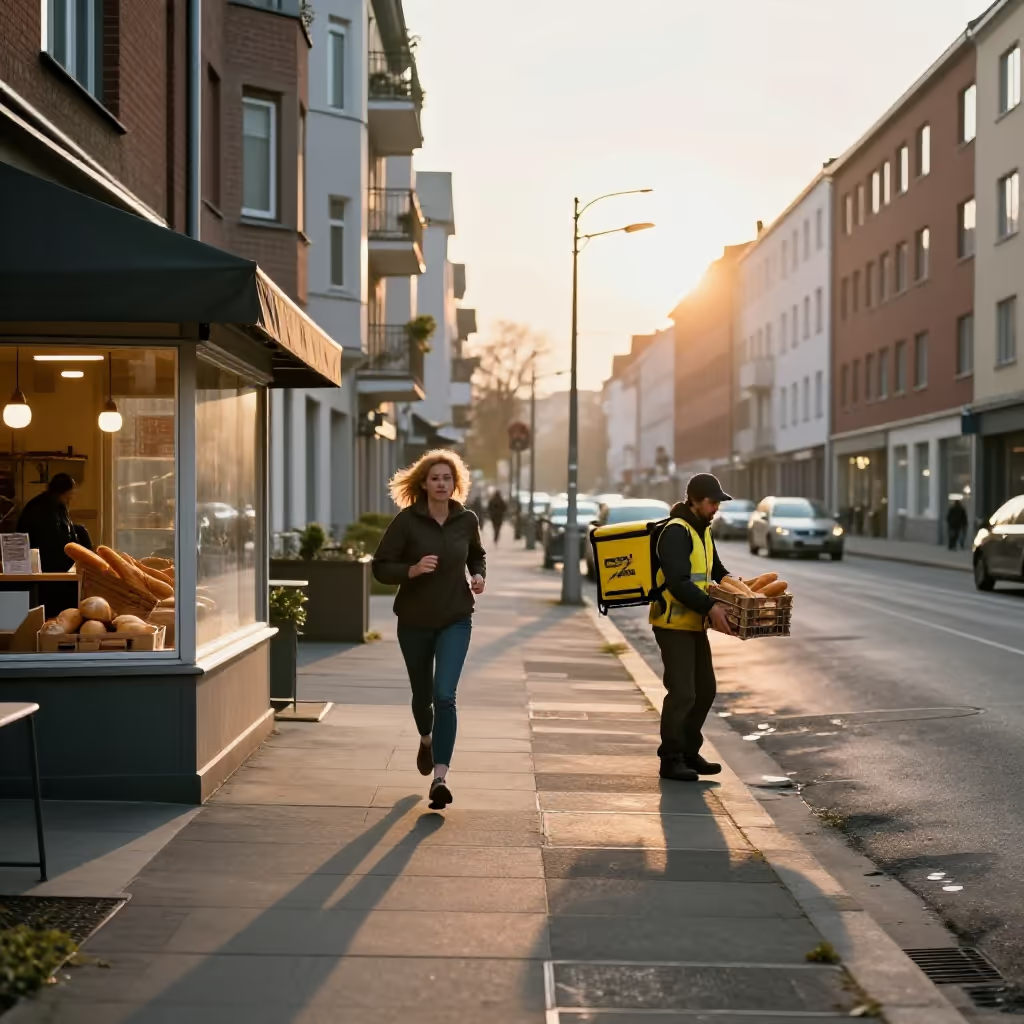
Der Termin ist am Vormittag um zehn Uhr.
The appointment is at ten in the morning.
Der Termin ist am Morgen um zehn Uhr.
The appointment is at ten in the morning.