

vorn
at the front
At the front side or at the beginning of something.
EXAMPLE
Im Kino sitze ich am liebsten nicht ganz vorn.
At the cinema, I prefer not to sit right at the front.
front
Loading your saved state.
at the front
At the front side or at the beginning of something.
Im Kino sitze ich am liebsten nicht ganz vorn.
At the cinema, I prefer not to sit right at the front.

from the beginning
Once again from the start.
Diese Lösung funktioniert nicht, wir müssen noch einmal von vorn anfangen.
This solution doesn't work; we have to start again from the beginning.

forward
Toward the front; looking toward the future.
Trotz der Niederlage blickt die Mannschaft optimistisch nach vorn.
Despite the defeat, the team is looking forward optimistically.
The adverb 'vorn' (at the front) belongs to the word family of 'vor' (before/in front of). It describes a position at the front side or at the beginning of something and helps you understand where the meaning comes from.
Bitte stellen Sie sich in der Schlange ganz vorn an.
Please stand right at the front of the line.
'Vorn' (at the front) describes a static position (question: Where?). For movement toward the front (question: Where to?), you use the combination 'nach vorn' (forward).
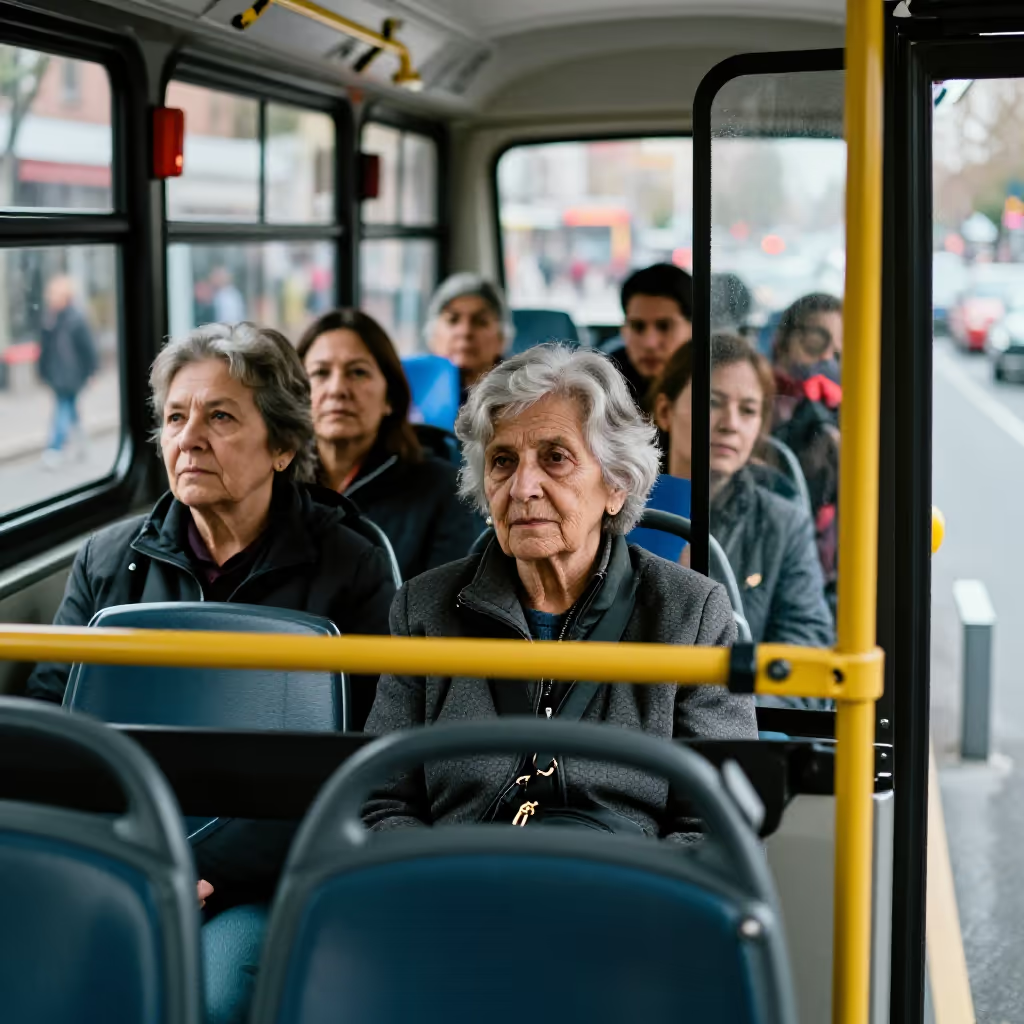
Er sitzt im Bus immer vorn.
He always sits at the front of the bus.
The phrase 'von vorn' (from the beginning) is often combined with verbs such as 'anfangen' (to start), 'beginnen' (to begin), or 'erzählen' (to tell). It means that an action is started completely anew.
Ich habe den Faden verloren, ich muss die Geschichte noch einmal von vorn erzählen.
I lost my train of thought; I have to tell the story again from the beginning.
The combination 'nach vorn' (forward) is often used figuratively and then means 'into the future'. Typical phrases are 'nach vorn schauen' or 'nach vorn blicken' (to look ahead/forward).
Nach der schwierigen Zeit möchte sie jetzt nur noch nach vorn schauen.
After the difficult time, she now just wants to look forward.
before / in front of
Vor and vorn can express a position in the front area. Vor normally names a reference point, such as “vor dem Bus” (in front of the bus), while vorn refers to the front side or front area without such an addition. Use vor with a reference point and vorn for the general position.

Bitte stell dich vorn an den Bus.
Please stand at the front by the bus.
Bitte stell dich vor den Bus.
Please stand in front of the bus.