

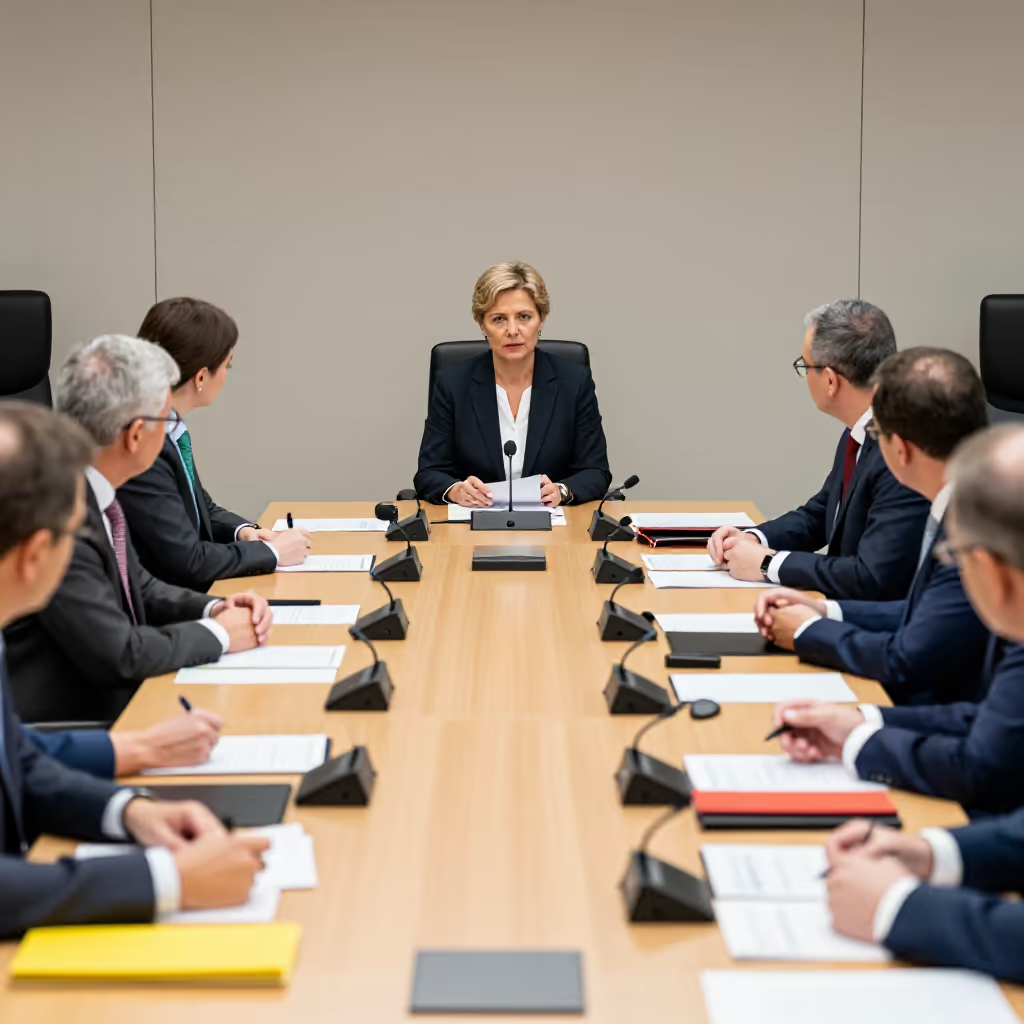
der Vorsitz
chairmanship
The position or function of leading a meeting, committee, party, or association.
EXAMPLE
Wer hat heute den Vorsitz bei der Konferenz?
Who is chairing the conference today?
chairmanship
Loading your saved state.
chairmanship
The position or function of leading a meeting, committee, party, or association.
Wer hat heute den Vorsitz bei der Konferenz?
Who is chairing the conference today?

to chair
To actively perform the leadership role in a meeting or organization. Synonymous with 'den Vorsitz haben' (to hold the chairmanship) or 'den Vorsitz innehaben' (to hold the chairmanship).
Frau Dr. Merkel wird den Vorsitz der Kommission führen.
Dr. Merkel will chair the commission.
'Vorsitz' is made up of 'vor' (in front) and 'Sitz' (seat). So it literally describes the position of the person who sits at the front during a meeting and leads it.
Der Platz für den Vorsitz blieb heute leer.
The chair's seat remained empty today.
'Vorsitz' is combined with certain verbs to describe the leadership function. The most common are 'den Vorsitz haben' (to hold the chairmanship), 'den Vorsitz führen' (to chair), and 'den Vorsitz übernehmen' (to take over the chairmanship).
Professor Schmidt hat den Vorsitz im Prüfungsausschuss.
Professor Schmidt chairs the examination committee.
In formal contexts such as minutes or reports, the phrase 'unter dem Vorsitz von' (under the chairmanship of) is often used to name the person leading the meeting.
Die Sitzung fand unter dem Vorsitz von Frau Meier statt.
The meeting took place under the chairmanship of Ms. Meier.
The person who holds the chairmanship is called 'der/die Vorsitzende' (the chairperson). This word is derived directly from 'Vorsitz' (chairmanship).
Die Vorsitzende eröffnete die Versammlung um 10 Uhr.
The chairperson opened the meeting at 10 o'clock.
leadership / tour / lead
Führung and Vorsitz can both be associated with leading a party. Vorsitz primarily refers to the formal office, while Führung refers more to the actual exercise of influence and control. Vorsitz is appropriate for the official function; when the political direction and influence are at issue, Führung is appropriate.

Nach der Wahl übernahm sie den Vorsitz der Partei.
After the election, she assumed the chairmanship of the party.
Auch ohne den Vorsitz zu haben, behielt er die Führung der Partei.
Even without holding the chairmanship, he retained leadership of the party.