

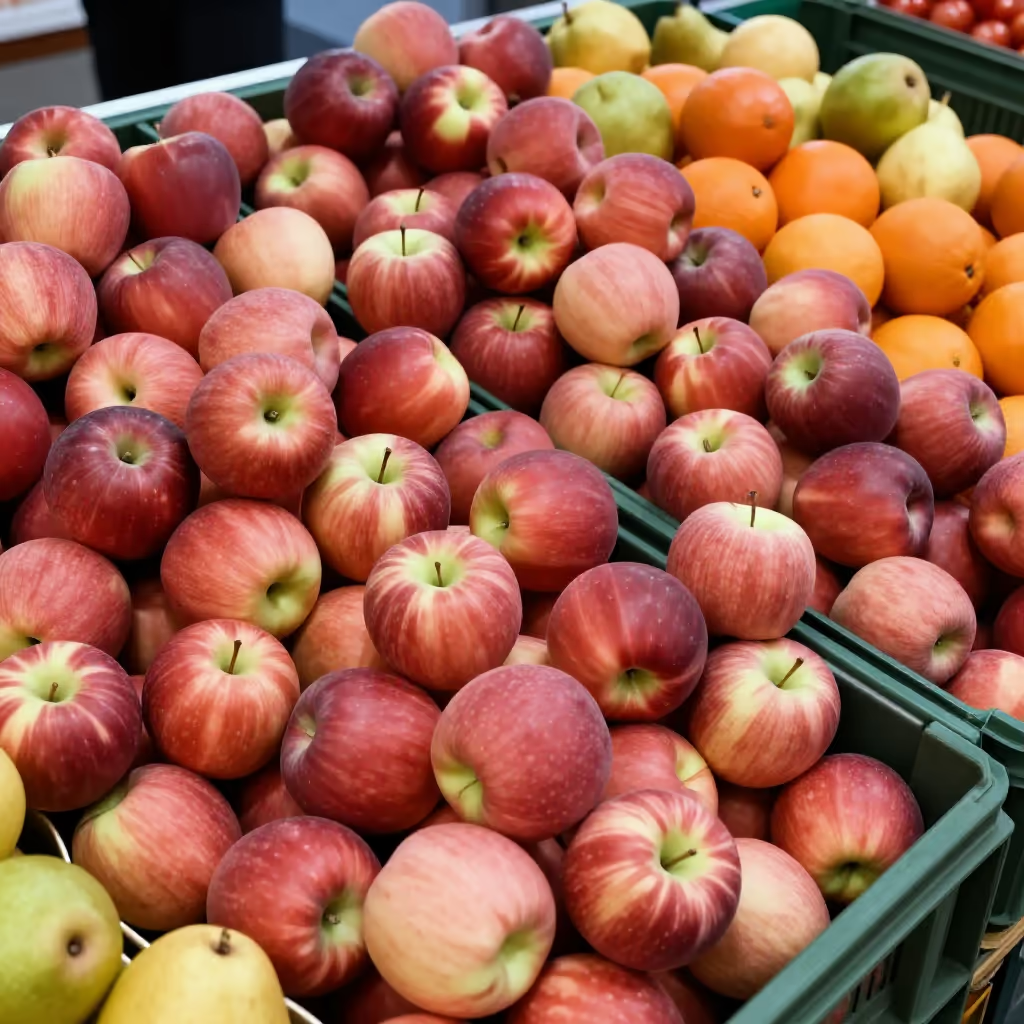
Expresses that something applies mainly, for the most part, or in the majority of cases. Synonyms are 'überwiegend' (predominantly) or 'hauptsächlich' (mainly).
example
In dieser Region wird vorwiegend Wein angebaut.
In this region, mainly wine is grown.

Usage tips
Word structure
The word consists of 'vor' and 'wiegend' (from 'wiegen', to weigh). So it literally describes something that 'weighs more' than other parts or aspects and therefore dominates.
EXAMPLE
Die Vorteile dieser Methode wiegen vor.
The advantages of this method prevail.
Adverbial use
'Vorwiegend' (mainly) is almost always used as an adverb and is not declined before a noun. It usually appears in the middle of a sentence and describes how or to what extent something happens.
EXAMPLE
Wir haben im Urlaub vorwiegend am Strand gelegen.
On vacation, we mainly lay on the beach.
Register: written language
'Vorwiegend' (mainly) belongs more to written language and is often used in reports, news, or factual descriptions to present facts.
EXAMPLE
Die Wirtschaft des Landes basiert vorwiegend auf dem Tourismus.
The country's economy is based mainly on tourism.
Compare with
confusable
vorwiegend vs ausschließlich
exclusively
'ausschließlich' and 'vorwiegend' both limit a statement, but they do so to different degrees. 'ausschließlich' means that truly only the thing mentioned applies, and nothing else is included. 'vorwiegend' means that something mainly applies, but other things are still possible. Learners may confuse the words because both seem like a restriction. The difference is important: 'ausschließlich' is one hundred percent; 'vorwiegend' is only the largest part.
vorwiegend
In dieser Gegend wohnen vorwiegend Familien mit kleinen Kindern.
In this area, mainly families with small children live.
ausschließlich
Frau Schneider nimmt heute ausschließlich Termine mit vorheriger Anmeldung an.
Today, Ms. Schneider is only accepting appointments with prior registration.