

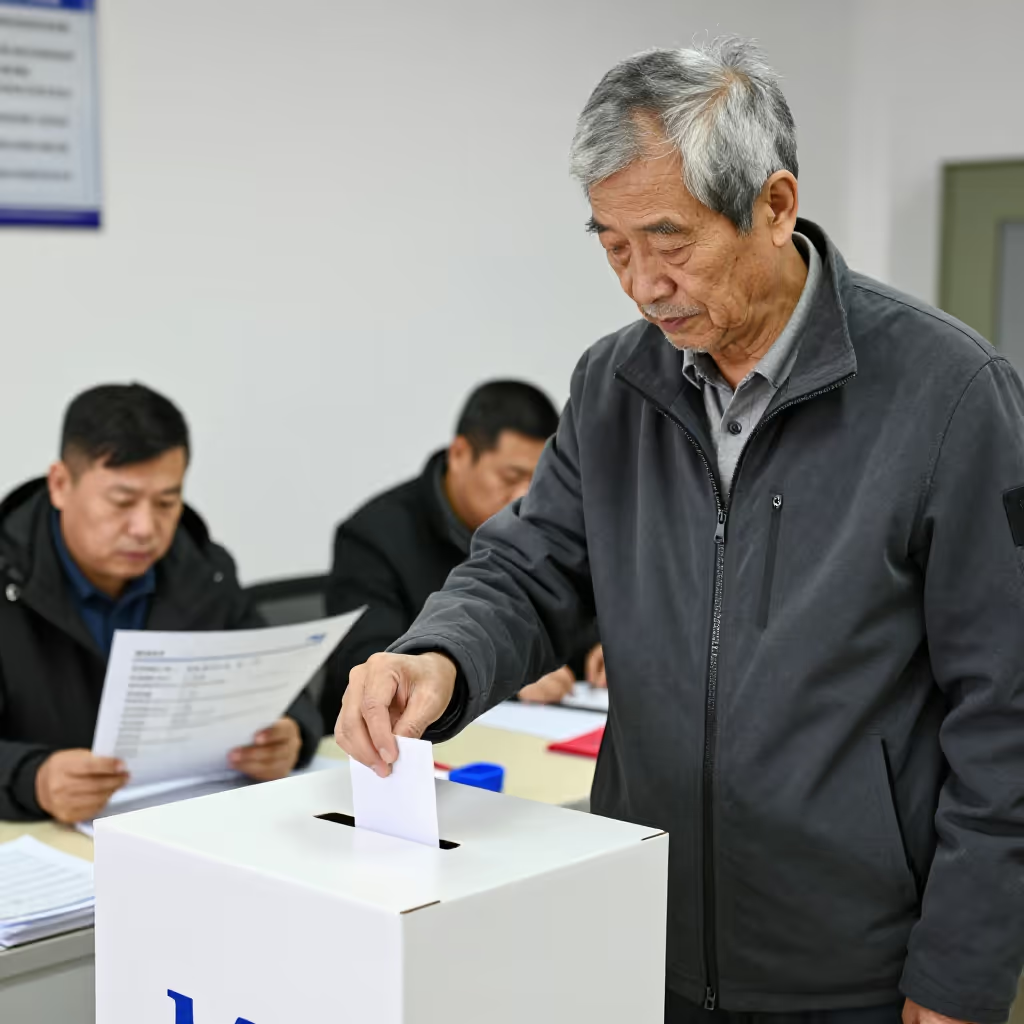
der Wähler
voter
A person who is entitled to cast their vote in a political election and may also do so.
EXAMPLE
Die Politiker versuchen, die unentschlossenen Wähler zu überzeugen.
The politicians are trying to convince undecided voters.
voter
Loading your saved state.
voter
A person who is entitled to cast their vote in a political election and may also do so.
Die Politiker versuchen, die unentschlossenen Wähler zu überzeugen.
The politicians are trying to convince undecided voters.
'Der Wähler' (the voter) is derived from the verb 'wählen' (to vote/choose). The ending '-er' here refers to the person who performs the action of voting.
Jeder, der wählt, ist ein Wähler.
Everyone who votes is a voter.
'Wähler' belongs to the N-declension. This means it gets the ending '-n' in the genitive, dative, and accusative singular, as well as throughout the plural. Only in the nominative singular does it remain without '-n'.
Die Partei will die Wähler überzeugen.
The party wants to convince the voters.
In a political context, 'Wähler' is often used with certain adjectives or in fixed phrases, for example 'unentschlossene Wähler' (undecided voters), 'Stammwähler' (core voters), or 'die Gunst der Wähler gewinnen' (to win the voters' favor).
Besonders die jungen Wähler sind für die Partei wichtig.
Young voters in particular are important for the party.
eligible voter
Wähler and Wahlberechtigter can refer to the same person. Wahlberechtigter emphasizes exclusively that the person has the legal right to take part in the election. Wähler refers to the person in connection with casting a vote, without necessarily making clear that they will actually go and vote.
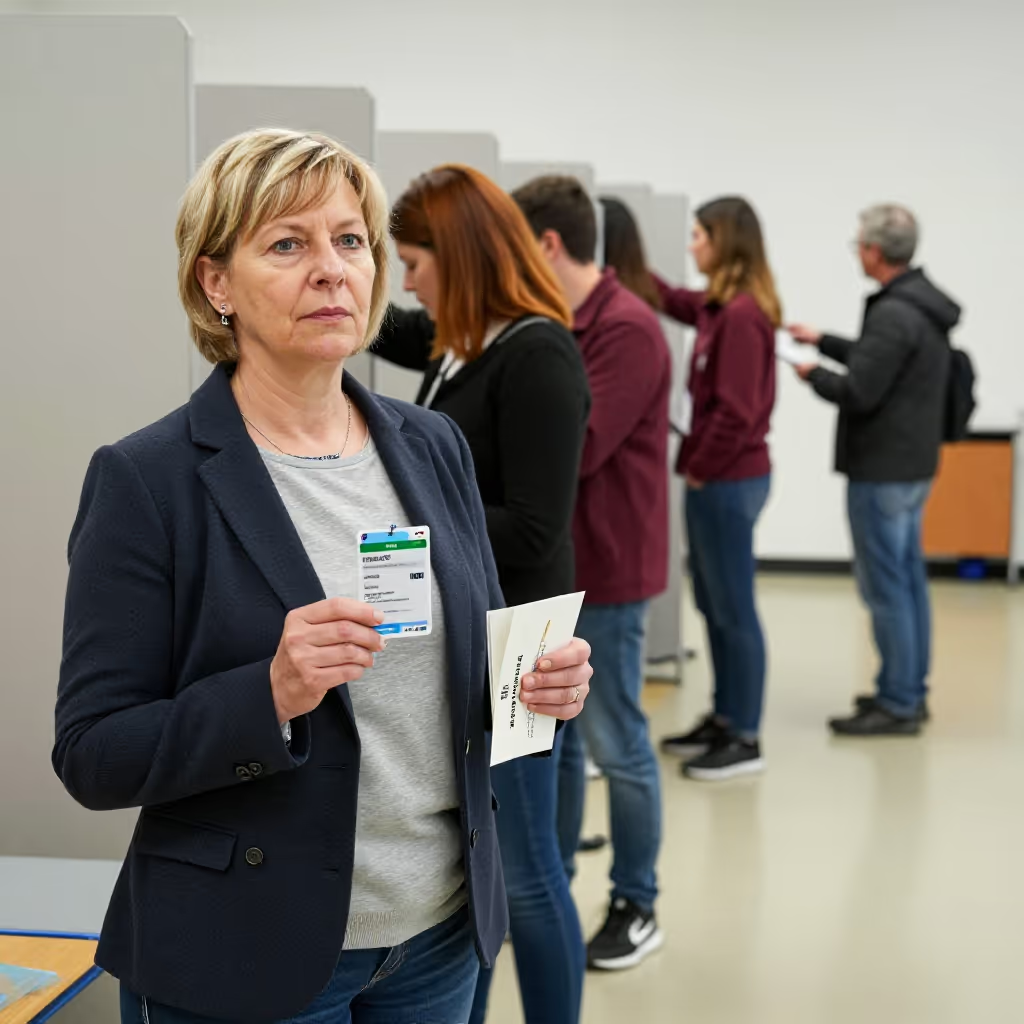
Als Wähler kann Paul am Sonntag seine Stimme abgeben.
As a voter, Paul can cast his ballot on Sunday.
Als Wahlberechtigter darf Paul am Sonntag seine Stimme abgeben.
As an eligible voter, Paul is allowed to cast his ballot on Sunday.