


sich wälzen
to roll around
To roll or turn one's body back and forth on a surface. This can happen because of restlessness, pain, or pleasure.
EXAMPLE
Das Pferd wälzte sich genüsslich im Sand.
The horse rolled around contentedly in the sand.
to roll / ponder / shift
Loading your saved state.
to roll around
To roll or turn one's body back and forth on a surface. This can happen because of restlessness, pain, or pleasure.
Das Pferd wälzte sich genüsslich im Sand.
The horse rolled around contentedly in the sand.
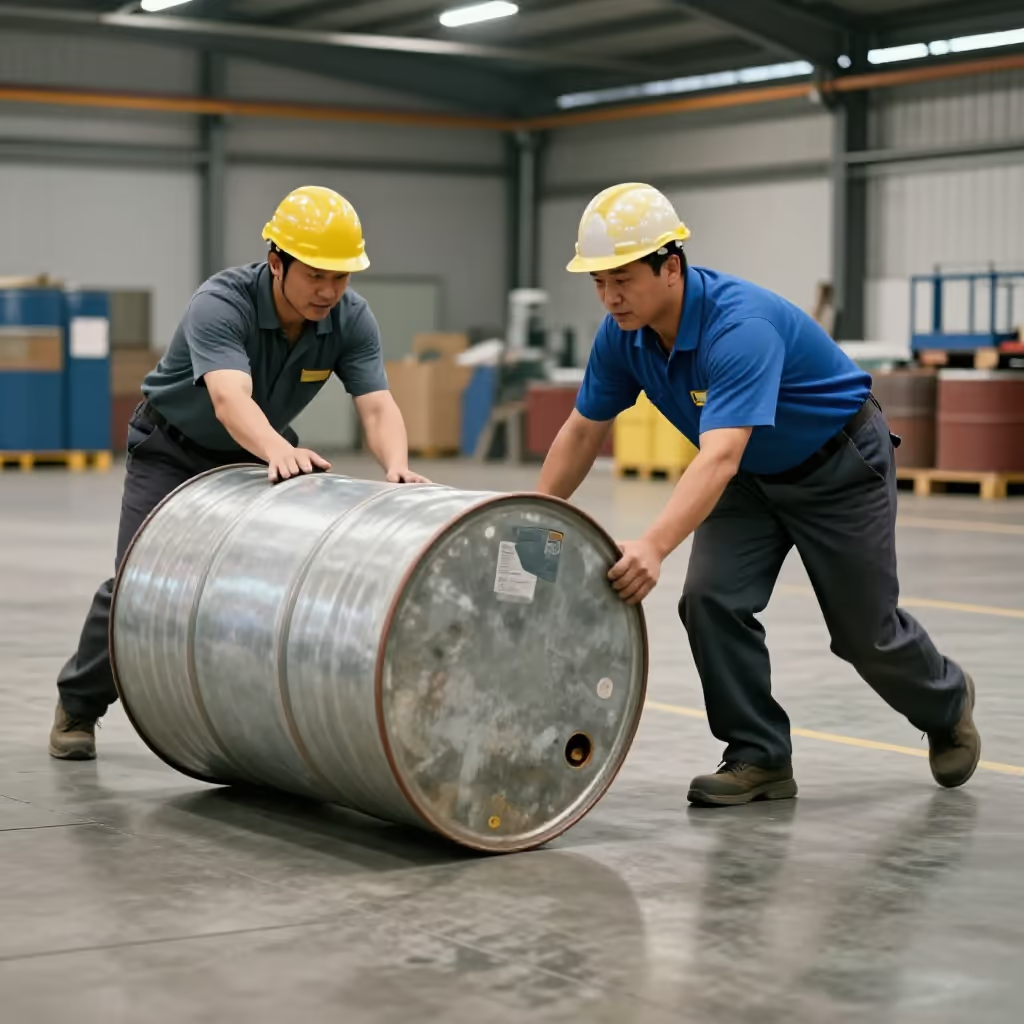
to roll
To move a heavy, usually round or cylindrical object by rolling it.
Die Arbeiter wälzten den schweren Baumstamm an den Rand des Weges.
The workers rolled the heavy tree trunk to the side of the path.

to ponder problems/thoughts
To think intensely and repeatedly about a problem or topic, often without arriving at a solution. It describes brooding, circular thinking.
Er lag die ganze Nacht wach und wälzte seine Sorgen.
He lay awake all night pondering his worries.

to shift onto
To transfer or pass off something unpleasant, such as responsibility, blame, or costs, onto someone else.
Das Unternehmen versucht, die gestiegenen Produktionskosten auf die Kunden abzuwälzen.
The company is trying to shift the increased production costs onto its customers.

to pore over books
Colloquial for the intensive study or reading of thick, often academic books.
Für ihre Doktorarbeit musste sie unzählige alte Bücher wälzen.
For her doctoral thesis, she had to pore over countless old books.
The basic idea of 'wälzen' is heavy, slow turning or rolling. This image connects all the meanings: the rolling of a body, of a tree trunk, or the mental 'rolling around' of problems.
Er wälzte den schweren Stein mühsam zur Seite.
He laboriously rolled the heavy stone to the side.
In the meaning 'to roll back and forth', the verb is always reflexive. The reflexive pronoun (sich, mich, dich, etc.) is a fixed part of the expression here.
Ich habe mich die ganze Nacht unruhig im Bett gewälzt.
I tossed and turned restlessly in bed all night.
In the figurative sense of thinking, 'wälzen' is almost always used with abstract nouns such as 'Probleme' (problems), 'Gedanken' (thoughts), or 'Sorgen' (worries) as the object.
Statt zu schlafen, wälzte sie stundenlang ihre Probleme.
Instead of sleeping, she pondered her problems for hours.
When responsibility or costs are transferred to someone else, the structure is 'etwas auf jemanden (Akkusativ) wälzen' (to shift something onto someone). The preposition 'auf' with the accusative is crucial here.
Der Chef wälzt die unangenehme Aufgabe auf seine Mitarbeiter ab.
The boss shifts the unpleasant task onto his employees.
The expression 'Bücher wälzen' (to pore over books) is colloquial and is often used with a slightly ironic tone. It implies that one has to study very thick, heavy, or dry specialist literature.
Für die Prüfung musste ich das ganze Wochenende dicke Bücher wälzen.
For the exam, I had to pore over thick books all weekend.
to think
Nachdenken neutrally describes intensive engagement with a problem and can lead to a solution. Gedanken or Probleme wälzen, by contrast, emphasizes repetitive, circular brooding that is often burdensome and remains without a result. Use nachdenken for an objective examination; for this stuck pattern of thinking, use wälzen.

Nina wälzt nachts immer wieder dieselben Gedanken zu dem Konflikt, ohne eine Lösung zu finden.
At night, Nina keeps going over the same thoughts about the conflict without finding a solution.
Nina denkt in Ruhe über den Konflikt nach und findet eine Lösung.
Nina calmly thinks about the conflict and finds a solution.