

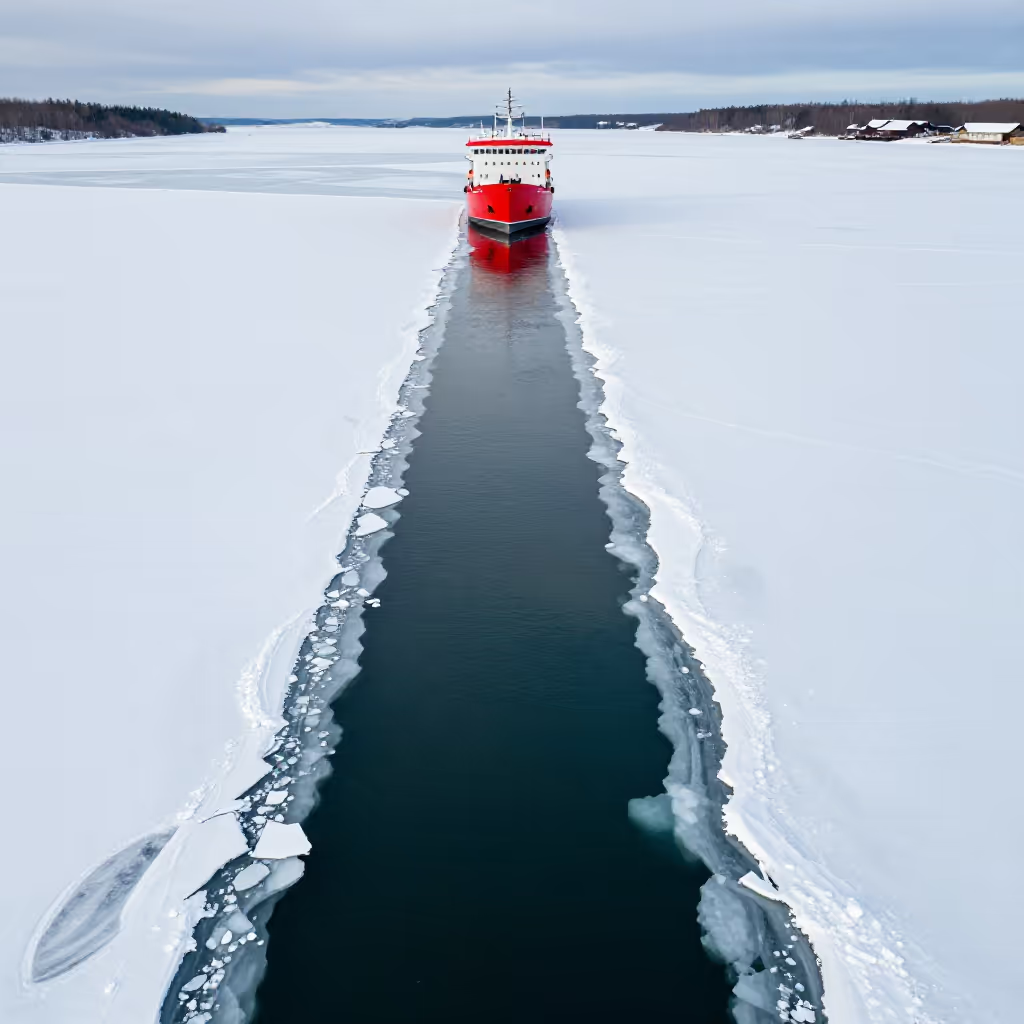
An ice-free spot or channel in an otherwise frozen body of water, created either naturally or by ships such as icebreakers.
example
Das Schiff folgte der Wake, die der Eisbrecher durch das Packeis geschlagen hatte.
The ship followed the ice channel that the icebreaker had cut through the pack ice.
Usage tips
False friend
'Die Wake' is not related to the English verb 'to wake (up)'. It refers only to a channel in the ice. However, the similarity to the English 'wake' (the trail of water behind a ship) is no coincidence, since the words are related.
EXAMPLE
Die Enten schwammen in der kleinen Wake auf dem zugefrorenen See.
The ducks swam in the small ice channel on the frozen lake.
Typical collocations
This noun is often used with verbs that describe the creation or use of the channel. Typical phrases are: 'eine Wake ins Eis schlagen' (to cut a channel into the ice), 'eine Wake offen halten' (to keep an ice channel open), or 'in einer Wake fahren' (to travel in an ice channel).
EXAMPLE
Der Eisbrecher schlug eine breite Wake für die nachfolgenden Schiffe.
The icebreaker cut a wide ice channel for the following ships.
Context clues
The word 'Wake' appears almost exclusively in texts about winter, ice, frozen lakes or seas, and navigation in icy conditions.
EXAMPLE
Im tiefsten Winter war nur noch eine kleine Wake im Hafen eisfrei.
In the depths of winter, only a small ice channel in the harbor was still free of ice.
Compare with
near_synonym · confusable
Wake vs Rinne
gutter / channel
'die Wake' and 'die Rinne' can both describe an elongated open area or depression. However, 'die Wake' is used only for ice on water: it is an ice-free area or track in an otherwise frozen surface. 'die Rinne' is much more general and means a narrow depression or a narrow channel, for example in the ground, on a surface, or in the terrain. The words can be confused because a 'Wake' can look like a 'Rinne' in the ice. If it is not clearly about ice and water, 'Rinne' is usually the more suitable word.
Wake
Hinter dem Eisbrecher blieb eine lange Wake im gefrorenen See zurück.
Behind the icebreaker, a long ice channel remained in the frozen lake.
Rinne
Nach dem Regen lief das Wasser durch eine schmale Rinne am Straßenrand.
After the rain, the water ran through a narrow channel along the side of the road.