

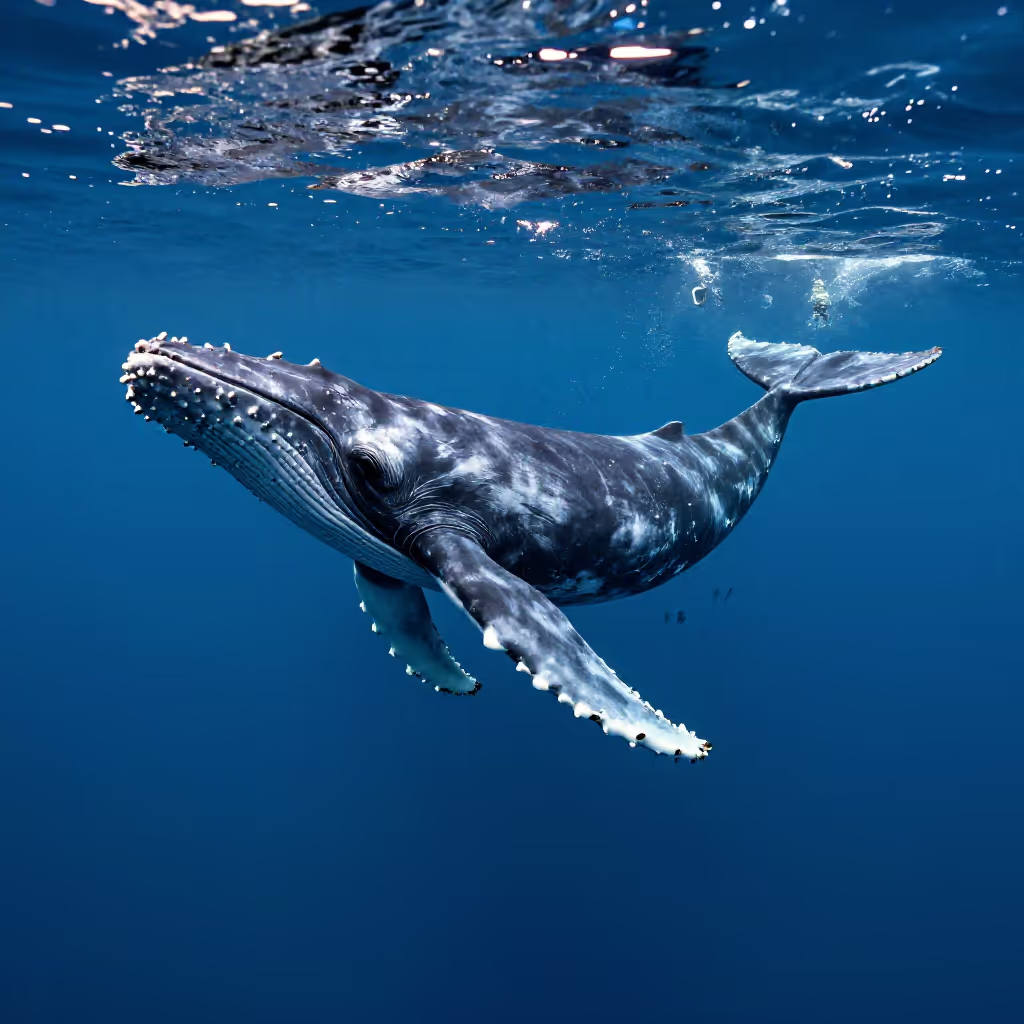
der Wal
whale
A very large mammal that lives in the sea.
EXAMPLE
Vom Schiff aus konnten wir in der Ferne einen Wal beobachten.
From the ship, we were able to observe a whale in the distance.
whale
Loading your saved state.
whale
A very large mammal that lives in the sea.
Vom Schiff aus konnten wir in der Ferne einen Wal beobachten.
From the ship, we were able to observe a whale in the distance.
'Der Wal' (the whale) sounds very similar to the English word 'wall'. But 'der Wal' is the large sea animal (whale). A wall in German is 'die Wand' or 'die Mauer'.
Im Urlaub haben wir einen riesigen Wal gesehen.
On vacation, we saw a huge whale.
The word stem 'Wal-' is used to form other words that have to do with the animal or the sea. Examples are der Walhai (whale shark), das Walross (walrus), or der Walfang (whaling).
Der Walgesang kann über hunderte Kilometer gehört werden.
Whale song can be heard over hundreds of kilometers.
Common verbs used in connection with whales are 'Wale beobachten' (to watch whales), 'Wale schwimmen' (whales swim), or, when an animal is washed onto land, 'ein Wal strandet' (a whale is stranded).
An der Küste ist leider ein Wal gestrandet.
Unfortunately, a whale has been stranded on the coast.
choice / election
Die Wahl and der Wal sound the same, but refer to completely different things. Die Wahl is about making a choice between options; der Wal is a large marine mammal. The article and spelling show which word is meant.

Im Meer beobachteten die Touristen einen großen Wal.
The tourists watched a large whale in the sea.
Bei der Wahl zwischen zwei Angeboten entschied sich Lara für das günstigere.
When choosing between two offers, Lara chose the cheaper one.