

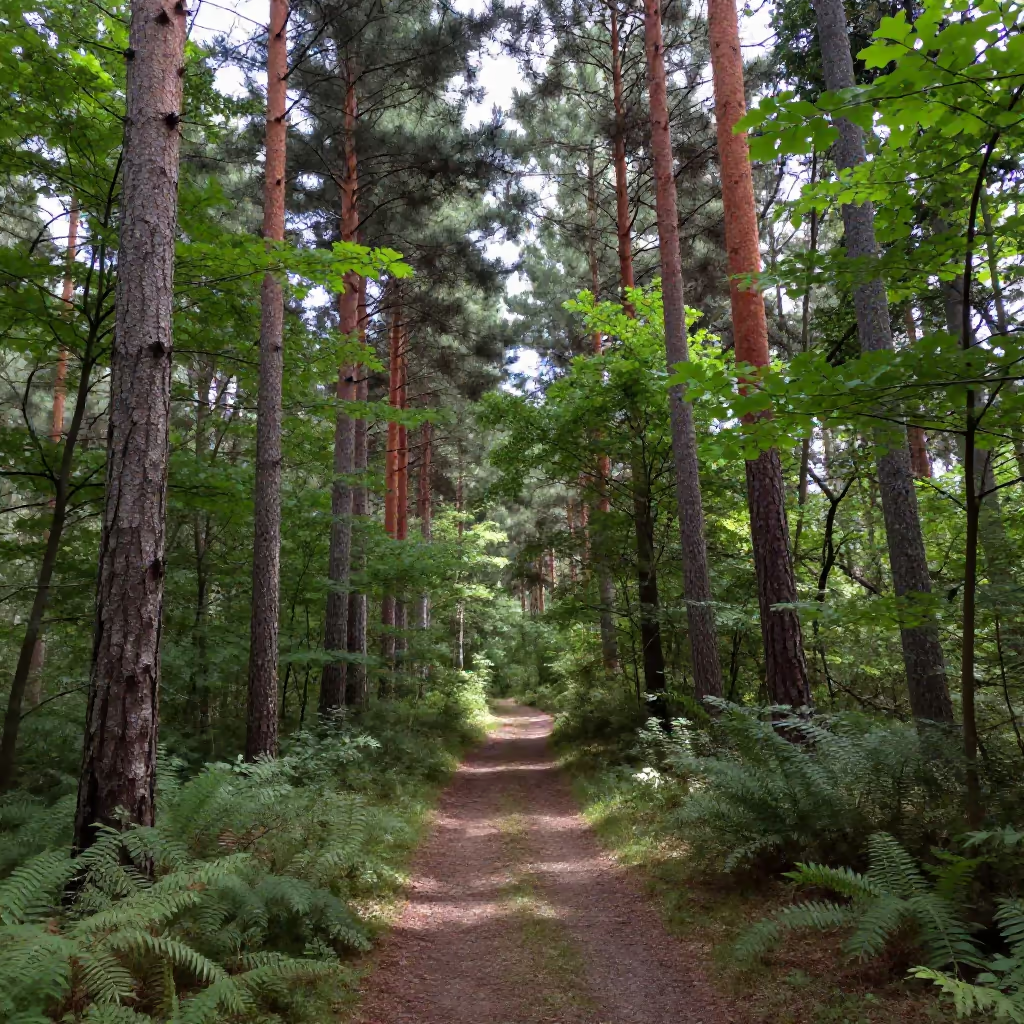
der Wald
forest
A large area densely covered with trees.
EXAMPLE
Am Sonntag machen wir einen langen Spaziergang im Wald.
On Sunday we're going for a long walk in the forest.
forest
Loading your saved state.
forest
A large area densely covered with trees.
Am Sonntag machen wir einen langen Spaziergang im Wald.
On Sunday we're going for a long walk in the forest.

not see the forest for the trees
An idiom meaning that someone does not recognize the obvious or the bigger picture because they are focusing too much on details.
Er hat sich so in den kleinen Fehlern verloren, dass er den Wald vor lauter Bäumen nicht mehr sieht.
He got so lost in the small mistakes that he could no longer see the forest for the trees.

forest
A figurative term for a large, confusing mass of something.
Bei der Konferenz gab es einen ganzen Wald von Kameras und Mikrofonen.
At the conference there was a whole forest of cameras and microphones.
Pay attention to the difference between 'in den Wald' (into the forest, accusative) for direction and 'im Wald' (in the forest, dative) for location. This difference is very important with place expressions.
Wir gehen am Nachmittag in den Wald.
We're going into the forest in the afternoon.
'Wald' (forest) is a very productive base word for many compounds. If you know 'Wald', you can more easily understand words like 'Regenwald' (rainforest), 'Nadelwald' (coniferous forest), 'Laubwald' (deciduous forest), or 'Waldweg' (forest path).
Der Amazonas-Regenwald ist der größte tropische Regenwald der Welt.
The Amazon rainforest is the largest tropical rainforest in the world.
Common verbs associated with the forest are 'spazieren gehen' (to go for a walk), 'wandern' (to hike), 'laufen' (to run/walk), or 'sich verirren' (to get lost).
Am Wochenende wandern wir oft stundenlang durch den Wald.
On weekends we often hike through the forest for hours.
The idiom 'den Wald vor lauter Bäumen nicht sehen' (not to see the forest for the trees) is fixed and cannot be changed. It is always used in this form to express that someone is overlooking the obvious.
Er suchte seinen Schlüssel überall, dabei lag er direkt vor ihm. Er hat den Wald vor lauter Bäumen nicht gesehen.
He looked for his key everywhere, even though it was right in front of him. He couldn't see the forest for the trees.
In the figurative meaning, 'Wald' is often used in the construction 'ein Wald aus/von ...' (a forest of ...). This describes a large, confusing mass.
Auf dem Platz stand ein ganzer Wald von Protestschildern.
There was a whole forest of protest signs standing in the square.
wood
Wald is the general term for a larger area densely covered with trees. Holz can also refer to a piece of forest regionally or in older usage, but typically means a small wood or grove. In general modern usage, Wald is usually the more appropriate choice.
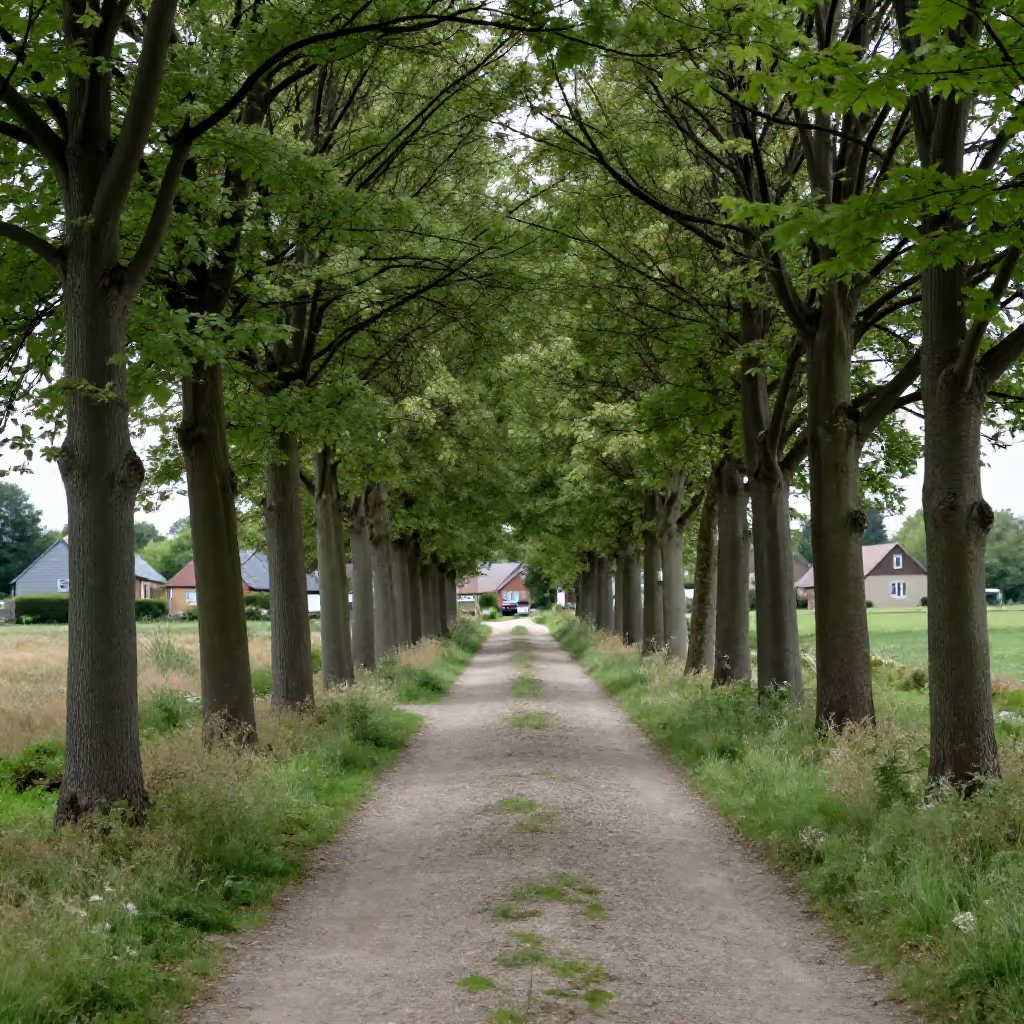
Hinter dem Dorf erstreckt sich ein großer Wald.
A large forest stretches out behind the village.
Hinter dem Dorf liegt ein kleines Holz.
There is a small wood behind the village.