

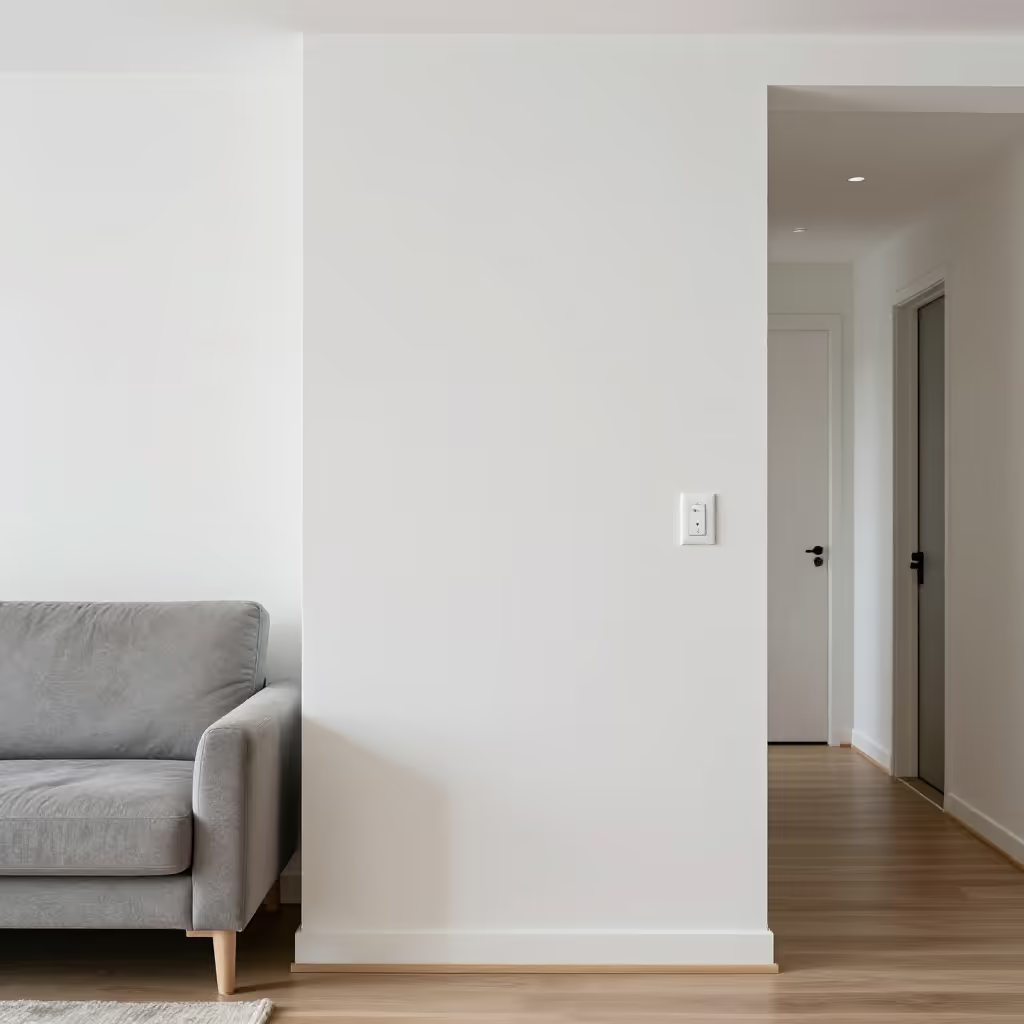
die Wand
wall
A vertical, solid surface that borders a room, encloses a building, or divides an area.
EXAMPLE
Wir müssen das neue Regal an der Wand befestigen.
We need to attach the new shelf to the wall.
wall
Loading your saved state.
wall
A vertical, solid surface that borders a room, encloses a building, or divides an area.
Wir müssen das neue Regal an der Wand befestigen.
We need to attach the new shelf to the wall.

to talk to a wall
An idiom meaning that you are speaking to someone who is not listening or does not respond to arguments.
Ihm Ratschläge zu geben ist, als würde man gegen eine Wand reden.
Giving him advice is like talking to a wall.
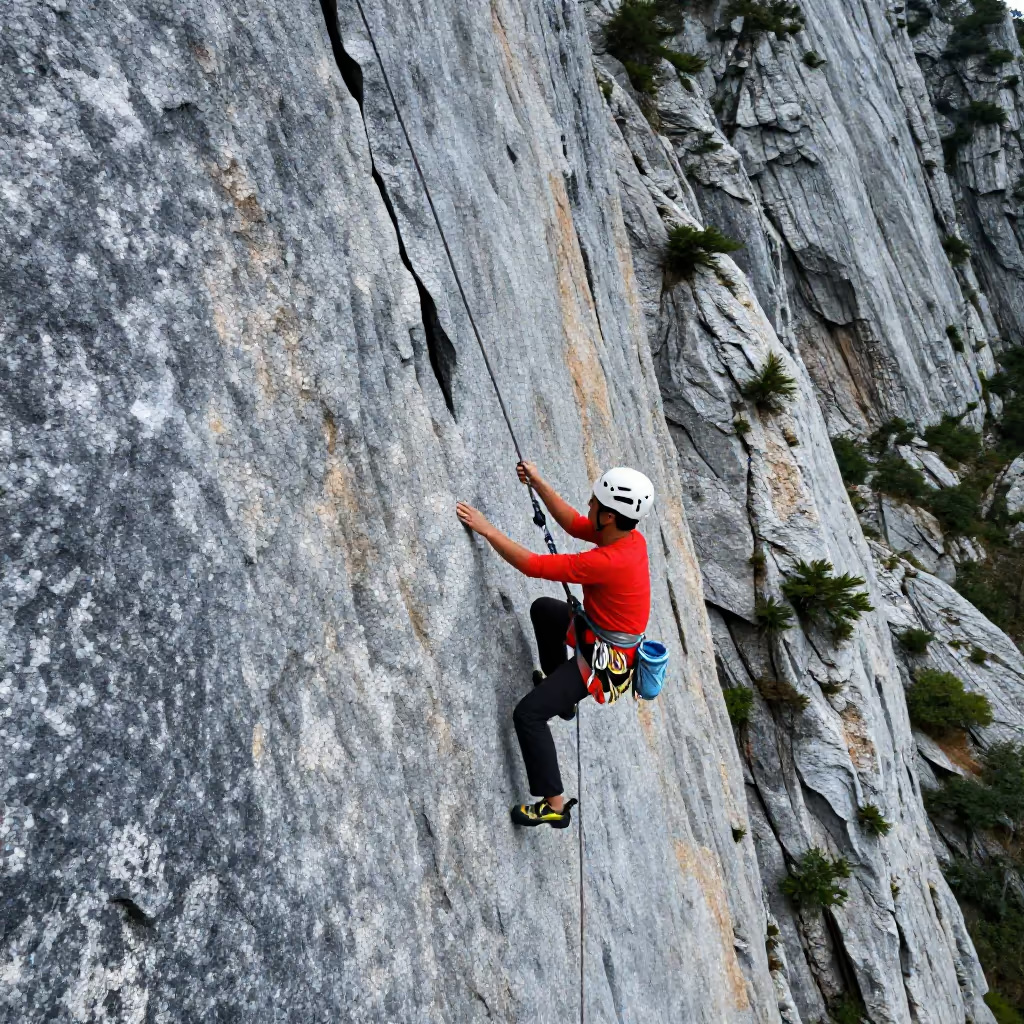
rock face
A steep, often vertical rock formation, especially in the context of mountaineering or climbing.
Die Eiger-Nordwand ist eine der berühmtesten Wände der Alpen.
The north face of the Eiger is one of the most famous rock faces in the Alps.

defensive wall
In sports, especially soccer, a very strong defense or defensive line that is hard to get past.
Die Abwehr des Gegners stand wie eine Wand.
The opponent's defense stood like a wall.
'Wand' is a very productive base word for compounds. Examples include 'Wandfarbe' (wall paint), 'Wandschrank' (built-in wall cabinet), 'Kletterwand' (climbing wall), or 'Brandwand' (firewall/fire wall).
Für das Kinderzimmer brauchen wir eine abwaschbare Wandfarbe.
For the children's room, we need washable wall paint.
You can easily recognize the meaning of 'Wand' from context: in sports, it refers to the defense; in climbing, to a rock face; and in a house, to the boundary of a room.
Die Abwehr stand heute wie eine Wand und ließ kein Tor zu.
The defense stood like a wall today and did not allow a single goal.
The idiom 'mit dem Rücken zur Wand stehen' means that you are in a very difficult, hopeless situation and have no options left.
Nach den hohen Verlusten stand die Firma mit dem Rücken zur Wand.
After the heavy losses, the company had its back to the wall.
Pay attention to the case after the preposition 'an' (on/at): 'an die Wand' (accusative) describes movement, while 'an der Wand' (dative) indicates a position.
Ich hänge das Bild an die Wand.
I am hanging the picture on the wall.
The idiom 'gegen eine Wand reden' is a fixed structure. It describes the frustrating feeling when another person is not listening to you at all.
Ich habe versucht, ihn zu warnen, aber es war, als würde ich gegen eine Wand reden.
I tried to warn him, but it was like talking to a wall.
wall
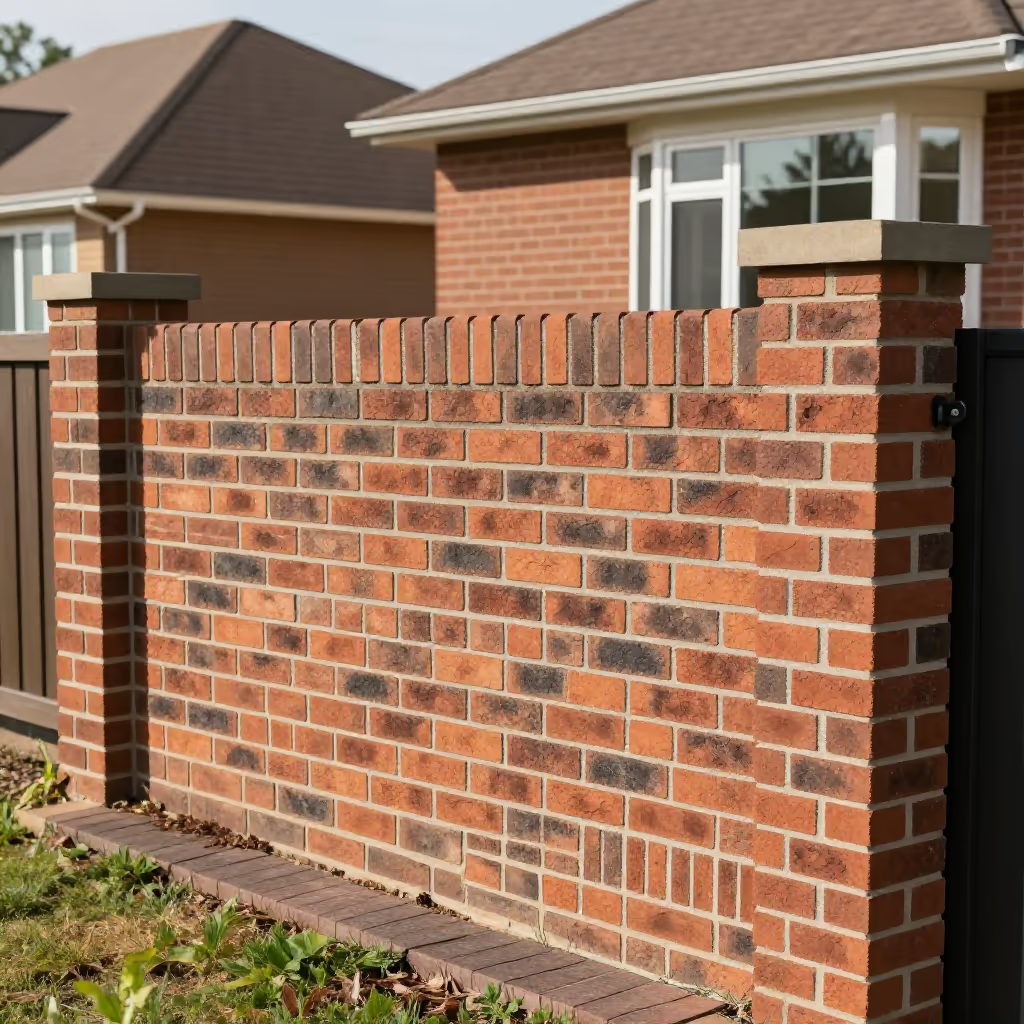
A Wand typically bounds a room or forms one of the surfaces of a building. A Mauer is usually a solid structure that marks off a property or outdoor area and can also stand on its own. For parts of buildings, however, either word can sometimes be used.
An der Wand im Wohnzimmer hängt ein großes Familienfoto.
A large family photo is hanging on the wall in the living room.
Um den Garten des Hauses steht eine hohe Mauer.
A high wall surrounds the garden of the house.