

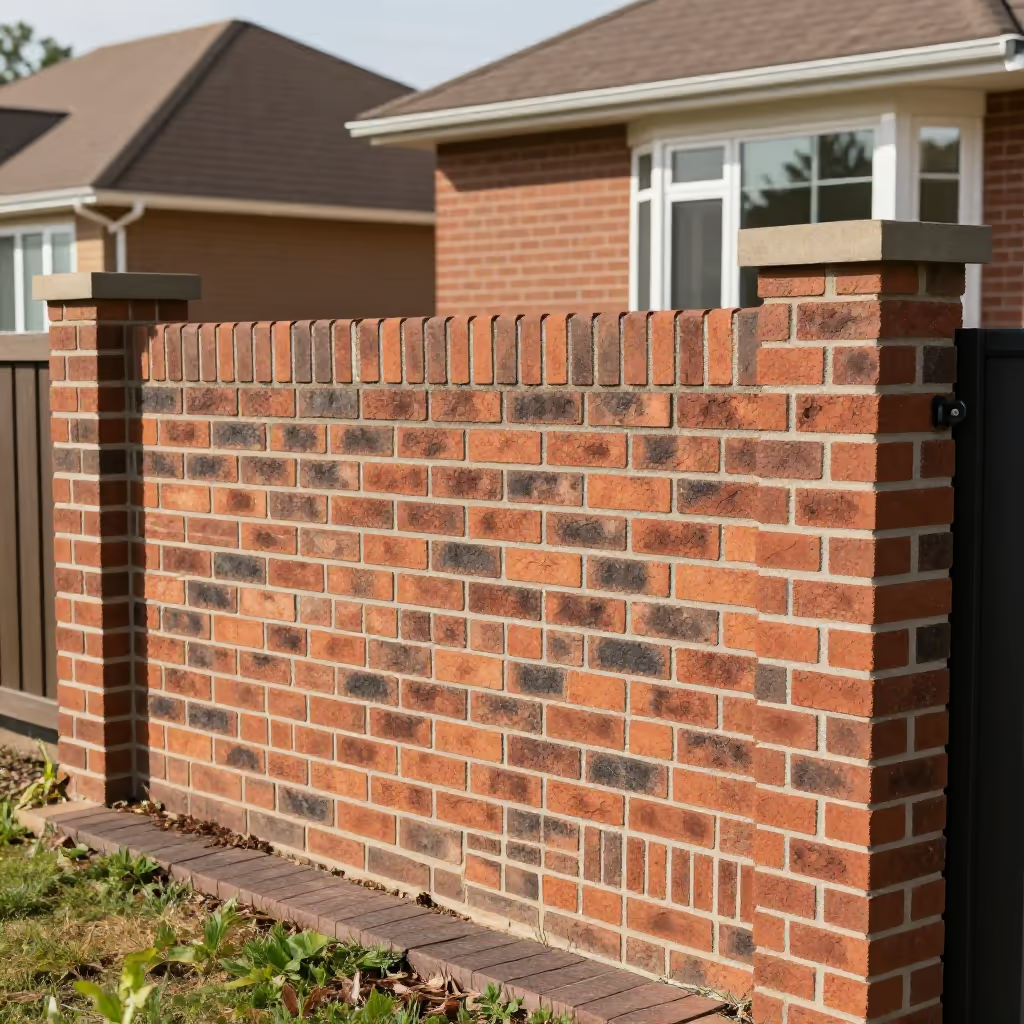
die Mauer
wall
A solid structure, usually made of stone, brick, or concrete, that serves as a boundary, support, or part of a building.
EXAMPLE
Um den Garten wurde eine hohe Mauer gebaut.
A high wall was built around the garden.
wall
Loading your saved state.
wall
A solid structure, usually made of stone, brick, or concrete, that serves as a boundary, support, or part of a building.
Um den Garten wurde eine hohe Mauer gebaut.
A high wall was built around the garden.
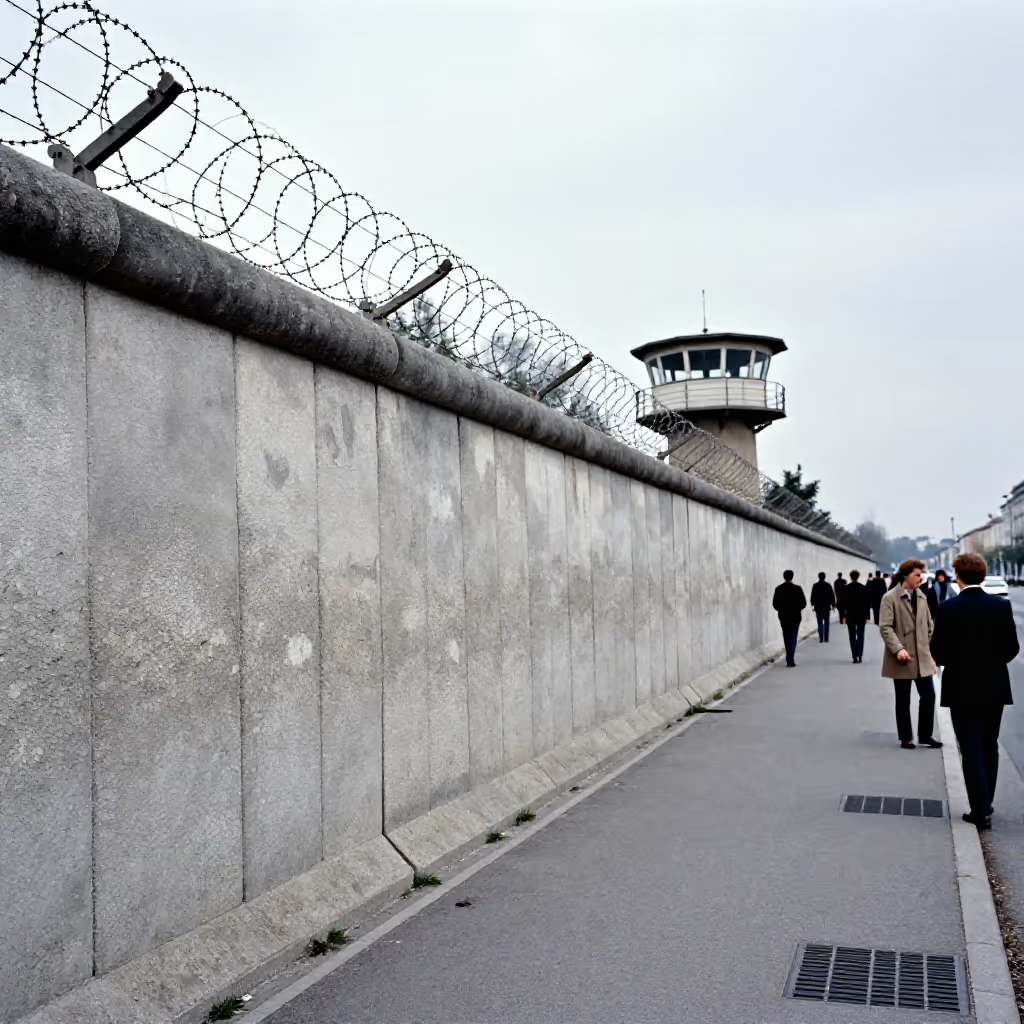
the Wall
In a historical context, a specific term for the Berlin Wall, which separated West Berlin from East Berlin and the GDR from 1961 to 1989.
Der Fall der Mauer im Jahr 1989 war ein historisches Ereignis.
The fall of the Wall in 1989 was a historic event.

wall / barrier
An invisible but noticeable barrier that arises between people through silence, rejection, or lack of understanding.
Bei seinen Kollegen stieß er nur auf eine Mauer des Schweigens.
Among his colleagues, he only ran into a wall of silence.
The related verb is 'mauern'. Literally, it means to build a wall. Colloquially, it is also used when someone blocks, gives no information, or refuses to cooperate.
Der Verdächtige mauerte bei der Befragung durch die Polizei.
The suspect stonewalled during police questioning.
With a physical wall, prepositions show different relationships. 'An der Mauer' (at/on the wall; dative) describes a position, while 'gegen die Mauer' (against/into the wall; accusative) expresses movement or impact.
Das Fahrrad lehnte an der Mauer.
The bicycle was leaning against the wall.
When 'die Mauer' (the Wall) is used in a historical German context, it almost always refers to the Berlin Wall. Typical signal words are 'Fall' (fall), 'Bau' (construction), 'DDR' (GDR), or years such as 1961 and 1989.
Viele Familien wurden durch den Bau der Mauer getrennt.
Many families were separated by the construction of the Wall.
In the figurative meaning, 'Mauer' (wall) describes an invisible barrier between people. It is often combined with abstract nouns like 'Schweigen' (silence), 'Ablehnung' (rejection), or 'Ignoranz' (ignorance), usually in the form 'Mauer des/der ...' (wall of ...).
Sein Vorschlag stieß im Team auf eine Mauer der Ablehnung.
His suggestion ran into a wall of rejection within the team.
wall
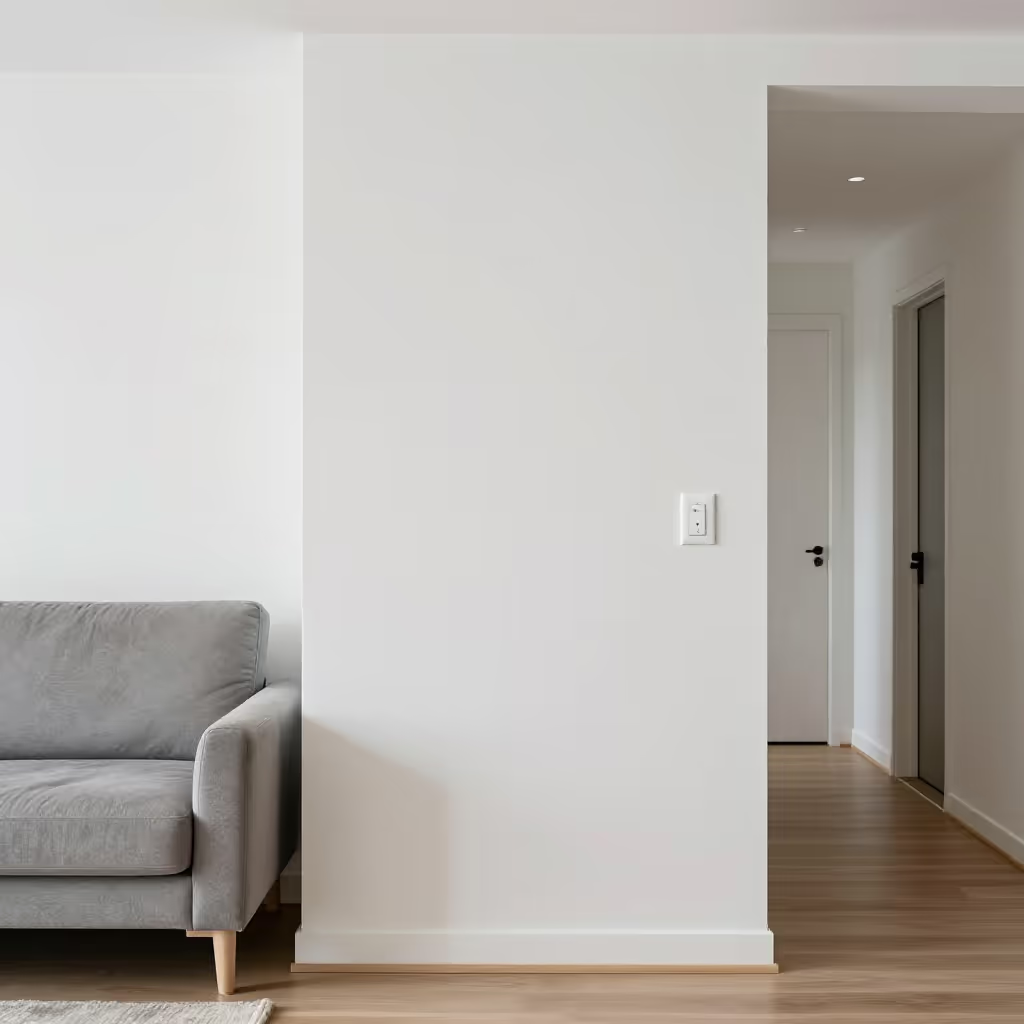
A Wand typically bounds a room or forms one of the surfaces of a building. A Mauer is usually a solid structure that marks off a property or outdoor area and can also stand on its own. For parts of buildings, however, either word can sometimes be used.
Um den Garten des Hauses steht eine hohe Mauer.
A high wall surrounds the garden of the house.
An der Wand im Wohnzimmer hängt ein großes Familienfoto.
A large family photo is hanging on the wall in the living room.