

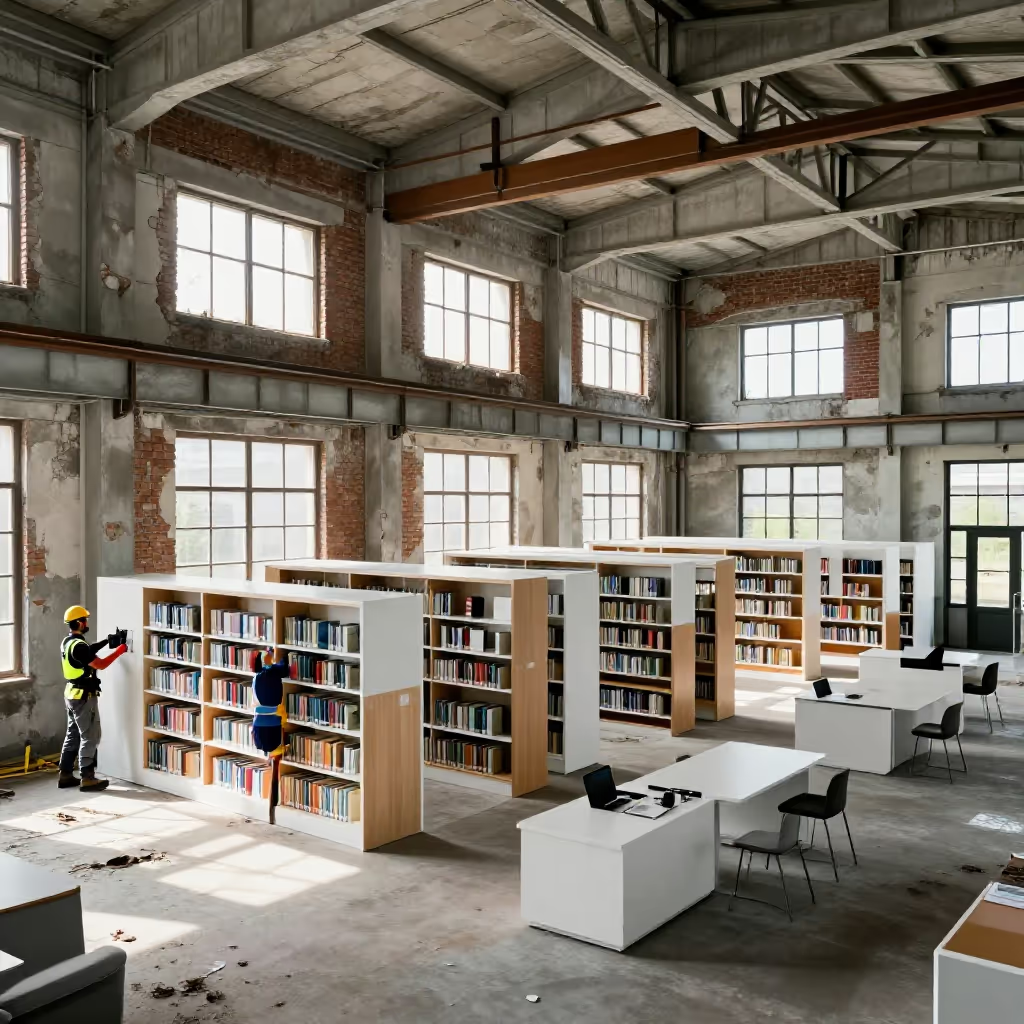
sich wandeln
to change
To change or transform; to take on a new form, a new state, or a new character.
Die Arbeitswelt hat sich in den letzten zwanzig Jahren stark gewandelt.
The world of work has changed greatly over the last twenty years.
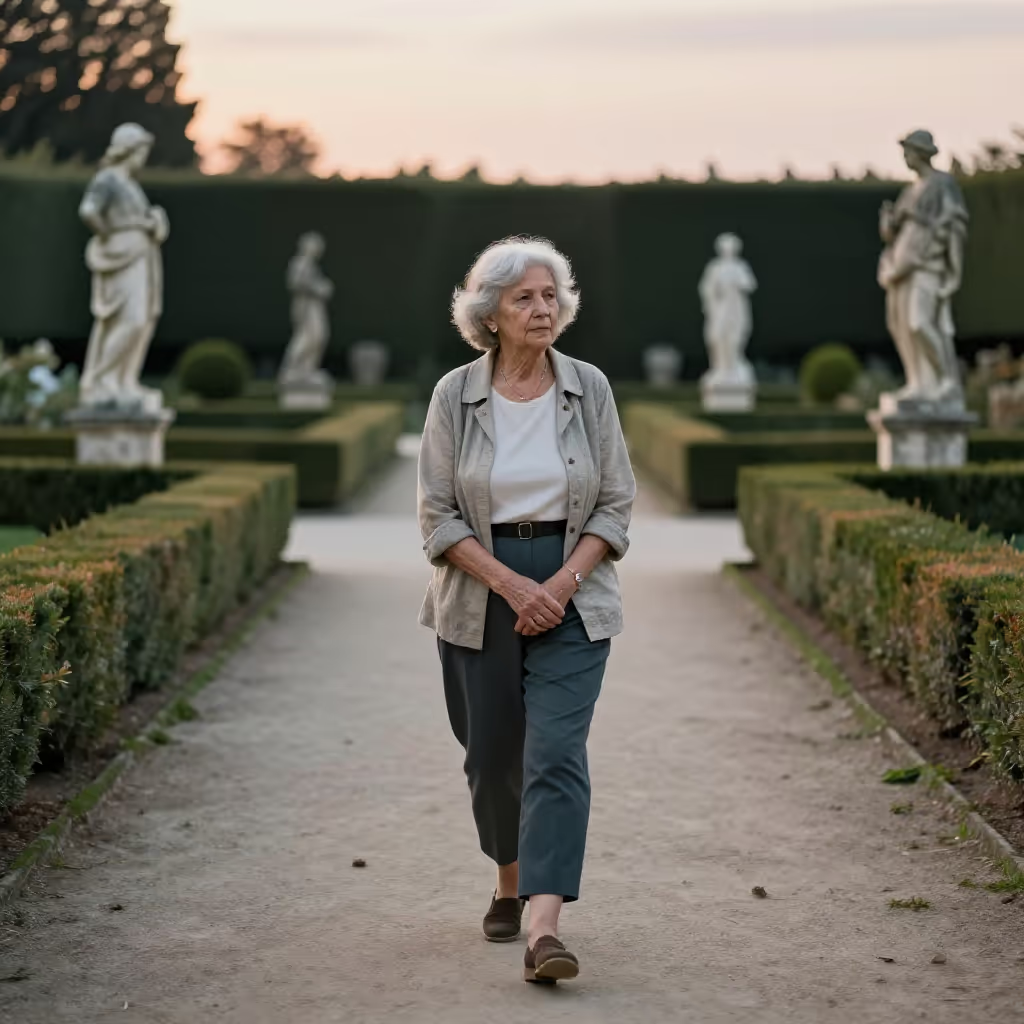

to change / stroll
Loading your saved state.
to change
To change or transform; to take on a new form, a new state, or a new character.
Die Arbeitswelt hat sich in den letzten zwanzig Jahren stark gewandelt.
The world of work has changed greatly over the last twenty years.

'Wandeln' (to change/stroll) is closely related to the noun 'der Wandel' (change) and the verb 'verwandeln' (to transform something actively). All of these words have to do with change or movement.
Der Wandel der Jahreszeiten ist faszinierend.
The change of the seasons is fascinating.
The two main meanings can be clearly distinguished grammatically: 'sich wandeln' (to change) is always reflexive and means 'sich verändern' (to change). 'Wandeln' without 'sich' means 'gehen' (to walk).
Die Mode hat sich über die Jahre stark gewandelt.
Fashion has changed greatly over the years.
In the meaning 'gehen' (to walk), 'wandeln' (to stroll) is very elevated and poetic. It is not used for everyday walking, but to describe a slow, almost solemn movement.
Die Geister sollen um Mitternacht durch das alte Schloss wandeln.
The ghosts are said to stroll through the old castle at midnight.
The expression 'auf jemandes Spuren wandeln' (to follow in someone's footsteps) is a fixed phrase. The person you are emulating is in the genitive ('Marias Spuren') or introduced with 'von' ('den Spuren von Maria').
Mit ihrem ersten Roman wandelt sie auf den Spuren großer Schriftstellerinnen.
With her first novel, she is following in the footsteps of great women writers.
to go
'gehen' and 'wandeln' can both describe movement on foot. 'gehen' is the normal word for everyday situations. 'wandeln', by contrast, is elevated or poetic and tends to describe slow, calm walking. In normal conversations, 'wandeln' often sounds too solemn or old-fashioned. Learners may confuse the words because both refer to physical movement. A simple guideline is: use 'gehen' for everyday situations; 'wandeln' fits better in literary texts or when the movement is meant to sound especially calm and graceful.

Im alten Schlossgarten wandeln die Besucher langsam zwischen den hohen Bäumen.
In the old palace garden, visitors stroll slowly among the tall trees.
Am Sonntag gehen wir mit den Kindern durch den Park.
On Sunday, we walk through the park with the children.