

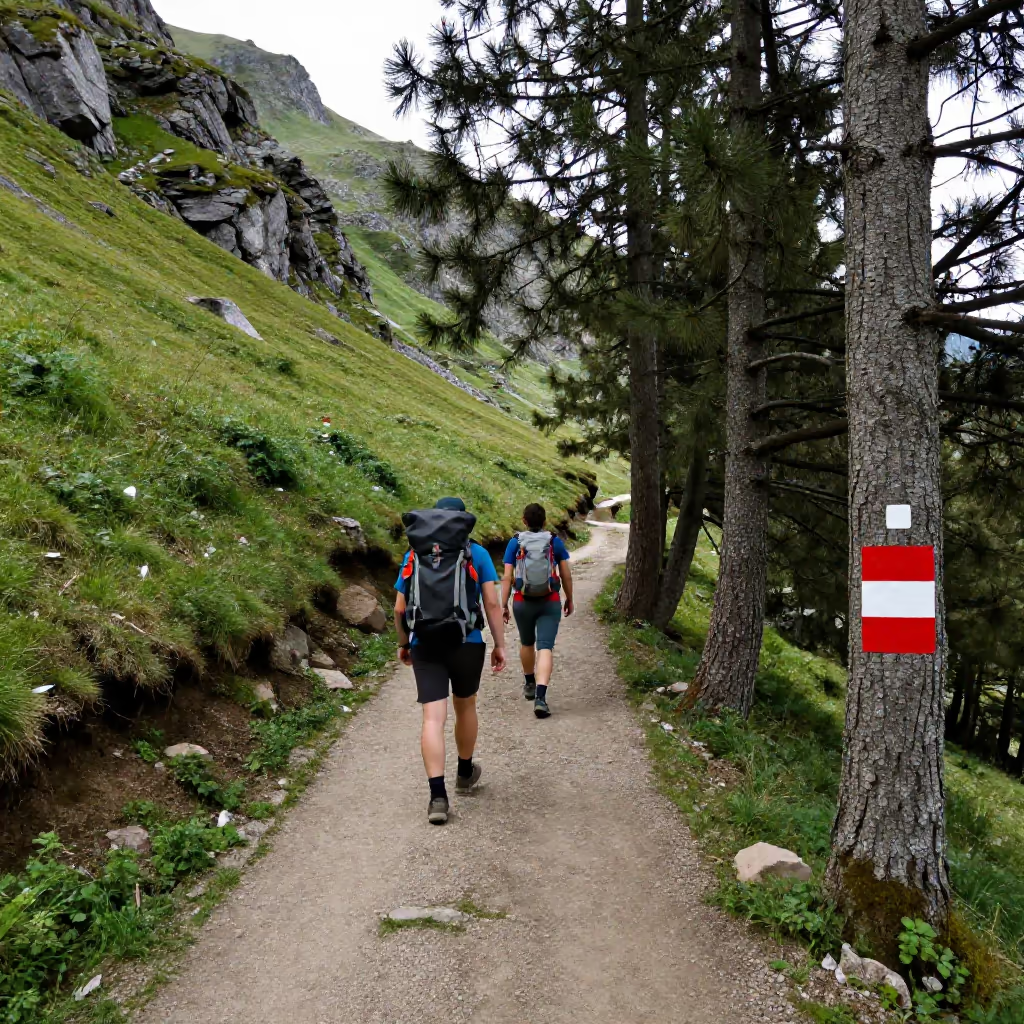
A marked or constructed path in nature that is specifically intended for hiking.
example
Der neue Wanderweg führt auf den Gipfel des Berges und bietet eine tolle Aussicht.
The new hiking trail leads to the summit of the mountain and offers a great view.
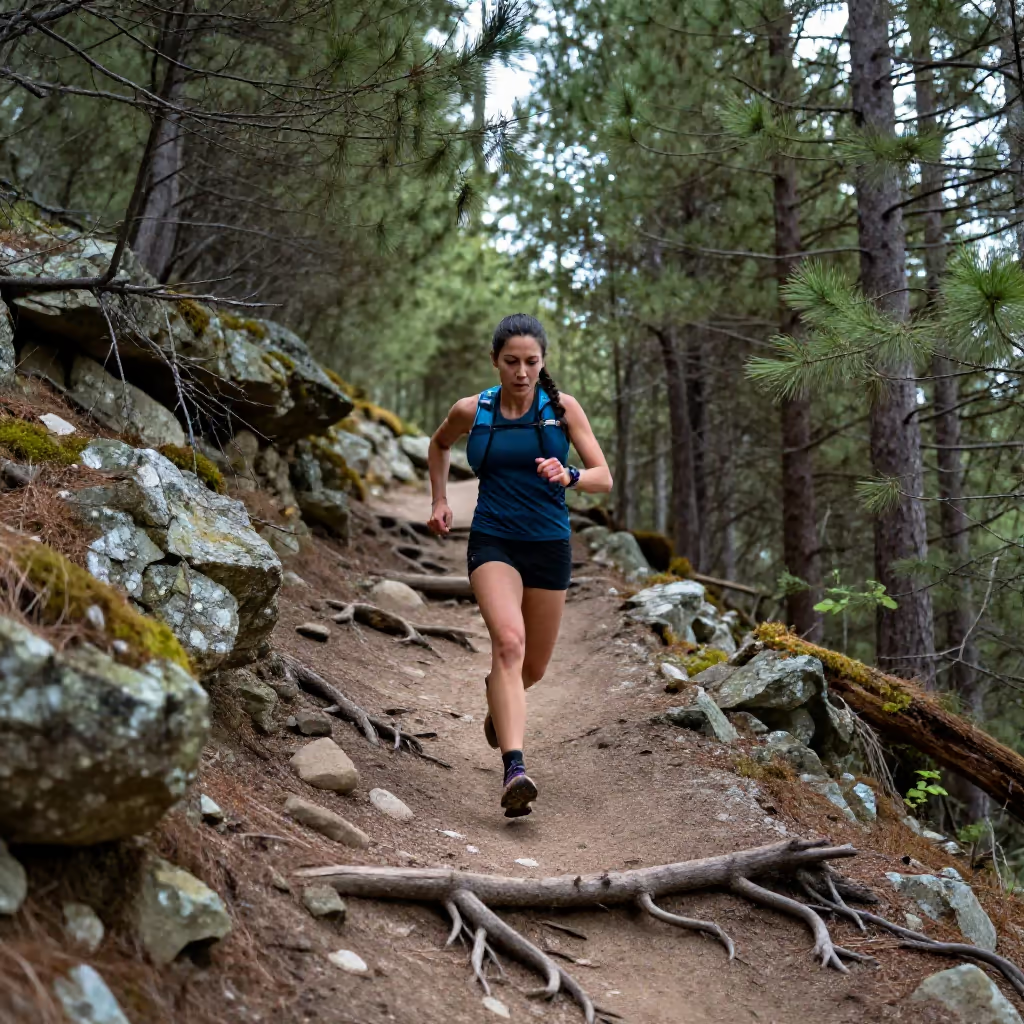
Usage tips
Compound word
The word consists of the stem of the verb 'wandern' (to hike) and the noun 'Weg' (path, way). So it simply describes a path meant for hiking.
EXAMPLE
Dieser Wanderweg ist auch für Familien mit Kindern geeignet.
This hiking trail is also suitable for families with children.
Sentence structure and usage
When moving along a hiking trail, you usually use the preposition 'auf' with the dative. Another very typical construction is 'einem Wanderweg folgen' (to follow a hiking trail).
EXAMPLE
Wir sind gestern auf einem wunderschönen Wanderweg gewandert.
Yesterday we hiked on a beautiful hiking trail.
Typical adjectives
Hiking trails are often described with adjectives such as 'gut ausgeschildert' (well signposted), 'markiert' (marked), 'steil' (steep), 'schmal' (narrow), or 'malerisch' (picturesque).
EXAMPLE
Der Wanderweg war sehr steil, aber die Aussicht hat sich gelohnt.
The hiking trail was very steep, but the view was worth it.
Compare with
near_synonym · confusable
Wanderweg vs Pfad
path
'der Pfad' and 'der Wanderweg' can both mean a path in nature. A 'Pfad' is usually narrow, simple, and often not properly developed. It can lead through forests, meadows, or mountains. A 'Wanderweg', on the other hand, is a path specifically intended for hiking and is often marked or planned. Learners may confuse the words because you walk on both. If you just mean a small, narrow path, 'Pfad' fits better. If you are talking about a planned route for hikers, 'Wanderweg' is more natural.
Wanderweg
Am See beginnt ein gut markierter Wanderweg bis zur nächsten Hütte.
A well-marked hiking trail begins at the lake and goes to the next hut.
Pfad
Hinter dem Haus führt ein schmaler Pfad durch den Wald.
Behind the house, a narrow path leads through the forest.