

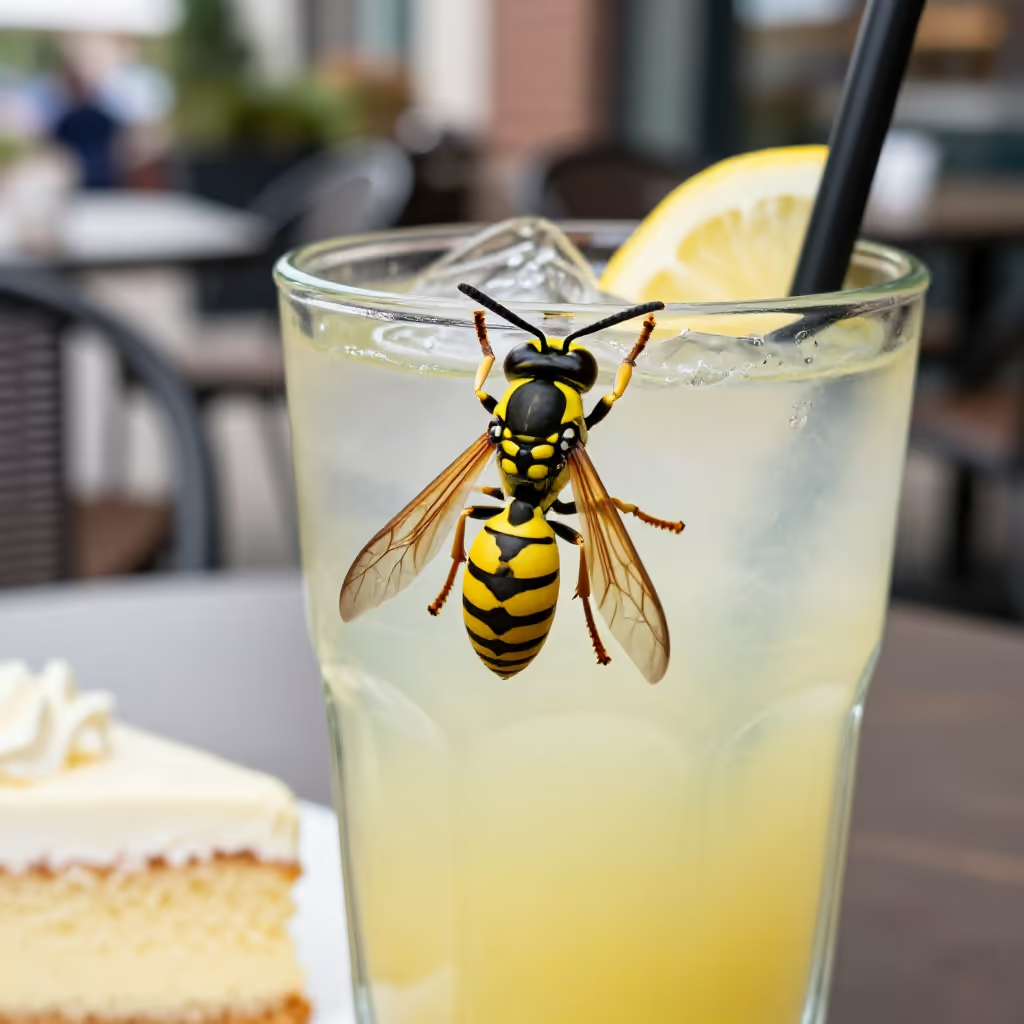
A yellow-and-black striped insect with a stinger that belongs to the family of paper wasps. Wasps are known for often appearing near sweet foods and drinks in summer.
example
Eine Wespe ist in mein Limonadenglas geflogen.
A wasp flew into my glass of lemonade.
Usage tips
Word family
The word 'Wespe' (wasp) is the basis for useful compounds. A 'Wespenstich' (wasp sting) is the painful injury caused by the insect, and a 'Wespennest' (wasp nest) is the place where wasps live.
EXAMPLE
Ein Wespenstich am Arm kann sehr schmerzhaft sein.
A wasp sting on the arm can be very painful.
Typical verbs
In connection with wasps, the verbs 'stechen' (to sting) and 'summen' (to buzz) are often used. A typical passive construction is 'von einer Wespe gestochen werden' (to be stung by a wasp).
EXAMPLE
Pass auf, dass die Wespe dich nicht sticht!
Watch out that the wasp doesn't sting you!
Typical situations
Wasps are often perceived as annoying because they are attracted to sweet foods and drinks. People say that wasps 'anfliegen' (fly toward someone) or 'umschwirren' (swarm around someone).
EXAMPLE
Kaum hatte ich den Kuchen auf den Tisch gestellt, wurde ich von Wespen umschwirrt.
No sooner had I put the cake on the table than I was surrounded by wasps.
Compare with
confusable
Wespe vs Biene
bee
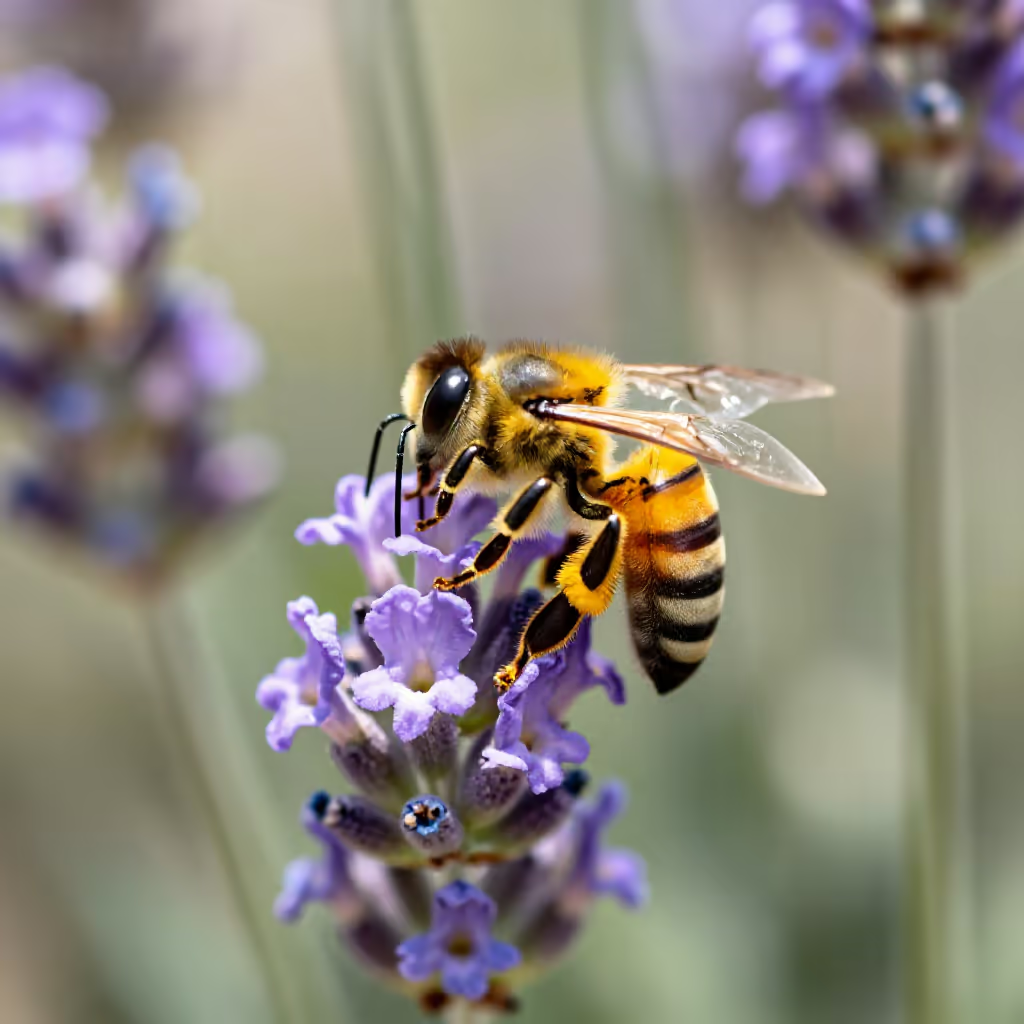
'die Biene' and 'die Wespe' are both yellow-and-black insects, so they can easily be confused. A bee collects nectar, pollinates plants, and is connected with honey. A wasp looks similar, but in summer it often comes to cake, juice, or other sweet things. When talking about honey, flowers, and pollination, 'Biene' fits better. When a yellow-and-black insect is bothering you near food or a drink, 'Wespe' is often meant.
Wespe
Beim Picknick setzt sich eine Wespe auf mein Glas Saft.
At the picnic, a wasp lands on my glass of juice.
Biene
Eine Biene fliegt von Blüte zu Blüte und sammelt Nektar.
A bee flies from flower to flower and collects nectar.