

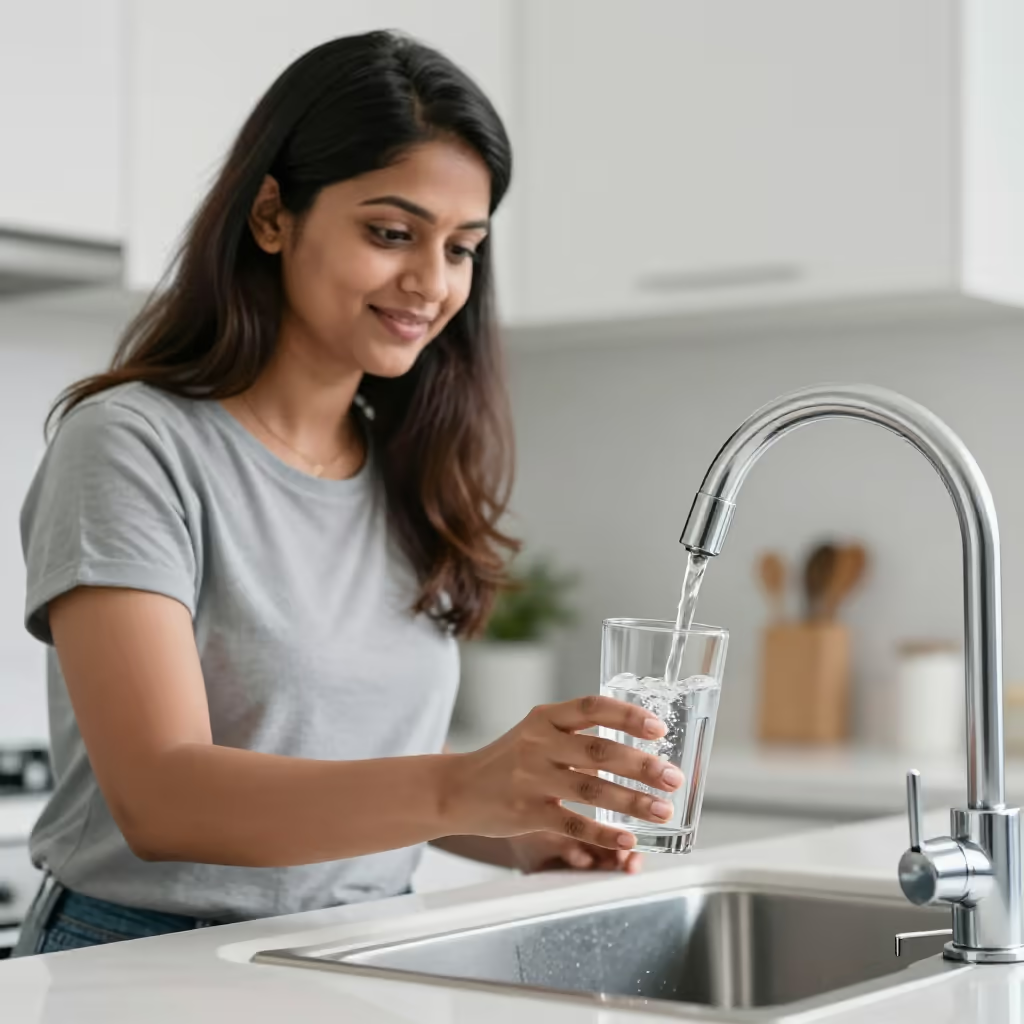
das Wasser
water
The transparent, odorless, and tasteless liquid (H₂O) that is necessary for life and is used for drinking, washing, etc.
EXAMPLE
Könnte ich bitte ein Glas Wasser ohne Kohlensäure haben?
Could I please have a glass of still water?
water
Loading your saved state.
water
The transparent, odorless, and tasteless liquid (H₂O) that is necessary for life and is used for drinking, washing, etc.
Könnte ich bitte ein Glas Wasser ohne Kohlensäure haben?
Could I please have a glass of still water?
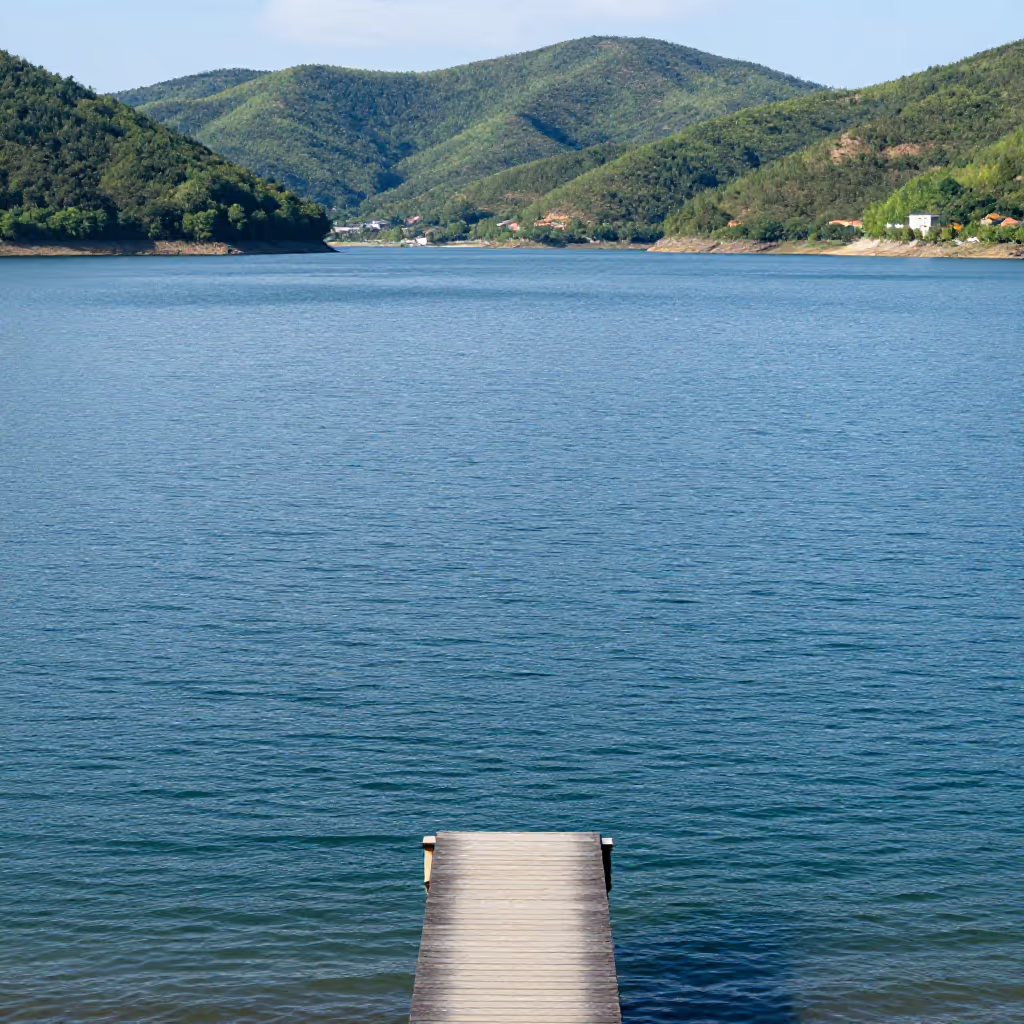
water
A larger body of water, such as a sea, lake, or river.
Das Wasser des Sees war im Sommer angenehm warm.
The water of the lake was pleasantly warm in summer.

to fall through
An idiom meaning that a planned event or undertaking cannot take place.
Wegen des starken Regens ist unser Picknick leider ins Wasser gefallen.
Because of the heavy rain, our picnic unfortunately fell through.

water
Refers to certain bodily fluids, especially sweat or tears.
Nach dem anstrengenden Training lief ihm das Wasser von der Stirn.
After the strenuous workout, sweat was running down his forehead.
'Wasser-' is a common component of compound nouns. These often describe the type of water or things that have to do with water.
Zum Kochen nehme ich immer Leitungswasser.
I always use tap water for cooking.
As a rule, 'Wasser' is used as an uncountable noun without a plural. You say 'viel Wasser' (a lot of water) or 'wenig Wasser' (little water), not 'vielen Wassern'.
Nach dem Sport sollte man viel Wasser trinken.
After exercising, you should drink a lot of water.
The meaning changes depending on the preposition: 'am Wasser' (by the water/on the shore), 'im Wasser' (in the water/swimming), and 'ins Wasser' (into the water, going or falling in).
Wir wohnen in einem Haus direkt am Wasser.
We live in a house right by the water.
The idiom 'ins Wasser fallen' means that a plan fails or falls through. The thing that does not take place is the subject of the sentence.
Wegen des Gewitters muss das Gartenfest leider ins Wasser fallen.
Because of the thunderstorm, the garden party unfortunately has to fall through.
When 'Wasser' is mentioned in connection with the body or emotions, it often means bodily fluids such as sweat or tears. Typical phrases include 'jemandem in die Augen steigen' (to come into someone's eyes) or 'von der Stirn laufen' (to run down from the forehead).
Vor lauter Rührung stand ihr das Wasser in den Augen.
She had tears in her eyes from sheer emotion.
body of water
When referring to a lake or river, “das Wasser” can mean either the liquid or the body of water. “Das Gewässer,” by contrast, refers to the geographical body of water as a whole. When talking about pollution, the choice therefore depends on whether you mean the substance or the entire lake or river.
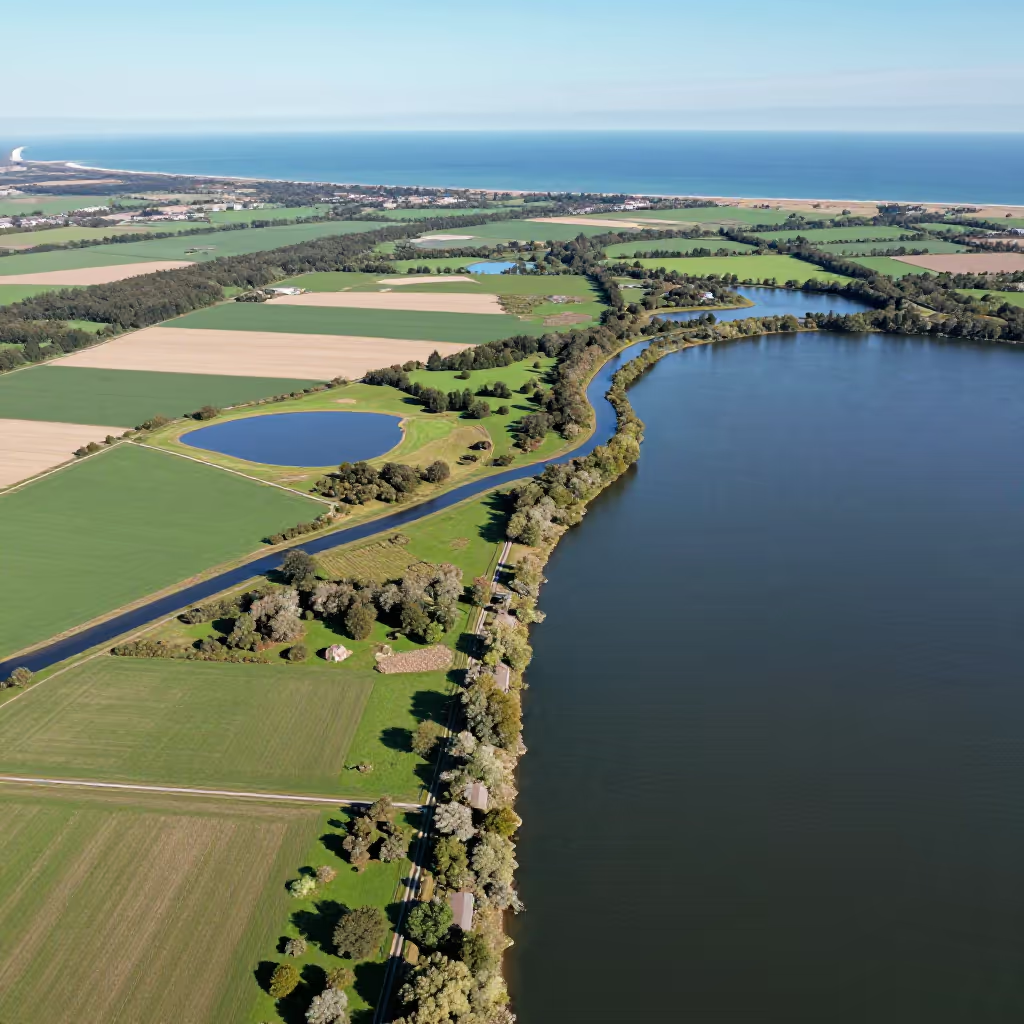
Nach dem Unfall ist das Wasser im See mit Öl verschmutzt.
After the accident, the water in the lake is contaminated with oil.
Nach dem Unfall wird das gesamte Gewässer auf Verschmutzung untersucht.
After the accident, the entire body of water is tested for contamination.