


alt
old
Having reached an advanced age or having existed for a long time.
EXAMPLE
Dieses Schloss ist über 500 Jahre alt.
This castle is over 500 years old.
old
Loading your saved state.
old
Having reached an advanced age or having existed for a long time.
Dieses Schloss ist über 500 Jahre alt.
This castle is over 500 years old.
old
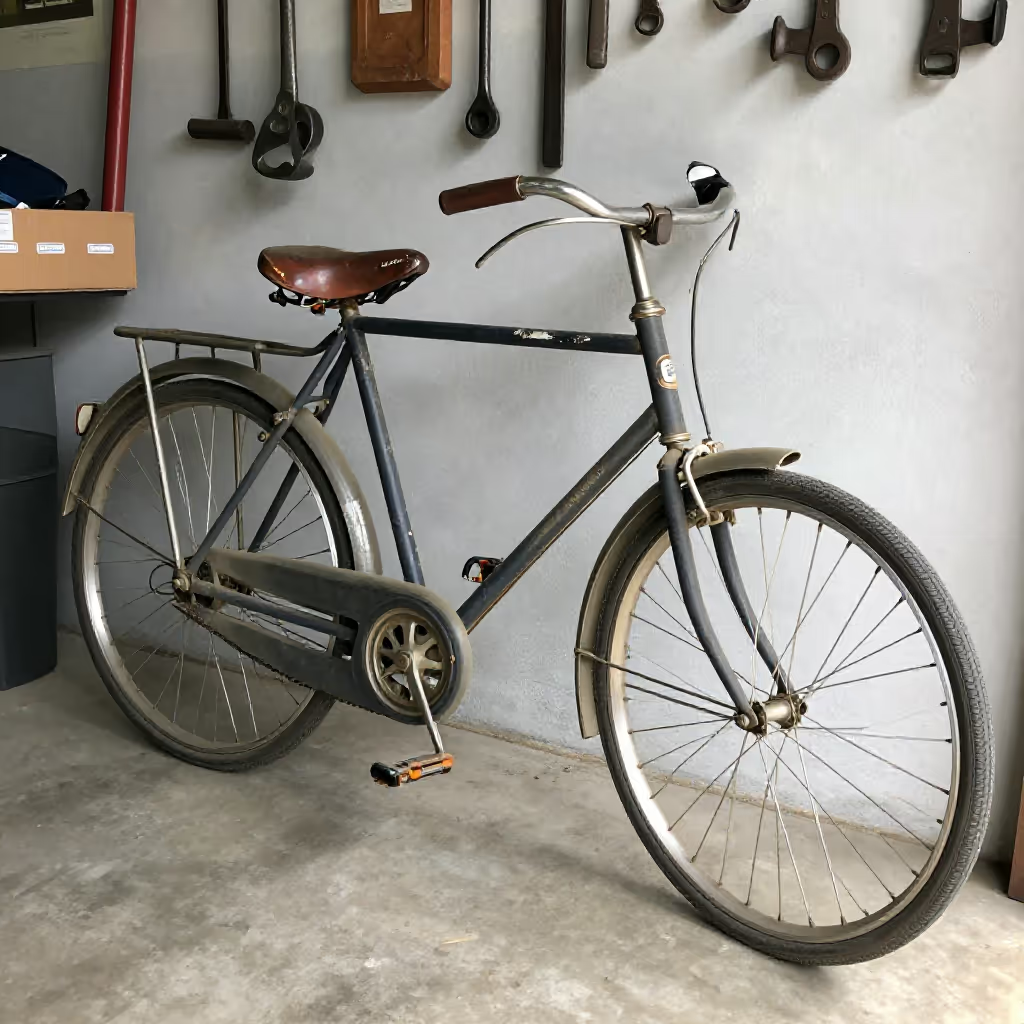
Not new, used, or originating from an earlier time.
Er zog ein altes Hemd für die Gartenarbeit an.
He put on an old shirt for gardening.

former
Former, previous. Refers to a state or relationship in the past.
Gestern habe ich zufällig meine alte Grundschullehrerin getroffen.
Yesterday I happened to run into my former elementary school teacher.
stale
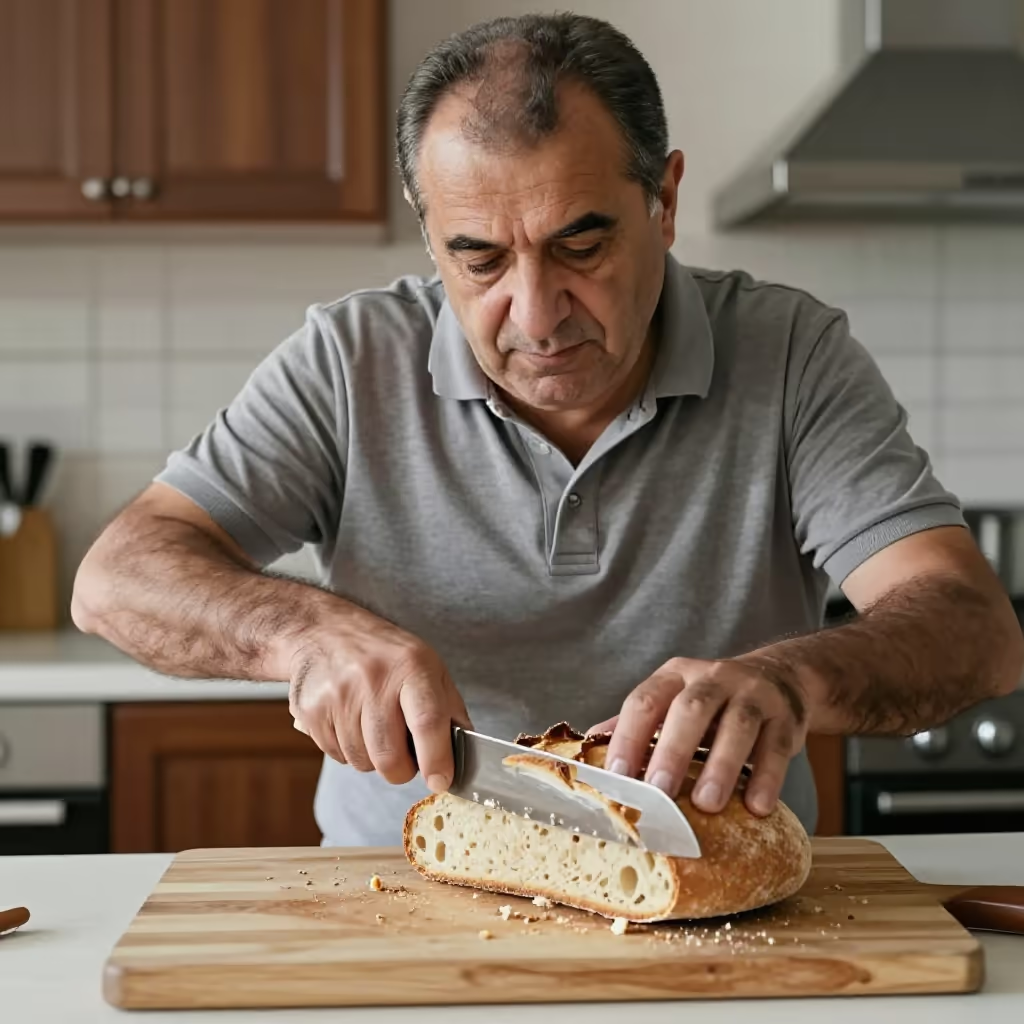
No longer fresh, especially with foods such as bread or pastries.
Das Brot von vorgestern ist schon ziemlich alt und hart.
The bread from the day before yesterday is already pretty stale and hard.

old
Used in forms of address to express a familiar, long-standing relationship.
Na, du alter Freund, wie geht es dir denn so?
Well, old friend, how are you doing?
When forming comparisons with 'alt' (old), the vowel changes to an umlaut: 'alt, älter, am ältesten' (old, older, oldest). This change is important for correct comparative sentences.
Mein Bruder ist älter als ich.
My brother is older than me.
The exact meaning of 'alt' depends strongly on the noun. 'Altes Brot' (stale bread) is no longer fresh, an 'altes Auto' (old car) is used, and an 'altes Schloss' (old castle) has a long history.
Dieses Brot ist leider schon alt und hart.
Unfortunately, this bread is already stale and hard.
To state the age of people or things, you use the fixed structure: subject + 'sein' (to be) + [number] 'Jahre' (years) + 'alt' (old).
Mein Großvater ist neunzig Jahre alt geworden.
My grandfather turned ninety years old.
In the meaning of 'ehemalig' (former), 'alt' almost always stands directly before the noun. It describes something that belonged to an earlier phase of life.
Ich habe am Wochenende einen alten Schulfreund getroffen.
I met an old school friend at the weekend.
In the combination 'alter/alte + noun', 'alt' can express affection and a long acquaintance. It is a very informal and friendly expression.
Na, du alte Schlafmütze, bist du endlich wach?
Well, you old sleepyhead, are you finally awake?
year-old / year-long
For a precise statement of age, “jährig” is typically used with a number directly before a noun. “Alt,” by contrast, is used in the fixed predicative form “Jahre alt.” So you say “ein zehnjähriger Hund” (a ten-year-old dog), but “der Hund ist zehn Jahre alt” (the dog is ten years old).

Der Hund meiner Nachbarin ist zehn Jahre alt.
My neighbor’s dog is ten years old.
Meine Nachbarin hat einen zehnjährigen Hund.
My neighbor has a ten-year-old dog.