


wecken
to wake
To bring someone out of sleep; to cause someone to wake up.
EXAMPLE
Kannst du mich morgen früh um sechs Uhr wecken?
Can you wake me tomorrow morning at six o'clock?
to wake
Loading your saved state.
to wake
To bring someone out of sleep; to cause someone to wake up.
Kannst du mich morgen früh um sechs Uhr wecken?
Can you wake me tomorrow morning at six o'clock?
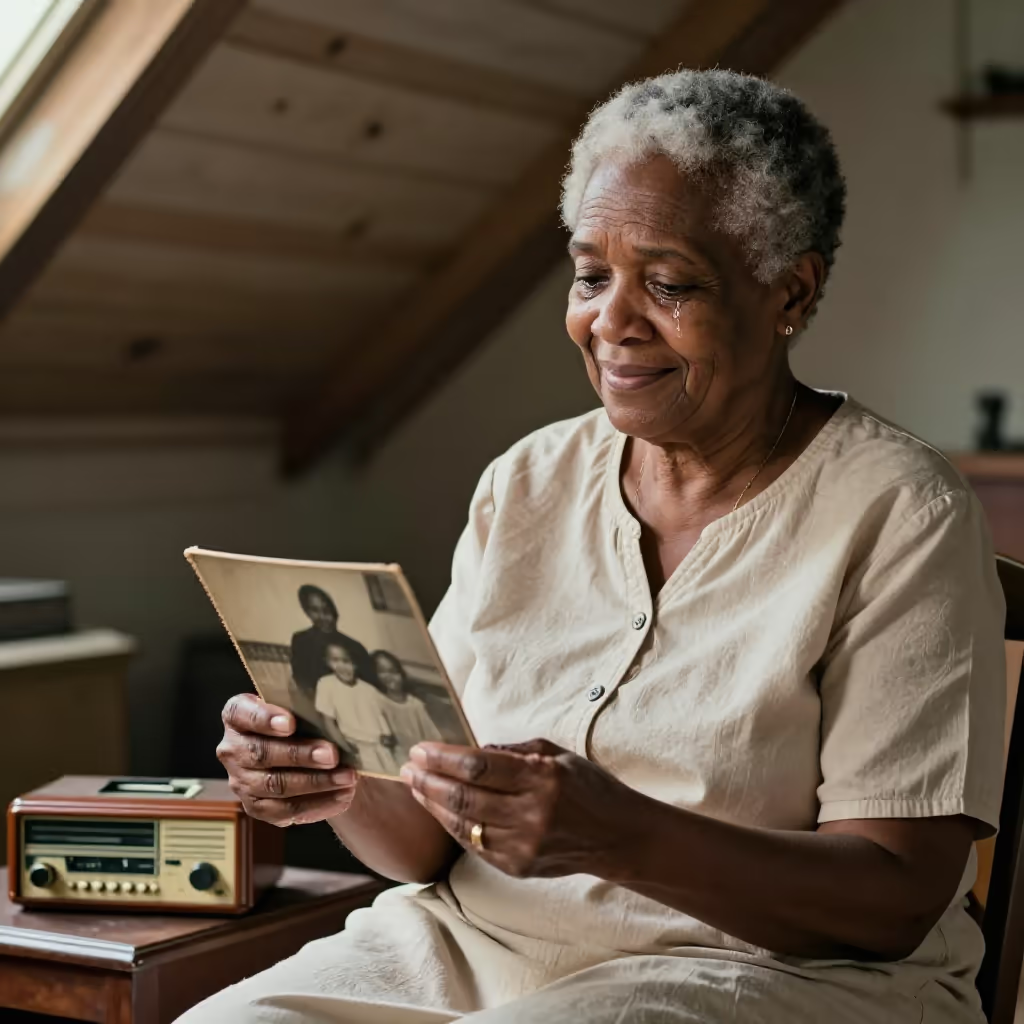
to arouse / evoke
To arouse or trigger a feeling, a memory, or an interest.
Dieser Geruch weckt bei mir immer Kindheitserinnerungen.
This smell always evokes childhood memories for me.

let sleeping dogs lie
An idiom meaning that one should leave a sensitive matter alone in order not to cause unnecessary problems.
Frag lieber nicht nach dem alten Streit, man soll keine schlafenden Hunde wecken.
Better not ask about the old argument; you should let sleeping dogs lie.
'Wecken' (to wake) is the causative verb related to 'wachen' (to be awake/keep watch) or 'aufwachen' (to wake up). It means to make someone or something awake.
Der Lärm von der Baustelle wird ihn sicher gleich wecken.
The noise from the construction site will surely wake him any moment now.
The verb 'wecken' (to wake) always requires an accusative object. This object is the person who is supposed to wake up, or the feeling that is being triggered.
Der laute Wecker hat mich heute Morgen geweckt.
The loud alarm clock woke me this morning.
When 'wecken' (to wake) is used with a person, it means 'aufwecken' (to wake someone up). When it is used with an abstract noun like 'Interesse' (interest) or 'Erinnerung' (memory), it means 'hervorrufen' (to evoke/trigger).
Bitte wecke den Vater nicht, er ist sehr müde.
Please don't wake the father; he is very tired.
In the figurative meaning, 'wecken' (to arouse/evoke) is very often combined with abstract nouns: 'Interesse wecken' (to arouse interest), 'Neugier wecken' (to arouse curiosity), 'Erinnerungen wecken' (to evoke memories), 'Gefühle wecken' (to arouse feelings), or 'Hoffnung wecken' (to inspire hope).
Ein guter Lehrer kann die Neugier seiner Schüler wecken.
A good teacher can arouse their students' curiosity.
The idiom 'keine schlafenden Hunde wecken' (to let sleeping dogs lie) is a fixed unit. It is used to express that it is better not to bring up an old, sensitive topic.
Ich wollte die Chefin nicht nach dem Fehler fragen, um keine schlafenden Hunde zu wecken.
I didn't want to ask the boss about the mistake, so as not to wake sleeping dogs.
to trigger / release
Both verbs can evoke a feeling or emotional reaction. Auslösen focuses more on the specific result caused by a trigger, while wecken activates a feeling, interest, or memory that is already present or initially hidden. Auslösen is appropriate when there is a clear cause, while wecken is more suitable for a feeling that gradually comes to the surface.

Die alten Fotos weckten bei den Angehörigen viele Erinnerungen.
The old photos evoked many memories among the relatives.
Die Nachricht löste bei den Angehörigen große Sorge aus.
The news caused great concern among the relatives.