


weggehen
to leave
To leave a place; to move away from a place.
EXAMPLE
Ich muss jetzt weggehen, sonst verpasse ich meinen Bus.
I have to leave now, otherwise I'll miss my bus.
to leave / go out
Loading your saved state.
to leave
To leave a place; to move away from a place.
Ich muss jetzt weggehen, sonst verpasse ich meinen Bus.
I have to leave now, otherwise I'll miss my bus.

to go out
To leave the house in order to have fun, often in the evening at bars, clubs, parties, or the cinema.
Wollen wir am Samstagabend zusammen weggehen?
Do we want to go out together on Saturday evening?
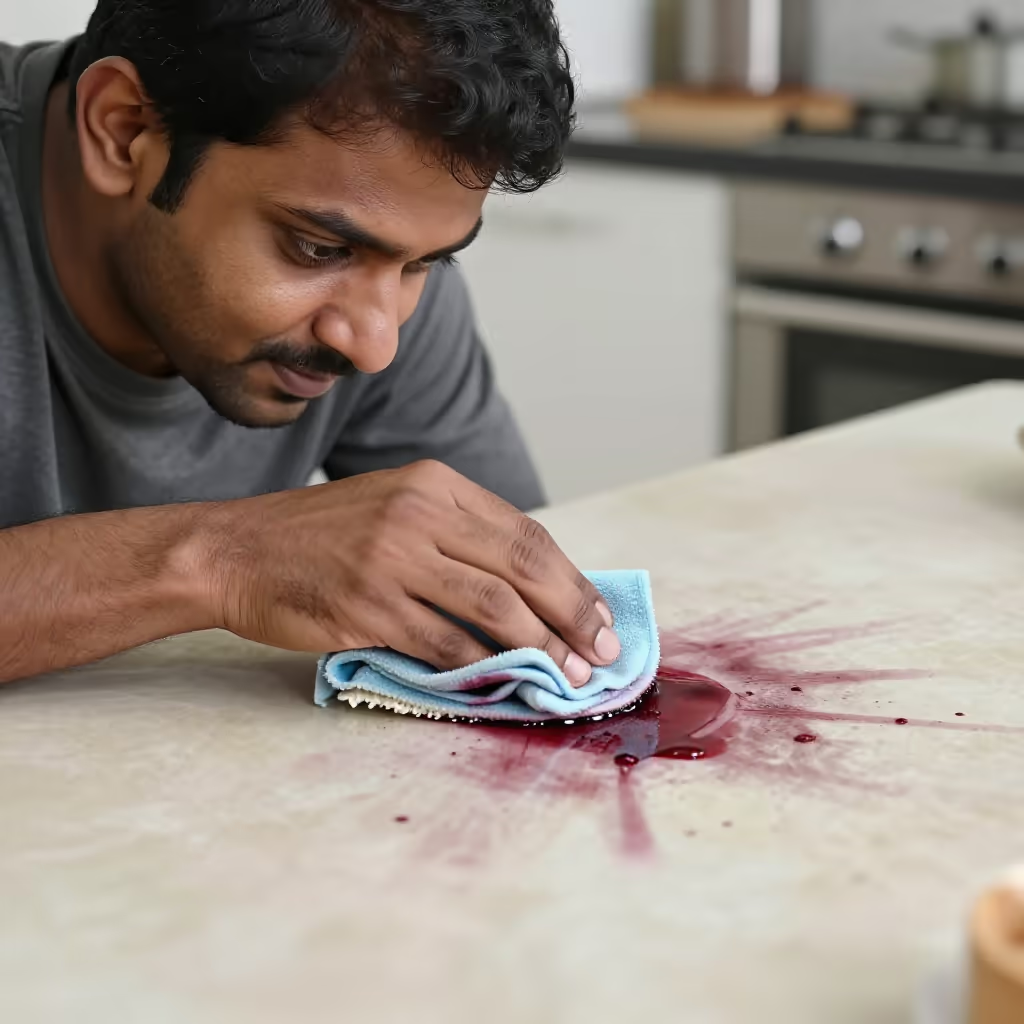
to come out
To be removable or disappear, especially with stains or dirt.
Ich hoffe, dieser Rotweinfleck geht beim Waschen wieder weg.
I hope this red wine stain comes out in the wash.

to sell
Colloquial for 'to be sold', often referring to goods that are very popular and sell quickly.
Die Konzertkarten sind weggegangen wie warme Semmeln.
The concert tickets sold like hotcakes.
'Weggehen' (to leave / go out) is a separable verb. The prefix 'weg-' comes at the end in a main clause. In subordinate clauses and in the infinitive with 'zu', the verb stays together.
Wann gehst du heute von der Arbeit weg?
When are you leaving work today?
As a verb that describes movement or a change of location, 'weggehen' (to leave / go out) forms the perfect tense with the auxiliary verb 'sein'. A common source of errors is using 'haben'.
Sie ist schon vor einer Stunde weggegangen.
She left an hour ago.
In everyday language, 'weggehen' very often means going out in the evening for entertainment, for example to a bar, a club, the cinema, or a party.
Lass uns am Freitagabend zusammen weggehen und tanzen.
Let's go out together on Friday evening and dance.
When talking about stains or dirt, the stain itself is the subject of the sentence. The verb then describes whether the stain disappears or not.
Der Kaffeefleck auf meinem Hemd geht einfach nicht weg.
The coffee stain on my shirt just won't come out.
In the meaning 'to sell well', the verb is often part of the idiom 'weggehen wie warme Semmeln' (to sell like hotcakes). This means that a product sells extremely quickly and well.
Die neuen Smartphones gehen weg wie warme Semmeln.
The new smartphones are selling like hotcakes.
to remove
Both verbs refer to leaving a place. „Weggehen“ is the straightforward choice in everyday language. „Sich entfernen“ often sounds more formal and can emphasize more strongly that someone is deliberately keeping their distance from a particular place.
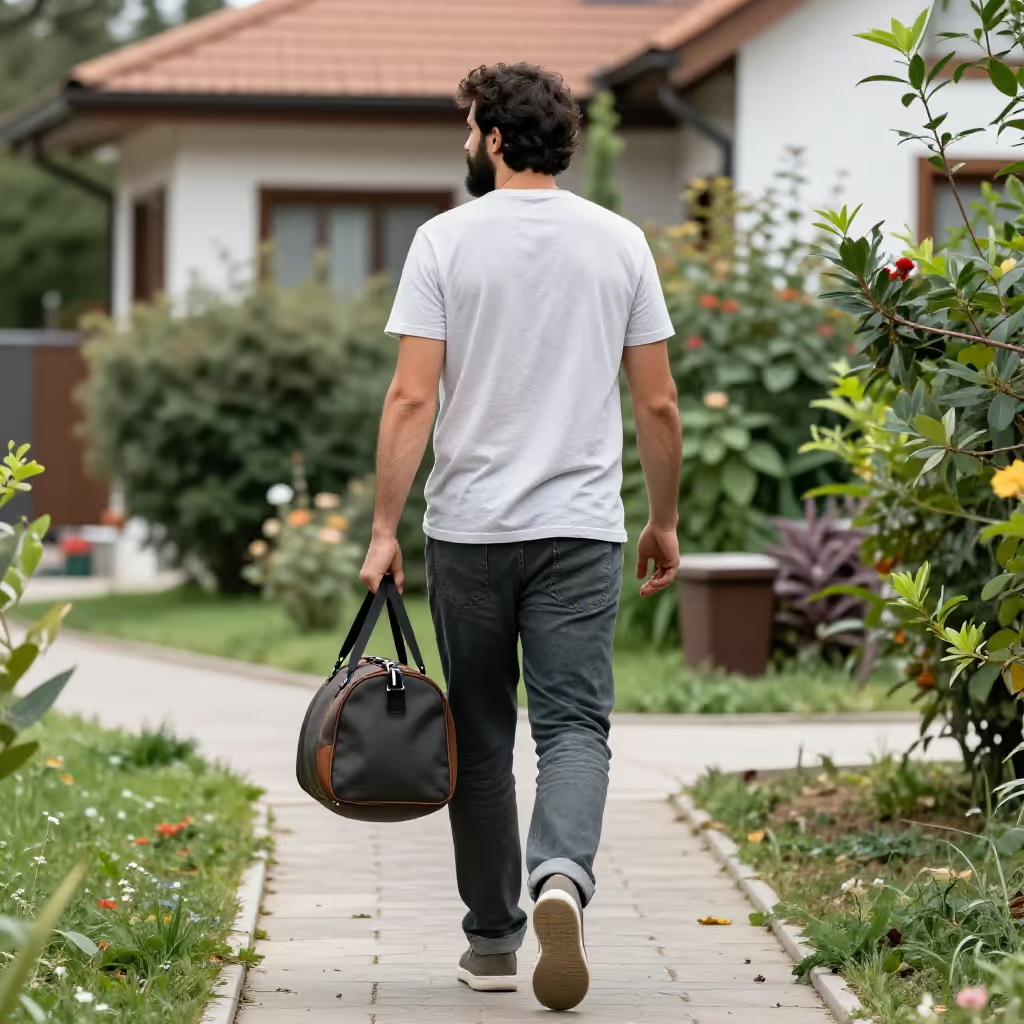
Paul bittet die Besucher, vom Eingang wegzugehen.
Paul asks the visitors to go away from the entrance.
Der Sicherheitsdienst fordert die Besucher auf, sich vom Eingang zu entfernen.
Security asks the visitors to move away from the entrance.