

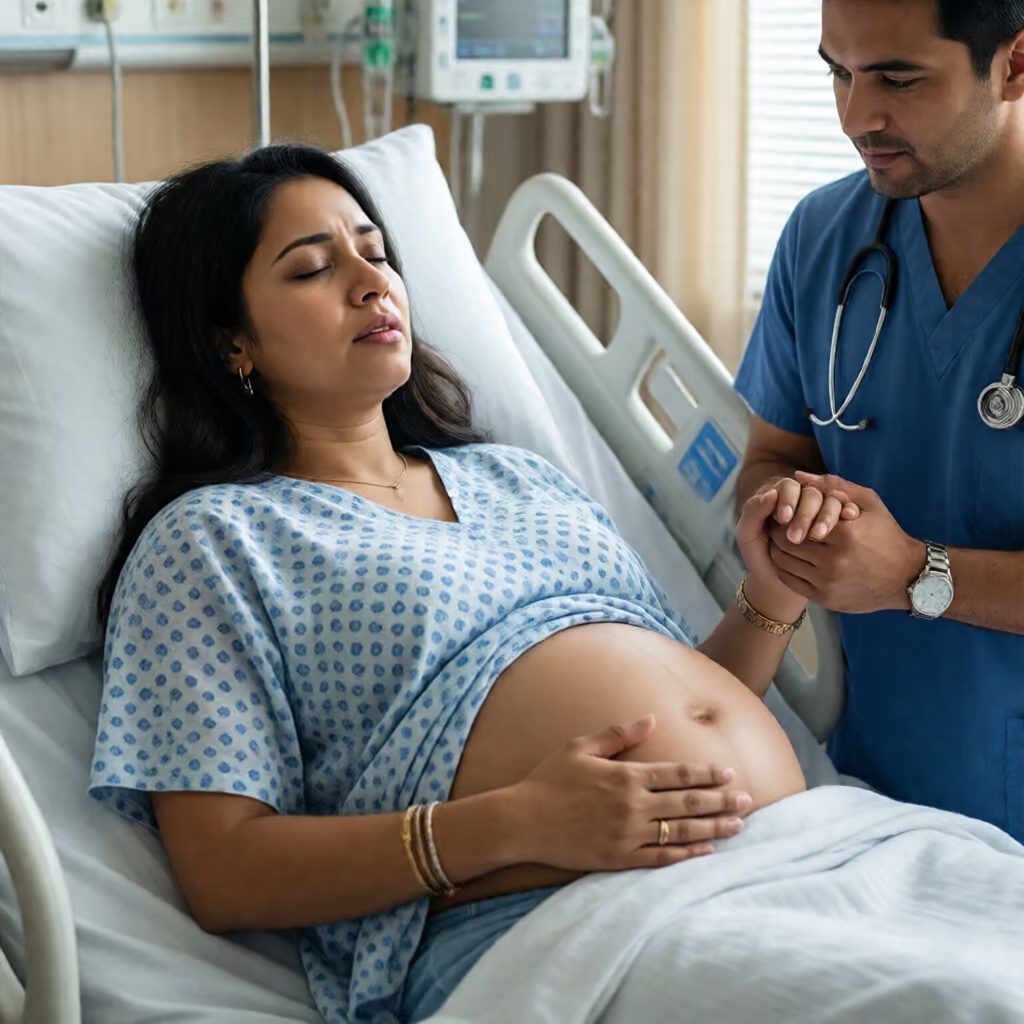
die Wehe
contraction
A painful tightening of the uterus, especially during childbirth. The word is usually used in the plural.
EXAMPLE
Die Wehen kommen jetzt alle fünf Minuten.
The contractions are now coming every five minutes.
contraction / drift
das Wehe
Loading your saved state.
contraction
A painful tightening of the uterus, especially during childbirth. The word is usually used in the plural.
Die Wehen kommen jetzt alle fünf Minuten.
The contractions are now coming every five minutes.

to undergo birth pangs
Figuratively, 'in den Wehen liegen' (to undergo birth pangs) means to be in a difficult phase of development or preparation.
Das neue Theaterstück liegt noch in den Wehen.
The new play is still undergoing birth pangs.

drift
A pile of snow or sand blown together by the wind.
Der Wind hatte vor der Haustür eine hohe Wehe aufgetürmt.
The wind had piled up a high drift in front of the door.
| gender | neuter das |
|---|---|
| genitive | des Wehes |
| singular | plural | |
|---|---|---|
| nominative | das Wehe | – |
| accusative | das Wehe | – |
| dative | dem Wehe | – |
| genitive | des Wehes | – |
The article changes with the case; it is shown in colour.
| gender | feminine die |
|---|---|
| plural | die Wehen |
| genitive | der Wehe |
| singular | plural | |
|---|---|---|
| nominative | die Wehe | die Wehen |
| accusative | die Wehe | die Wehen |
| dative | der Wehe | den Wehen |
| genitive | der Wehe | der Wehen |
The article changes with the case; it is shown in colour.
In the childbirth sense, 'Wehe' (contraction) often appears in phrases such as 'Wehen haben' (to have contractions), 'Wehen einsetzen' (contractions start), and 'Wehen kommen' (contractions come). People also often describe how regular or strong the contractions are.
Kurz nach Mitternacht setzten regelmäßige Wehen ein.
Regular contractions started shortly after midnight.
In the fixed expression 'in den Wehen liegen' (to undergo birth pangs), the subject is usually a project, a creative work, or a change that is not yet complete. The expression uses childbirth as a metaphor for a difficult process of development.
Die Reform des Schulsystems liegt seit Jahren in den Wehen.
The reform of the school system has been undergoing birth pangs for years.