

die Wehrmacht
Wehrmacht
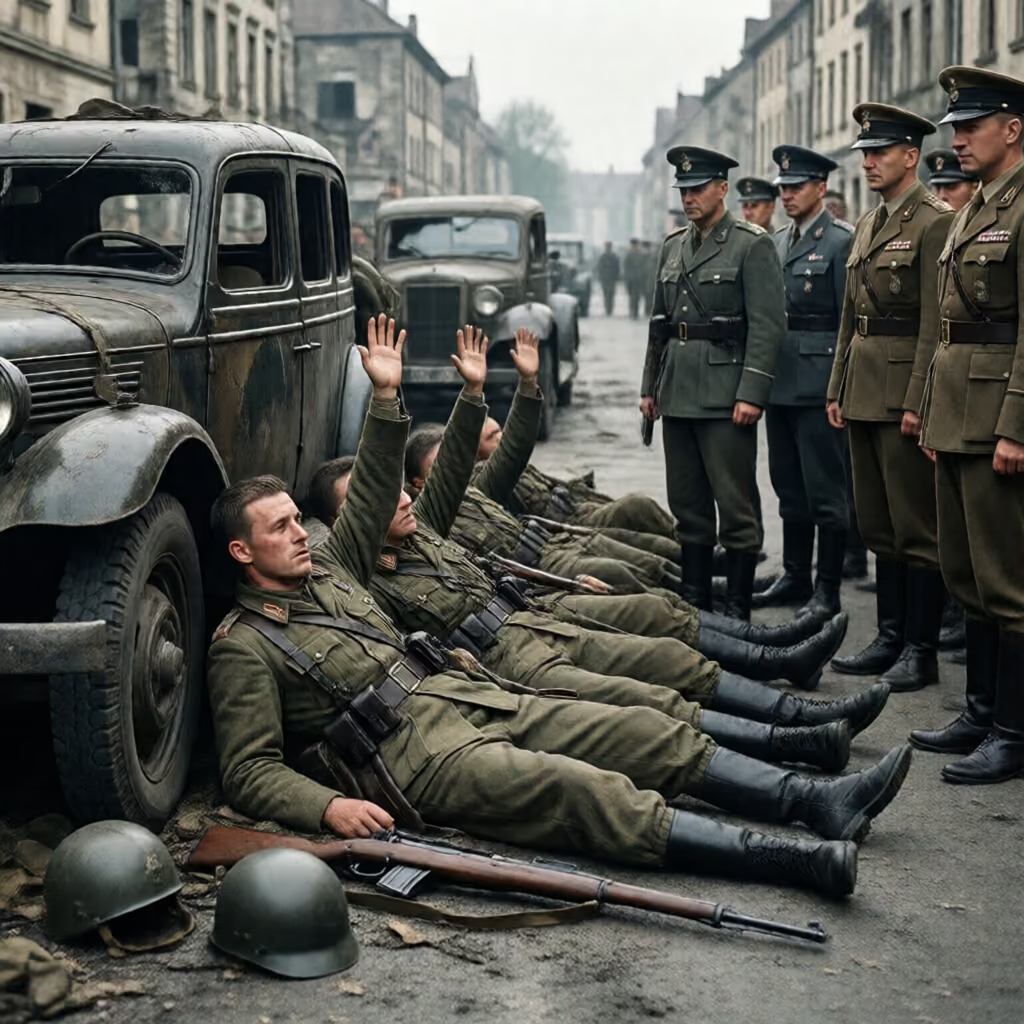
The German armed forces during the Nazi era from 1935 to 1945. The term refers to the army, navy, and air force of the German Reich.
EXAMPLE
Die Wehrmacht kapitulierte im Mai 1945.
The Wehrmacht surrendered in May 1945.
Wehrmacht
die Wehrmacht, die Wehrmächte
Loading your saved state.
Wehrmacht
The German armed forces during the Nazi era from 1935 to 1945. The term refers to the army, navy, and air force of the German Reich.
Die Wehrmacht kapitulierte im Mai 1945.
The Wehrmacht surrendered in May 1945.
| gender | feminine die |
|---|---|
| plural | die Wehrmächte |
| genitive | der Wehrmacht |
| singular | plural | |
|---|---|---|
| nominative | die Wehrmacht | die Wehrmächte |
| accusative | die Wehrmacht | die Wehrmächte |
| dative | der Wehrmacht | den Wehrmächten |
| genitive | der Wehrmacht | der Wehrmächte |
The article changes with the case; it is shown in colour.
'Wehrmacht' (the German armed forces from 1935 to 1945) is made up of 'Wehr' (protection or defense) and 'Macht' (power). The compound literally denotes a military power for defense.
Die Wehrmacht wurde im Jahr 1935 offiziell gegründet.
The Wehrmacht was officially established in 1935.
'Wehrmacht' (the German armed forces from 1935 to 1945) is a term tied to a specific historical period. It therefore appears mainly in historical texts, documents, and accounts of the Second World War.
Im Museum werden Feldpostbriefe von Soldaten der Wehrmacht gezeigt.
The museum displays letters sent from the front by Wehrmacht soldiers.
Common phrases include 'in der Wehrmacht dienen' (to serve in the Wehrmacht), 'zur Wehrmacht eingezogen werden' (to be drafted into the Wehrmacht), and 'Angehörige der Wehrmacht' (members of the Wehrmacht). The preposition 'in' takes the dative here when referring to service or membership.
Sein Großvater musste während des Krieges in der Wehrmacht dienen.
His grandfather had to serve in the Wehrmacht during the war.