


das Weib
woman
An outdated term for a woman that today is usually used in a derogatory or crude way.
EXAMPLE
Er beschimpfte sie als „neugieriges Weib“.
He insulted her as a “nosy woman.”
woman / female
Loading your saved state.
woman
An outdated term for a woman that today is usually used in a derogatory or crude way.
Er beschimpfte sie als „neugieriges Weib“.
He insulted her as a “nosy woman.”
female
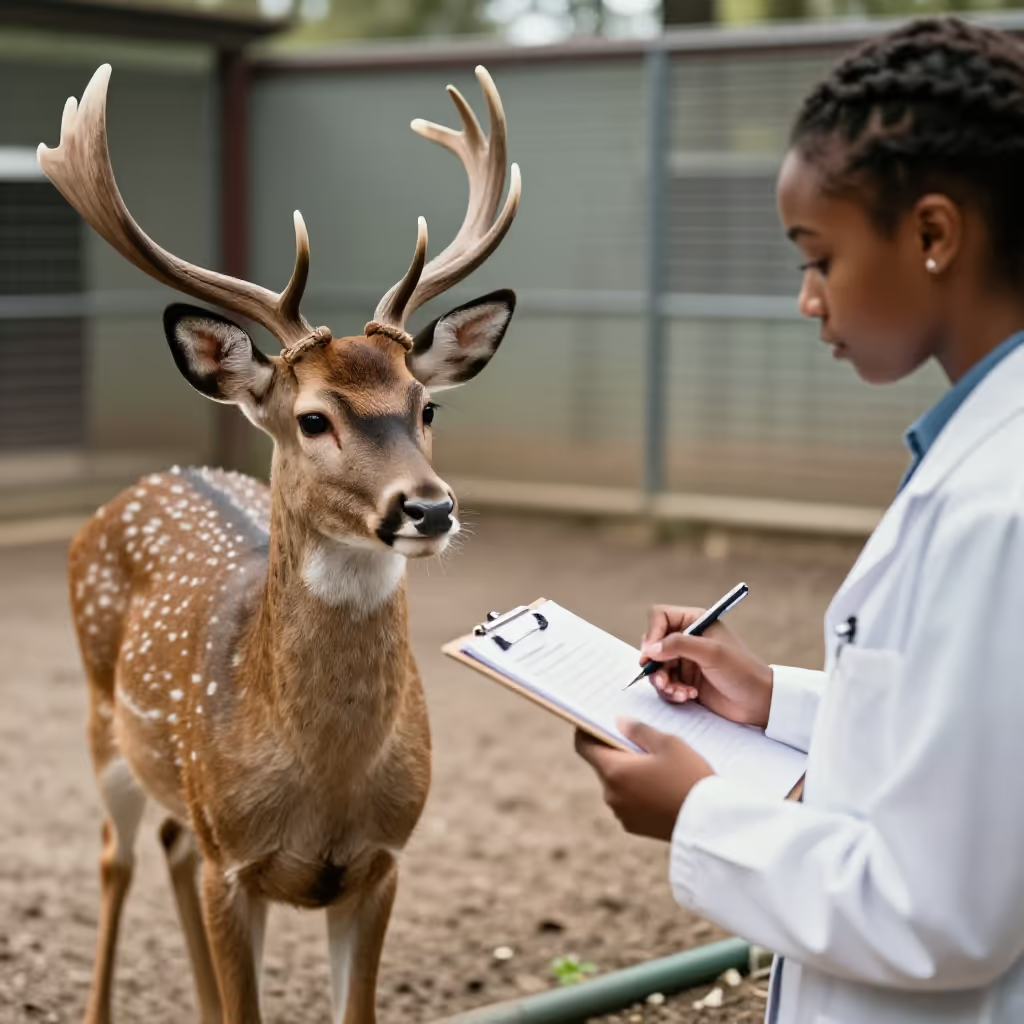
In biology, the neutral technical term for a female animal.
Bei dieser Vogelart ist das Weib deutlich unauffälliger gefärbt als das Männchen.
In this bird species, the female is much less conspicuously colored than the male.

wife
In historical or literary contexts, an outdated term for a wife.
In dem alten Roman sorgt sich der Bauer um Weib und Kind.
In the old novel, the farmer worries about his wife and child.
The word 'Weib' is the root of the very common modern adjective 'weiblich' (female). While 'das Weib' is often negative, 'weiblich' is a neutral term.
Die weiblichen Charaktere im Film waren sehr stark dargestellt.
The female characters in the film were portrayed as very strong.
Although it refers to a woman, 'Weib' has the neuter article 'das'. This is a remnant from a time when the word was neutral. Today, this neuter article can intensify the derogatory or detached effect.
Früher war „das Weib“ ein normales Wort, heute klingt es respektlos.
In the past, 'das Weib' was a normal word; today it sounds disrespectful.
In modern everyday language, 'Weib' is a coarse and usually derogatory term for a woman. You should avoid it if you want to speak respectfully about a person.
Er nannte sie im Streit ein „hinterhältiges Weib“.
During the argument, he called her a “deceitful woman.”
When referring to animals, 'Weib' is a neutral technical term for a female animal. You can recognize this meaning from the fact that an animal species is mentioned in the sentence.
Das Weibchen des Löwen, also das Löwen-Weib, kümmert sich um die Jungen.
The lioness, that is, the female lion, takes care of the young.
In fairy tales, historical novels, or old texts, 'Weib' often simply means 'Ehefrau' (wife) or 'Frau' (woman) without a negative connotation. The context makes it clear here that it is an outdated form of language.
In der Bibelgeschichte verlor der Mann Weib und Kinder.
In the Bible story, the man lost his wife and children.
female
Both das Weib and das Weibchen can refer to a female animal. das Weib is a neutral technical term, while das Weibchen is also used in general language. Weib is therefore appropriate in a biological technical text, whereas Weibchen is usually used in everyday language.

Bei dieser Art ist das Weib deutlich größer als das Männchen.
In this species, the female is significantly larger than the male.
Bei dieser Art ist das Weibchen deutlich größer als das Männchen.
In this species, the female is significantly larger than the male.