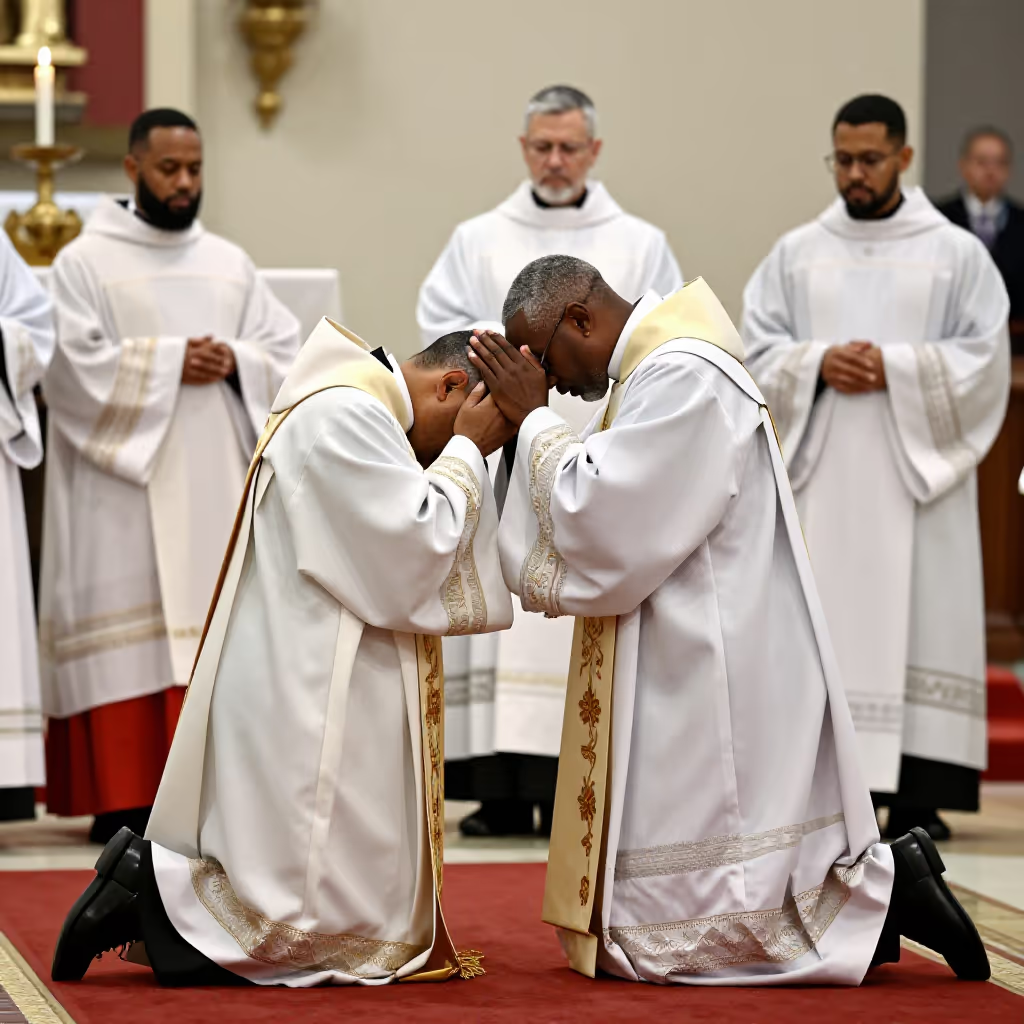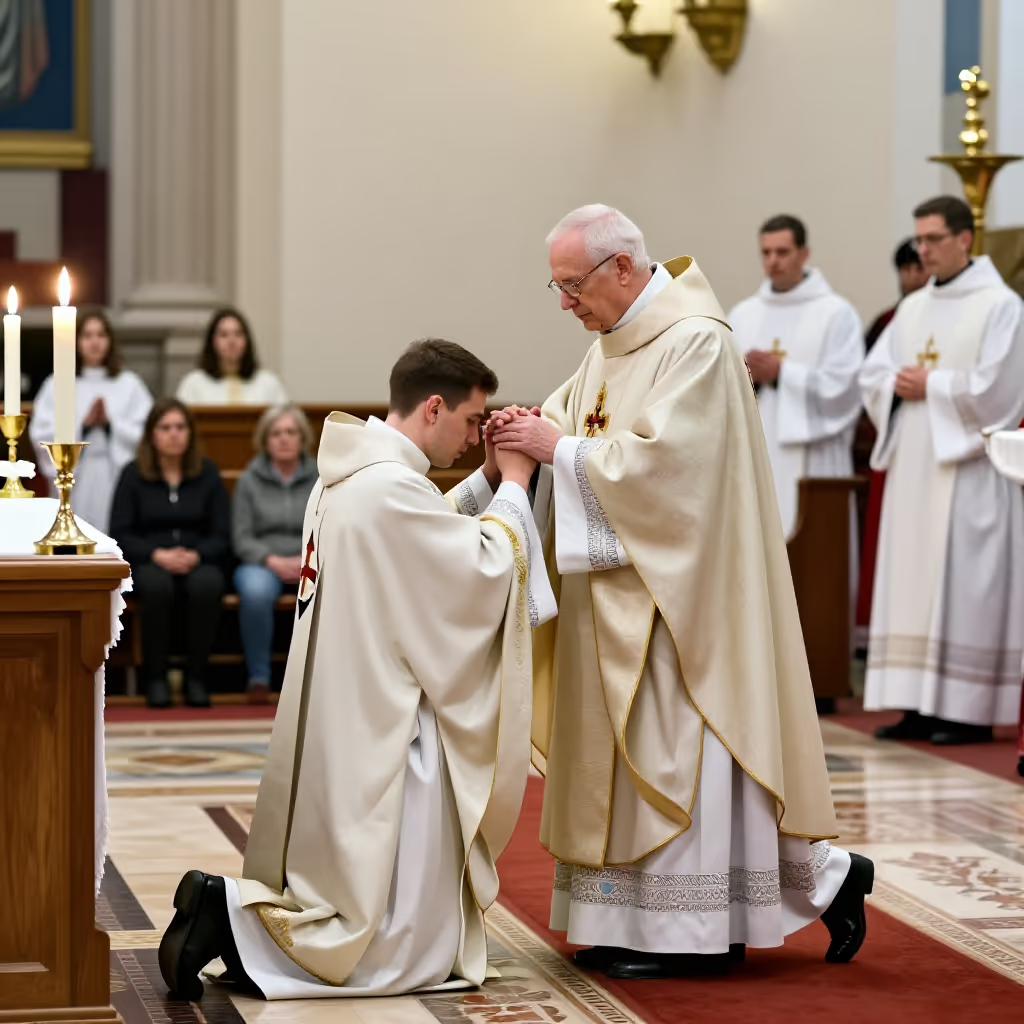
A solemn, often religious ceremony through which a person (e.g., a priest), a building (e.g., a church), or an object is dedicated to a special, usually sacred purpose.
example
Der Bischof vollzog die Weihe der neuen Kapelle.
The bishop performed the consecration of the new chapel.
Usage tips
Word family
'Die Weihe' (consecration) is the noun related to the verb 'weihen' (to solemnly dedicate something to a purpose). The word 'Weihnachten' (Christmas) is also linguistically related to it and originally means 'at the consecrated nights'.
EXAMPLE
Der Priester wird die neue Kapelle feierlich weihen.
The priest will solemnly consecrate the new chapel.
Typical collocations
In the context of a ceremony, 'Weihe' is often combined with verbs such as 'vollziehen' (to perform), 'vornehmen' (to carry out), or 'empfangen' (to receive). Common compounds are 'Priesterweihe' (ordination to the priesthood) or 'Kirchenweihe' (church consecration).
EXAMPLE
Der junge Mann empfing die Weihe zum Diakon.
The young man received ordination as a deacon.
Describing atmosphere
In its figurative meaning, 'Weihe' describes a very serious and solemn atmosphere. One can often 'spüren' (feel) this mood, or it 'herrscht' (prevails) in a particular place.
EXAMPLE
In der alten Bibliothek herrschte eine besondere Weihe.
There was a special solemn atmosphere in the old library.
Fixed expression
The idiom 'die höheren Weihen erhalten' (to receive the higher consecrations/recognition) means to receive official or social recognition in a field. Today it is often used slightly ironically.
EXAMPLE
Seit sein Rezept in einer berühmten Zeitschrift gedruckt wurde, hat er die höheren Weihen der Hobbyköche erhalten.
Since his recipe was printed in a famous magazine, he has received the higher recognition of amateur cooks.
Compare with
near_synonym
Weihe vs Anerkennung
recognition
'die Anerkennung' and 'die Weihe' are close only in a special use. 'Anerkennung' can mean praise and respect, but also official confirmation. 'Weihe' normally means a solemn, often religious ceremony. In the fixed expression 'die höheren Weihen erhalten' (to receive higher recognition), however, 'Weihen' means figuratively that someone is officially recognized or taken seriously in a field. In normal everyday language, for praise or confirmation you would rather say 'Anerkennung'. 'Weihe' fits only in religious or very ceremonial contexts, or in this fixed expression.
Weihe
Nach dem Erfolg bei der Ausstellung erhielt der junge Künstler die höheren Weihen der Fachwelt.
After his success at the exhibition, the young artist received the higher recognition of the professional world.
Anerkennung
Für ihre lange Arbeit im Verein bekommt meine Nachbarin viel Anerkennung.
My neighbor receives a lot of recognition for her many years of work in the club.