

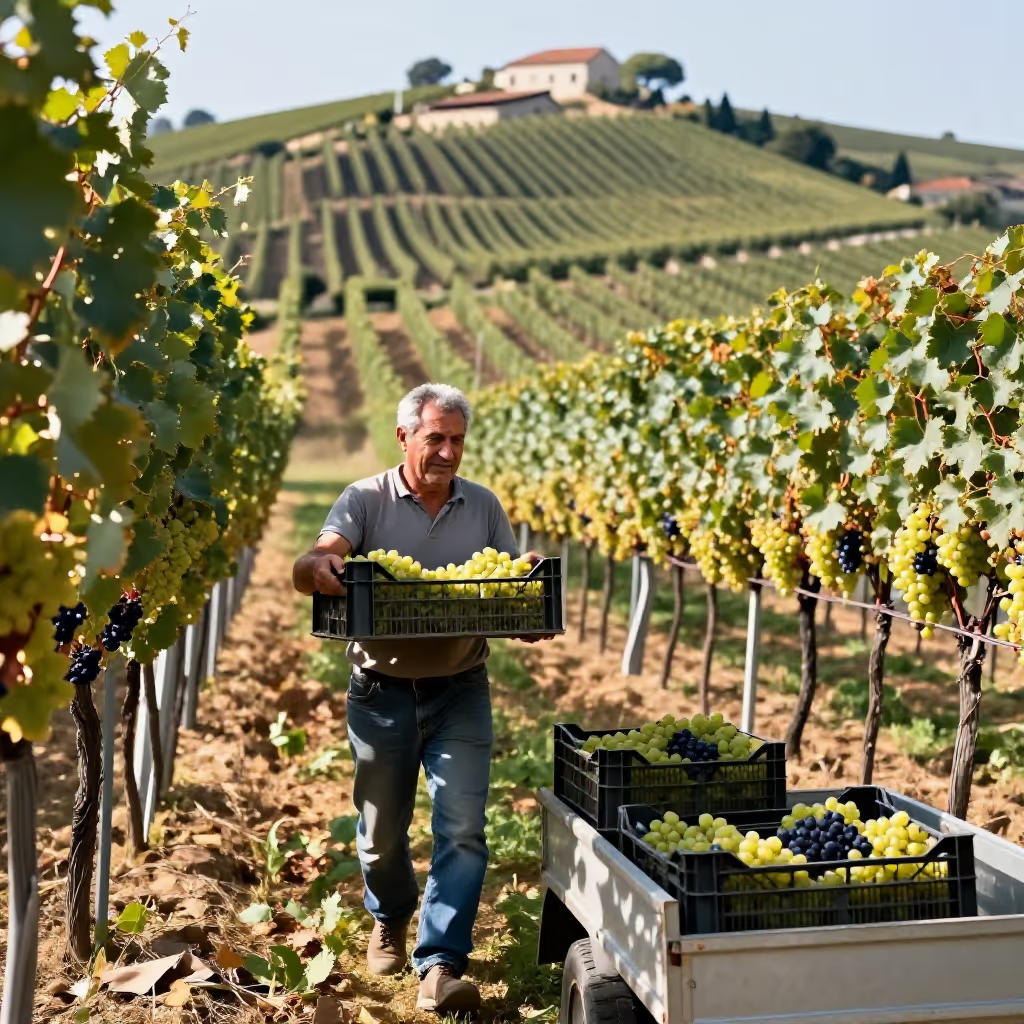
Used almost exclusively as the first part of compound nouns and then means 'relating to a vineyard' or 'coming from a vineyard'.
example
Die Weinberg-Schnecke ist in vielen Teilen Europas heimisch.
The Roman snail is native to many parts of Europe.
Usage tips
Word structure
The form 'Weinberg-' (vineyard-) is derived from the noun 'der Weinberg' (vineyard). This is made up of 'der Wein' (wine) and 'der Berg' (mountain/hill) and refers to a hill or slope where grapes are grown.
EXAMPLE
Im Herbst besuchen viele Touristen die Weinberge.
In autumn, many tourists visit the vineyards.
Use in compounds
'Weinberg-' (vineyard-) is used as the first part of a compound noun, or Kompositum, to define the second word more precisely. It describes that something comes from a vineyard or has to do with one.
EXAMPLE
Der Weinbergpfirsich hat ein besonders intensives Aroma.
The vineyard peach has a particularly intense aroma.
Common mistake
Careful: 'Weinberg' (vineyard) cannot stand as an independent adjective after a verb like 'sein' (to be). It must always be part of a compound noun.
EXAMPLE
Diese besondere Schneckenart nennt man Weinbergschnecke.
This special species of snail is called a Roman snail.
Compare with
confusable
Weinberg vs Wein
wine
'der Wein' and 'Weinberg-' look similar, but they have different functions. 'der Wein' can mean the drink made from grapes or also the plant on which grapes grow. 'Weinberg-', on the other hand, usually appears as the first part of compound nouns and shows that something has to do with a vineyard or comes from there. Learners may confuse the words because both are connected to grapes and viticulture. If you mean the drink, say 'Wein'. If a compound word describes something from or at the vineyard, 'Weinberg-' often comes before it.
Weinberg
Am Weinbergweg stehen alte Häuser mit Blick auf die Reben.
There are old houses on Weinbergweg with a view of the vines.
Wein
Dieser Wein schmeckt sehr trocken und passt gut zum Essen.
This wine tastes very dry and goes well with the food.