

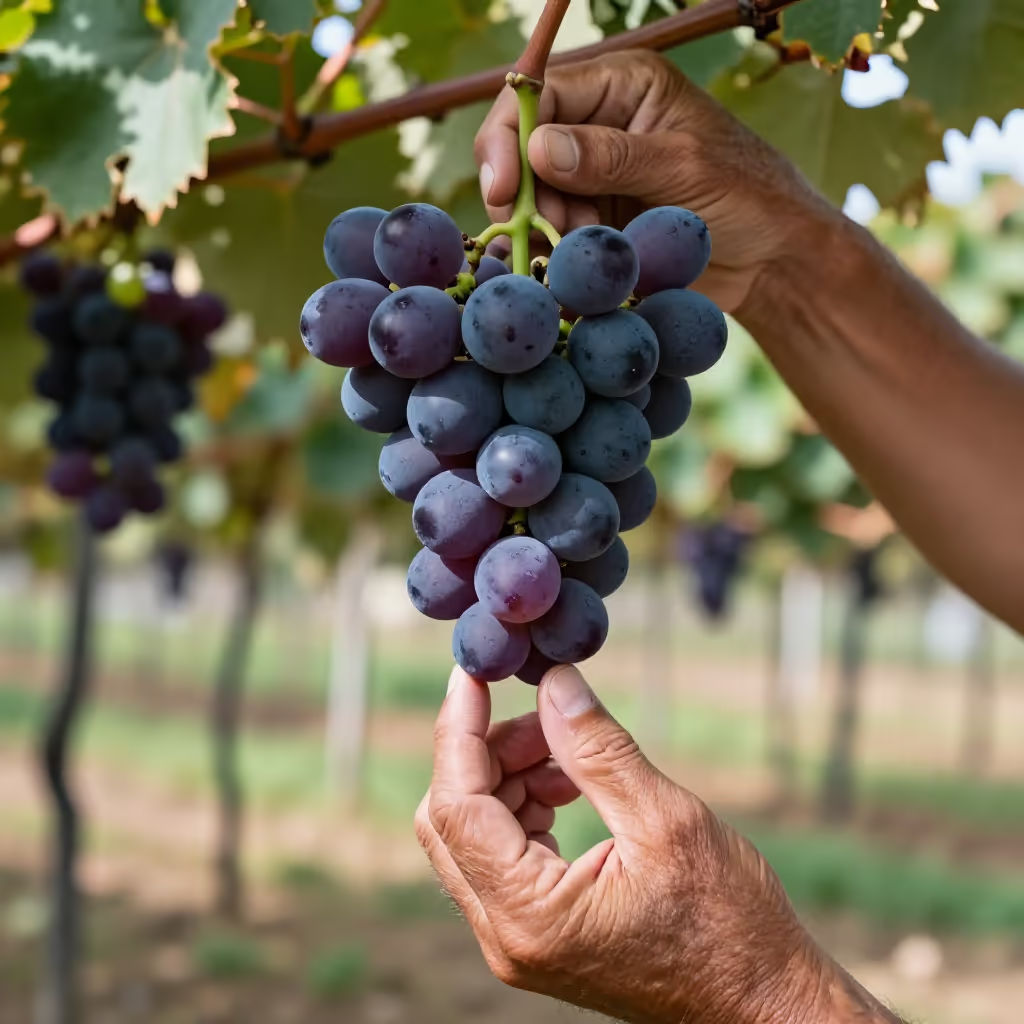
die Weintraube
grape
The individual round or oval berry fruit that grows on a grapevine and is used for making wine or for eating directly.
Diese kernlose Weintraube ist besonders süß und saftig.
This seedless grape is especially sweet and juicy.
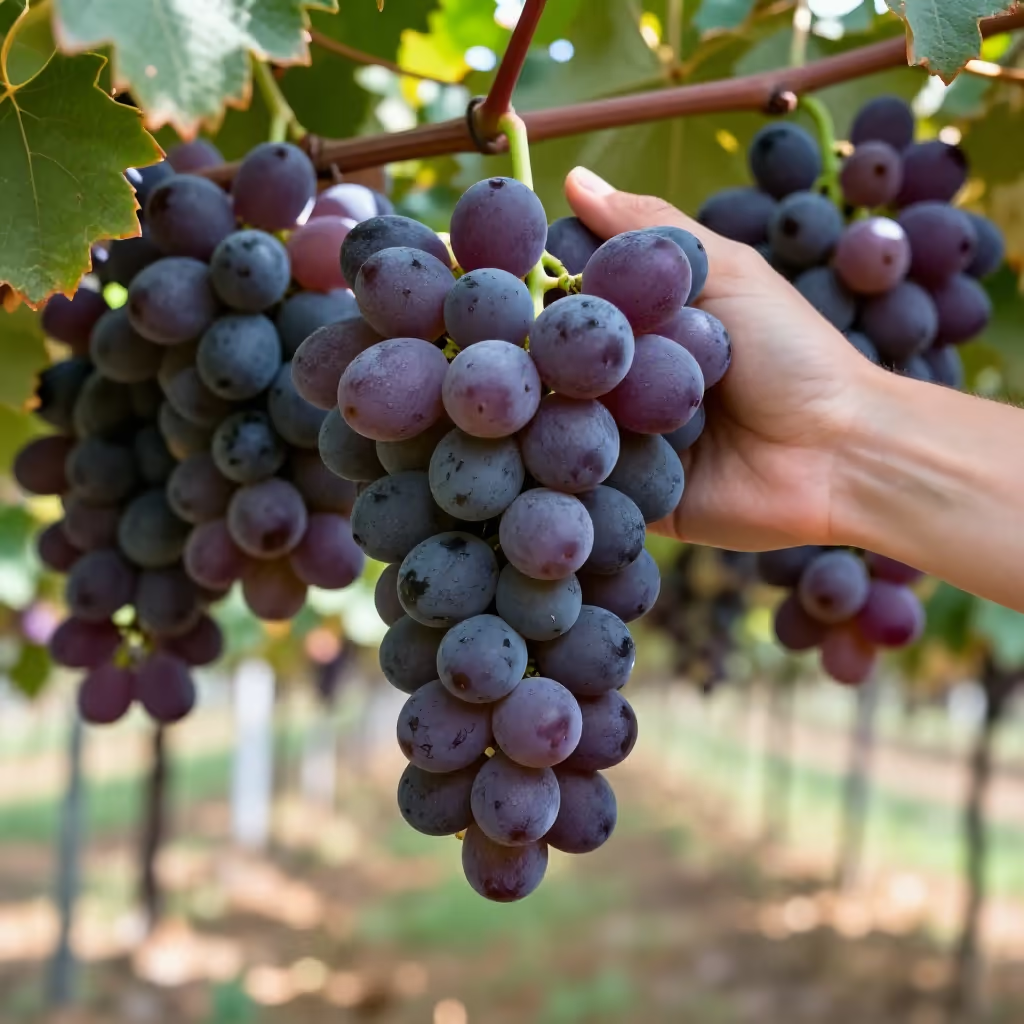
grape
Loading your saved state.

grape
The individual round or oval berry fruit that grows on a grapevine and is used for making wine or for eating directly.
Diese kernlose Weintraube ist besonders süß und saftig.
This seedless grape is especially sweet and juicy.
The word is made up of 'der Wein' (wine) and 'die Traube' (grape/bunch of grapes). So it names the fruit from which wine is traditionally made.
Im Herbst beginnt die Lese der Weintrauben für den neuen Wein.
In autumn, the harvesting of grapes for the new wine begins.
'Die Weintraube' refers to the single berry. A whole cluster with many berries is often simply called 'eine Traube' (a bunch of grapes) or 'Trauben' (grapes) in everyday language.
Kannst du mir bitte eine Traube aus dem Kühlschrank holen?
Could you please get me some grapes from the fridge?
Common adjectives used with 'Weintrauben' (grapes) describe their qualities. These include 'kernlos' (seedless), 'süß' (sweet), 'saftig' (juicy), as well as their color: 'rot' (red) or 'grün' (green).
Kinder mögen besonders gern kernlose, grüne Weintrauben.
Children especially like seedless green grapes.
grape / cluster
Traube can refer both to an individual fruit and to the entire fruit cluster of the grapevine, and in everyday speech it often means the whole bunch. Weintraube clearly refers to a single grape. When the number of individual fruits matters, Weintraube is more precise.

Sie nimmt eine einzelne Weintraube von dem Fruchtstand.
She takes a single grape from the cluster.
Sie legt eine ganze Traube auf den Obstteller.
She puts a whole bunch of grapes on the fruit plate.