

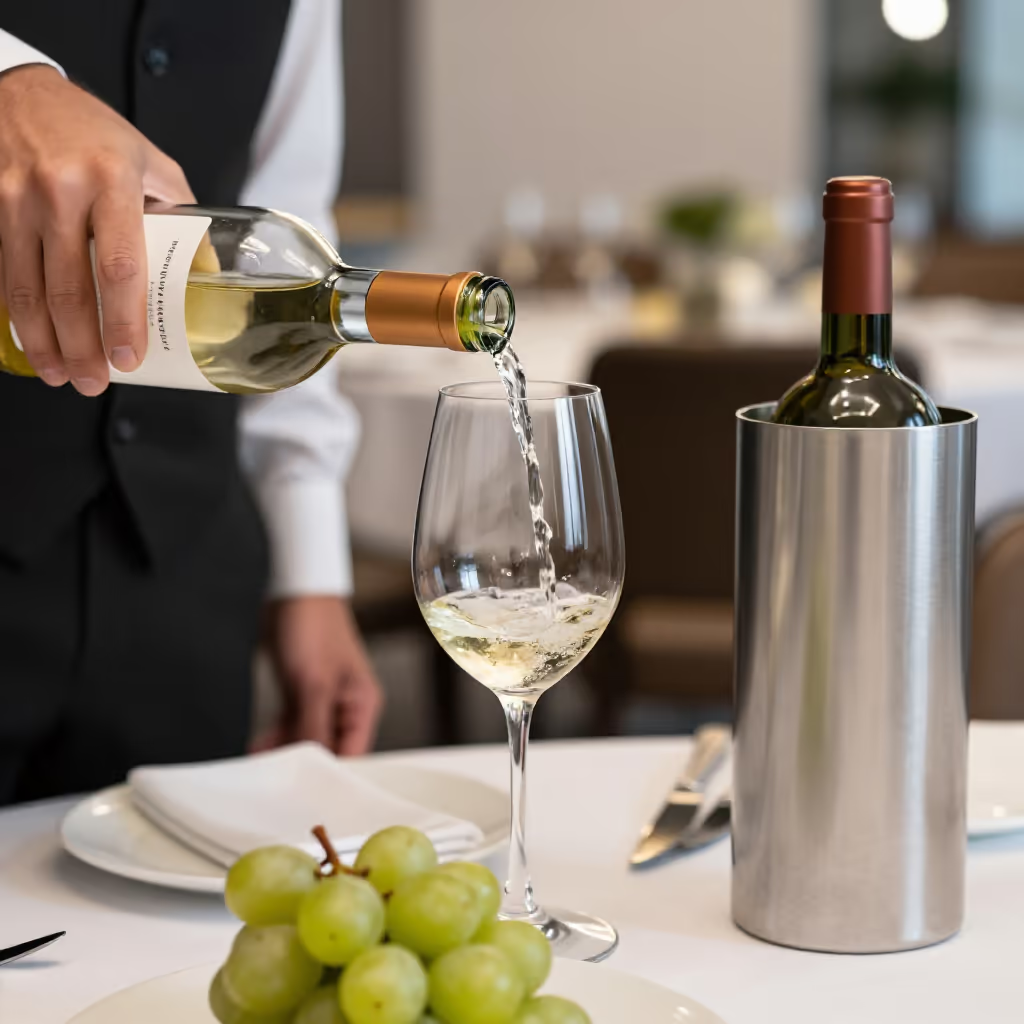
A wine of a light, greenish to golden-yellow color, usually made from light-colored grape varieties.
example
An einem warmen Sommerabend trinke ich gerne ein Glas gekühlten Weißwein.
On a warm summer evening, I like to drink a glass of chilled white wine.
Usage tips
Word composition
The word is a simple compound made from the adjective 'weiß' (white) and the noun 'der Wein' (wine). German forms many compounds like this, such as 'der Rotwein' (red wine).
EXAMPLE
Zum Fischgericht passt ein trockener Weißwein am besten.
A dry white wine goes best with the fish dish.
Typical quantities
In restaurants or everyday life, people often say 'ein Glas Weißwein' (a glass of white wine) or 'eine Flasche Weißwein' (a bottle of white wine). These expressions are very common.
EXAMPLE
Für den Mädelsabend haben wir zwei Flaschen Weißwein gekauft.
We bought two bottles of white wine for girls' night.
Typical adjectives
To describe white wine, the adjectives 'trocken' (dry), 'halbtrocken' (semi-dry), 'lieblich' (mildly sweet), or 'süß' (sweet) are often used. 'gekühlt' (chilled) is also an important quality.
EXAMPLE
Ich hätte gern einen lieblichen Weißwein, bitte.
I would like a mildly sweet white wine, please.
Compare with
antonym · confusable
Weißwein vs Rotwein
red wine
'der Rotwein' and 'der Weißwein' are both types of wine, but they differ mainly in color and production. 'Rotwein' is red and is made from dark grapes whose skins are fermented along with the juice. 'Weißwein' is light to golden yellow and is usually made from light-colored grapes. The words can be confused because they are formed in the same way: color plus 'Wein' (wine). So pay attention to the first part of the word: 'Rot-' means red wine, and 'Weiß-' means light-colored wine.
Weißwein
Im Sommer bestelle ich im Restaurant lieber einen kühlen Weißwein.
In summer, I prefer to order a chilled white wine at a restaurant.
Rotwein
Nach dem Essen öffnete die Familie eine Flasche Rotwein.
After the meal, the family opened a bottle of red wine.