

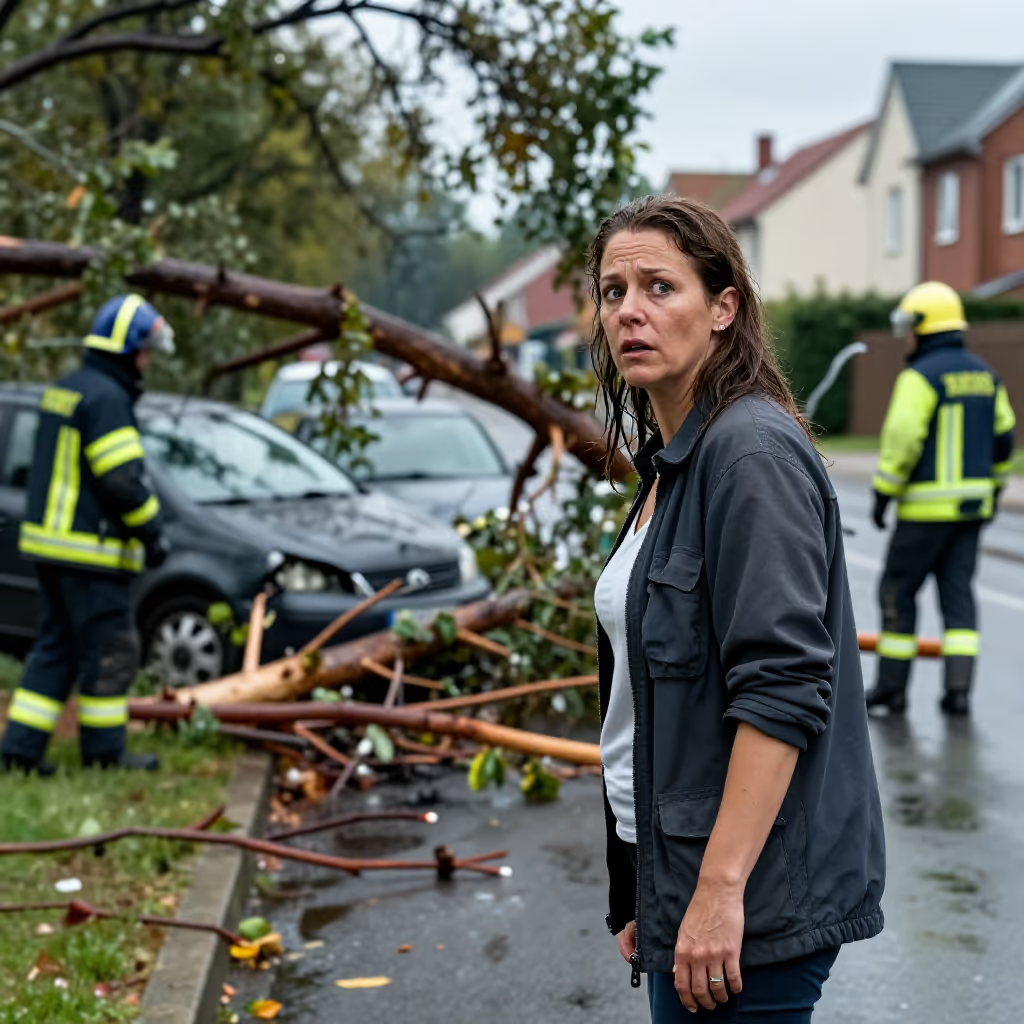
To happen to a person or be experienced by them. The word is mostly used for fateful, unexpected, or negative events and belongs to an elevated style of language.
example
Dem Reisenden ist auf seinem Weg viel Unheil widerfahren.
Much misfortune befell the traveler on his journey.

Usage tips
Inseparable verb
'Widerfahren' (to befall) is an inseparable verb. The prefix 'wider-' remains firmly attached to the verb in all conjugated forms and sentence positions.
EXAMPLE
Ich kann nicht glauben, was ihm widerfahren ist.
I can't believe what befell him.
Dative construction
This verb requires a special sentence structure: the person to whom something happens is always in the dative. The event itself is the subject in the nominative.
EXAMPLE
Dem Opfer ist großes Unrecht widerfahren.
A great injustice befell the victim.
Register and style
'Widerfahren' (to befall) is a word of elevated style and is rarely used in everyday speech. It usually describes fateful, serious, or negative events.
EXAMPLE
In alten Geschichten widerfährt den Helden oft ein seltsames Schicksal.
In old stories, a strange fate often befalls the heroes.
Typical collocations
Typical subjects used with 'widerfahren' (to befall) are abstract nouns such as 'Unrecht' (injustice), 'Gerechtigkeit' (justice), 'ein Schicksal' (a fate), or 'Glück' (luck).
EXAMPLE
Nach all den Jahren ist ihm endlich Gerechtigkeit widerfahren.
After all those years, justice finally befell him.
Compare with
near_synonym · confusable
widerfahren vs treffen
to meet / to hit
'treffen' and 'widerfahren' can both describe that something strongly affects a person. 'treffen' is more common in everyday language and can say that a piece of news, an event, or a problem affects someone strongly, emotionally or practically. 'widerfahren' sounds elevated and is usually used for something that happens to someone, often unexpectedly or negatively. Learners may confuse the words because both can have to do with unpleasant experiences. In practice: for normal everyday language, 'treffen' is more natural; 'widerfahren' is more suitable in serious, narrative, or more formal texts.
widerfahren
Der Familie ist auf der Reise ein großes Unglück widerfahren.
A great misfortune befell the family during the trip.
treffen
Die schlechte Nachricht trifft Emil härter, als er erwartet hat.
The bad news affects Emil more deeply than he expected.