

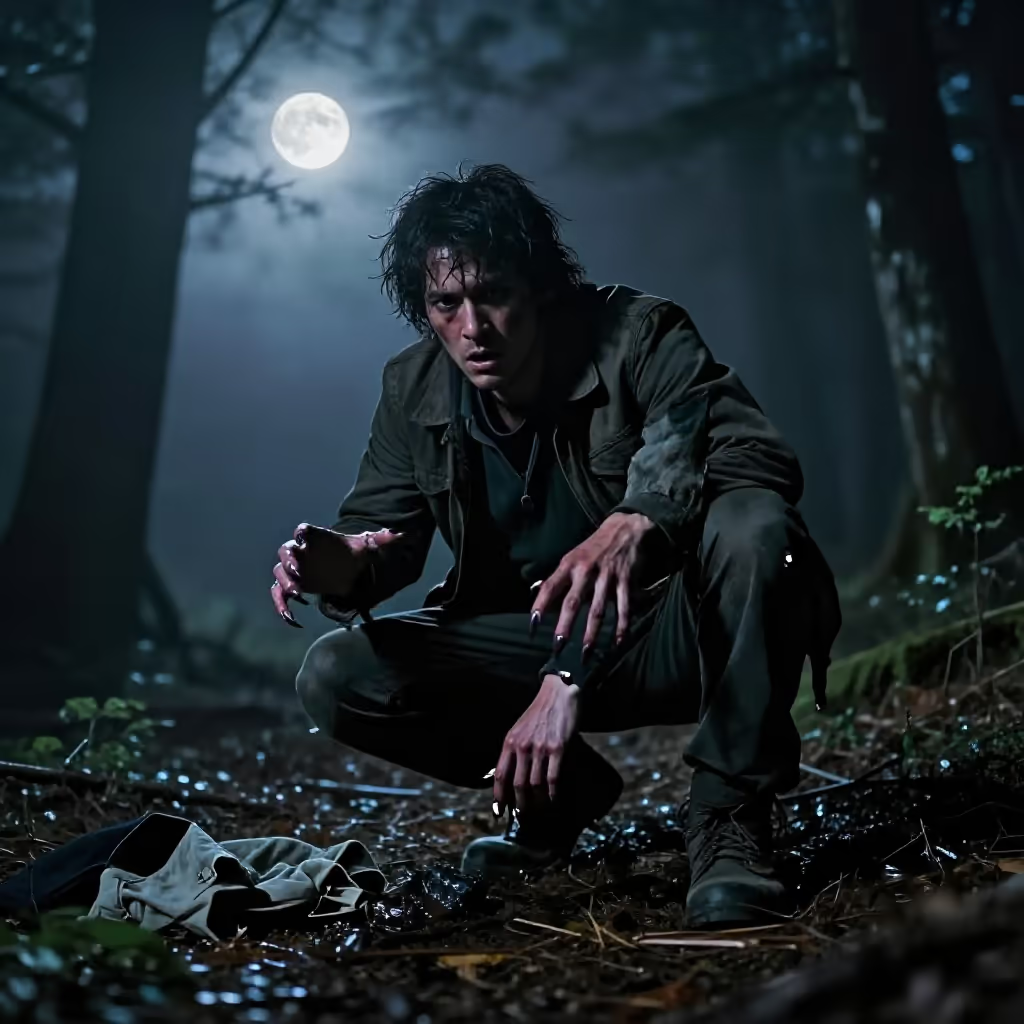
A mythological figure, a human who can transform into a wolf during a full moon or because of a curse.
example
In alten Legenden fürchteten die Dorfbewohner die Nächte, in denen der Werwolf umherstreifte.
In old legends, the villagers feared the nights when the werewolf roamed around.
Usage tips
Word structure
The word is made up of 'Wer' and 'Wolf' (wolf). 'Wer' is an old German word for 'man'. So a 'Werwolf' (werewolf) is literally a 'man-wolf'.
EXAMPLE
Die Legende vom Werwolf ist in vielen Kulturen bekannt.
The legend of the werewolf is known in many cultures.
Typical combinations
A werewolf is often associated with the full moon. Typical phrases are 'sich in einen Werwolf verwandeln' (to transform into a werewolf) and 'bei Vollmond' (during a full moon).
EXAMPLE
Der Sage nach verwandelt er sich bei Vollmond in einen Werwolf.
According to the legend, he transforms into a werewolf during a full moon.
Cultural context
The werewolf is a well-known figure in myths, fairy tales, and especially in modern fantasy and horror literature. It often symbolizes the uncontrolled, animal side of human beings.
EXAMPLE
Ich habe gestern einen spannenden Film über Werwölfe gesehen.
Yesterday I watched an exciting film about werewolves.