


westlich
western
Located in the cardinal direction west or directed toward it.
EXAMPLE
Die westliche Küste des Landes ist bekannt für ihre schönen Strände.
The western coast of the country is known for its beautiful beaches.
western
Loading your saved state.
western
Located in the cardinal direction west or directed toward it.
Die westliche Küste des Landes ist bekannt für ihre schönen Strände.
The western coast of the country is known for its beautiful beaches.
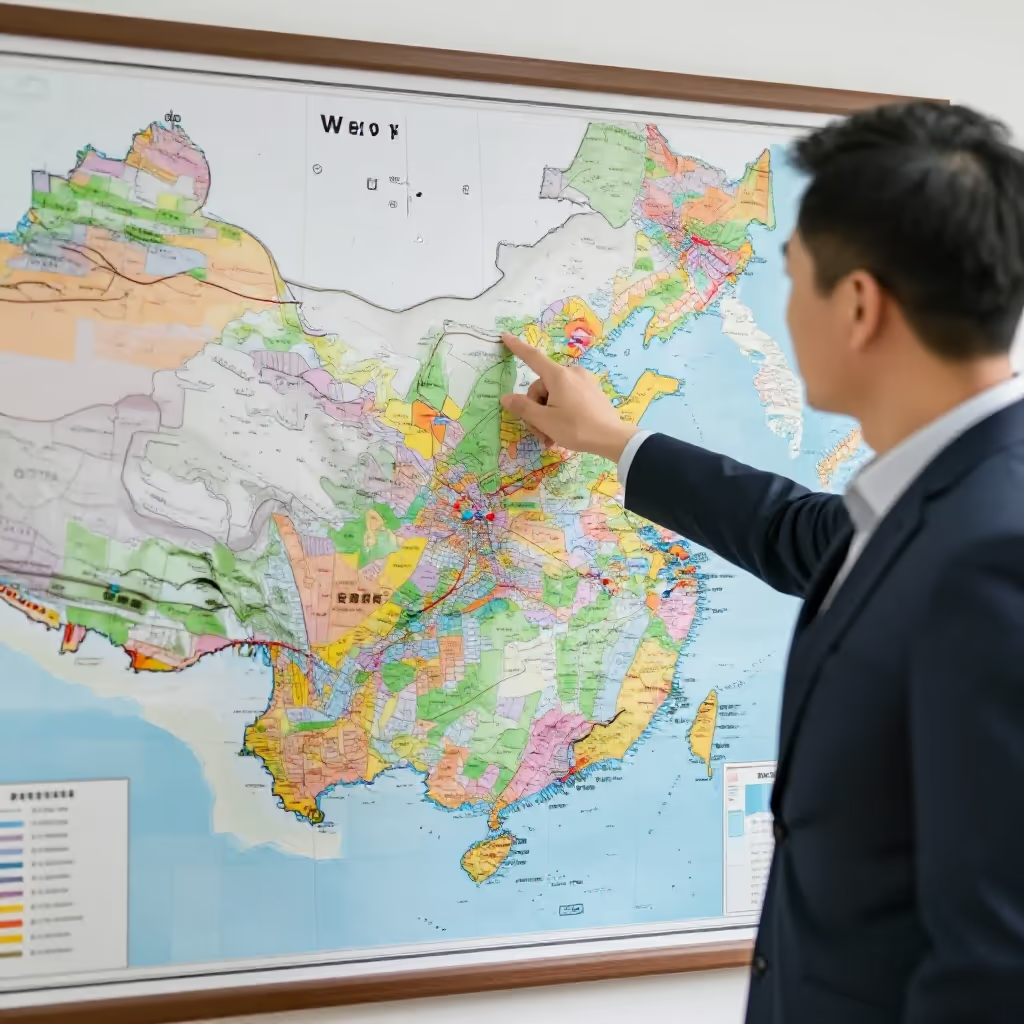
west of
Describes a position that is located in the direction of west from a specific point. Often used with 'von' (of/from).
Das Gewerbegebiet liegt westlich der Autobahn.
The industrial area is located west of the highway.
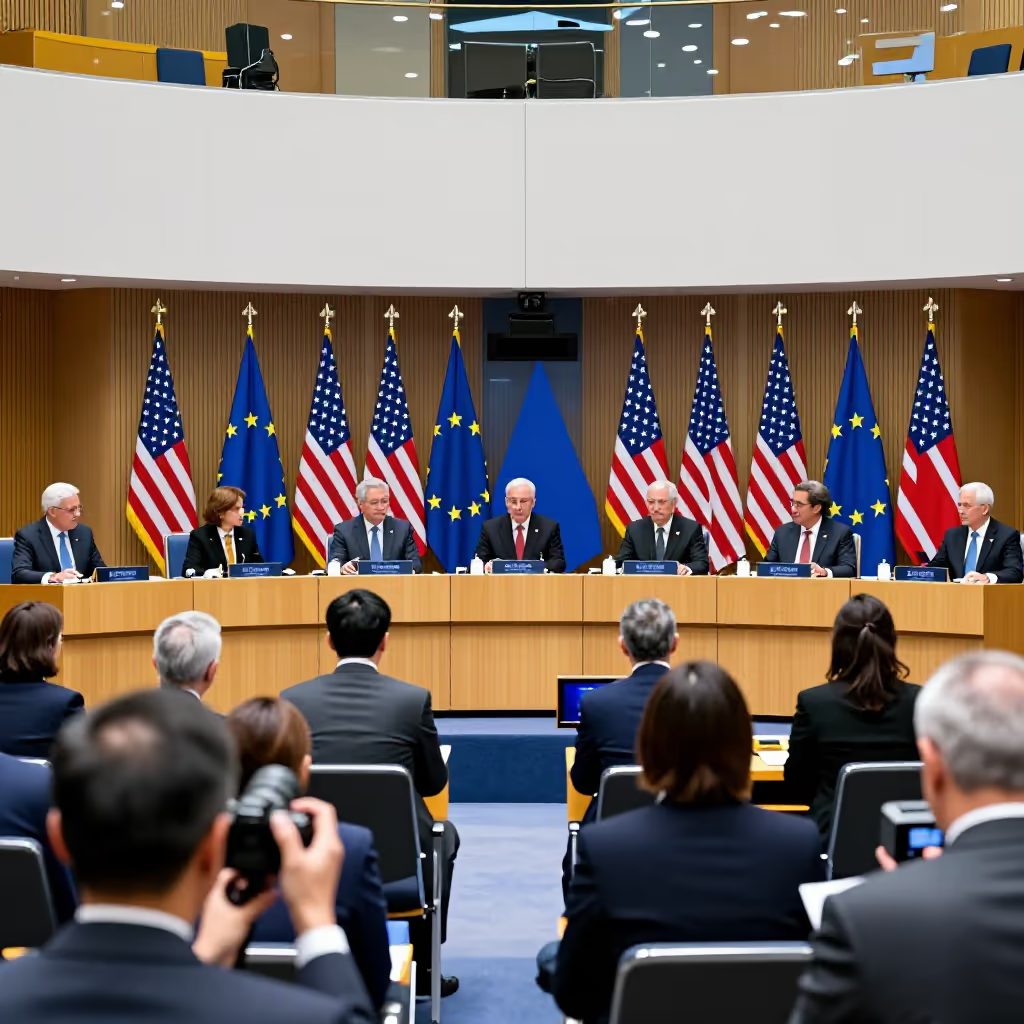
Western
Related to the culture, politics, or society of the so-called Western world, especially Western Europe and North America.
Viele westliche Gesellschaften sind von Individualismus geprägt.
Many Western societies are shaped by individualism.
'Westlich' (western) derives from the noun 'der Westen' (the west). The ending '-lich' turns the noun into an adjective. The same pattern applies to the other cardinal directions: 'nördlich' (northern/north of), 'südlich' (southern/south of), and 'östlich' (eastern/east of).
Die Sonne geht im Westen unter.
The sun sets in the west.
To indicate a position relative to a place, 'westlich' (west of) is used with the genitive or with the preposition 'von' + dative. The version with 'von' is more common in spoken language.
Das Dorf liegt westlich des Flusses.
The village is located west of the river.
If 'westlich' (western) stands before a noun, for example 'die westliche Region' (the western region), it describes a part of something (m01). If it stands alone with a place, for example 'westlich von Hamburg' (west of Hamburg), it indicates a relative position (m02). If it refers to culture or politics, it means the 'westliche Welt' (Western world) (m03).
Die westliche Fassade des Gebäudes braucht einen neuen Anstrich.
The western facade of the building needs a new coat of paint.
In the cultural and political sense, 'westlich' (Western) is often combined with abstract nouns such as 'Werte' (values), 'Kultur' (culture), 'Gesellschaft' (society), 'Demokratie' (democracy), or 'Lebensstil' (lifestyle).
Freie Meinungsäußerung ist ein zentraler westlicher Wert.
Freedom of expression is a central Western value.
West German
Both words can describe a location in the west of Germany. Westlich indicates a relative direction from a reference point, while westdeutsch refers to the geographical west of present-day Germany. Use westlich with a point of comparison and westdeutsch for regional classification.
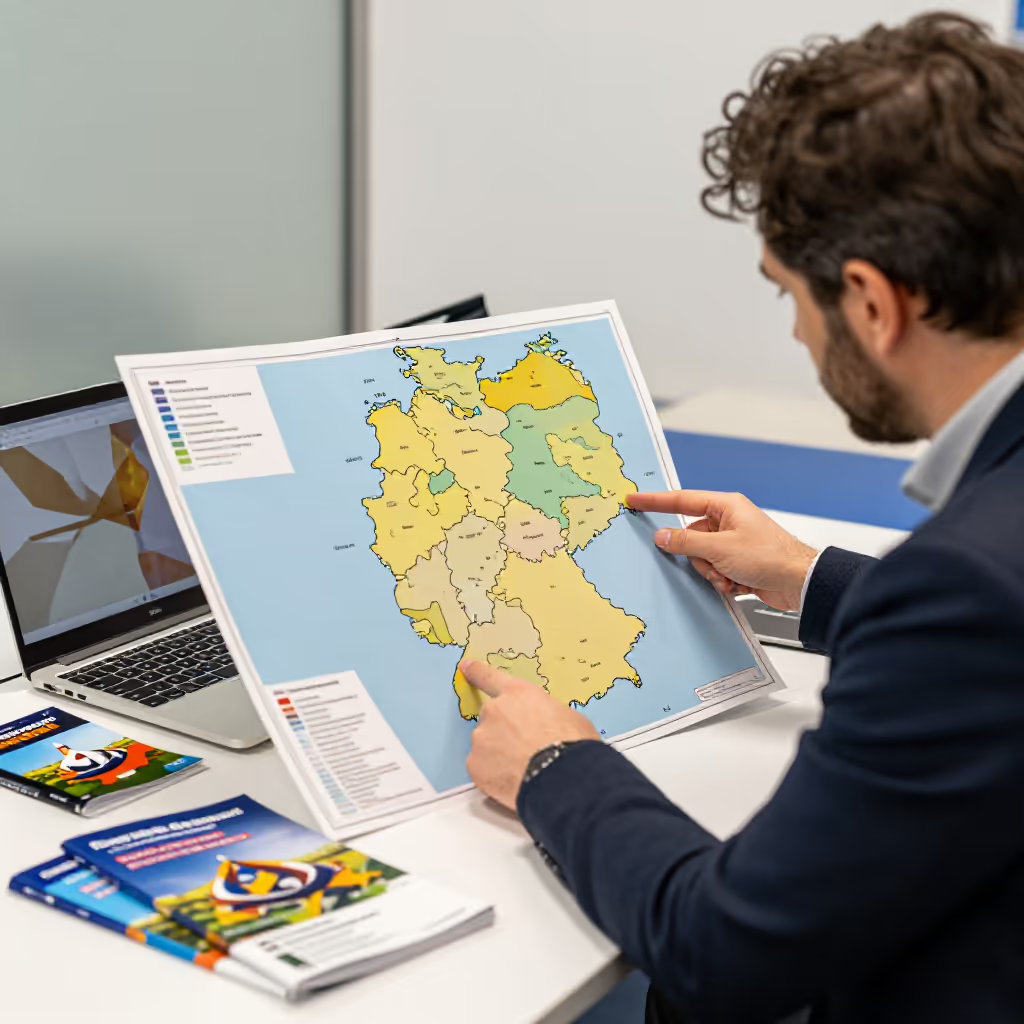
Köln liegt westlich von Berlin.
Cologne is west of Berlin.
Köln ist eine westdeutsche Stadt.
Cologne is a West German city.