

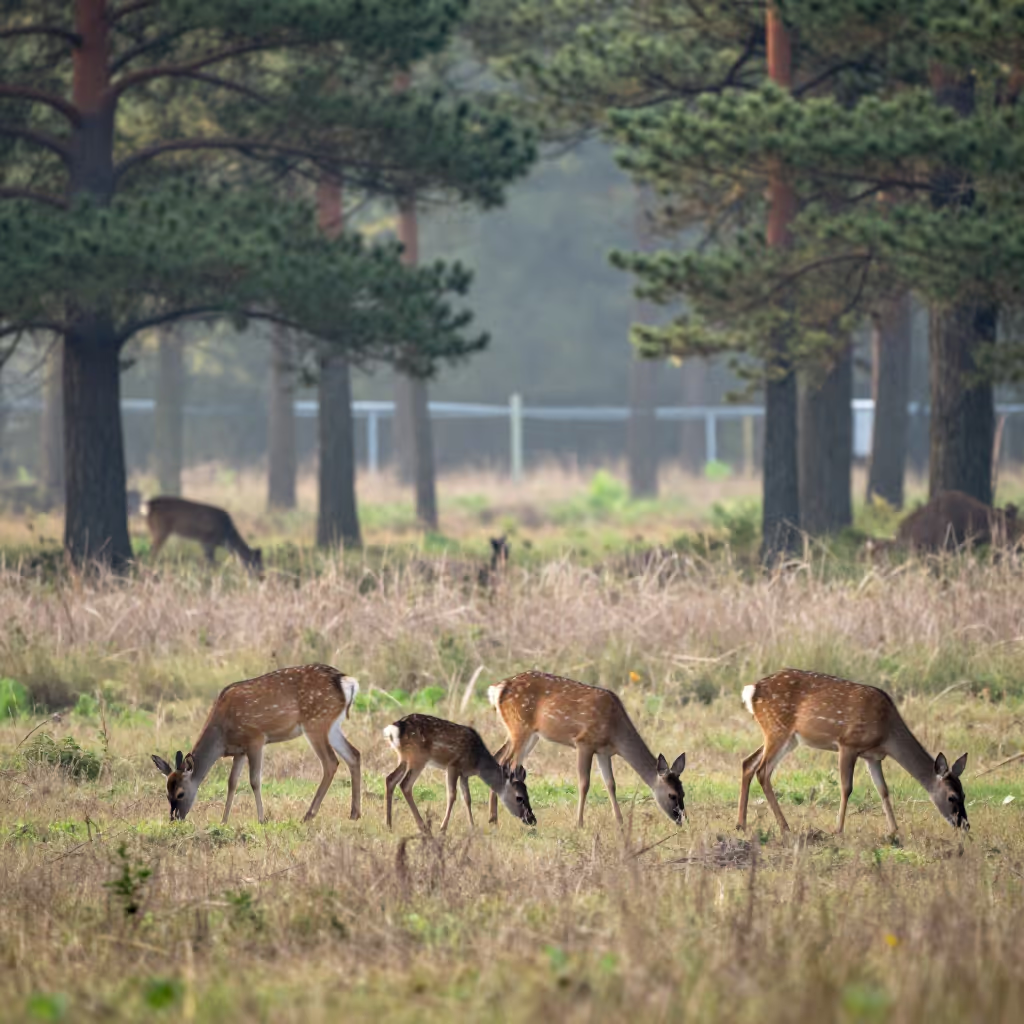
die Wildbahn
wild
The natural habitat of wild animals; nature in the open.
EXAMPLE
Der im Zoo geborene Tiger wurde wieder in die Wildbahn entlassen.
The tiger born in the zoo was released back into the wild.
wild
Loading your saved state.
wild
The natural habitat of wild animals; nature in the open.
Der im Zoo geborene Tiger wurde wieder in die Wildbahn entlassen.
The tiger born in the zoo was released back into the wild.

to let someone loose
To allow someone, often a young person, to go their own way and gain experience without supervision or control.
Nach dem Schulabschluss wurde er von seinen Eltern auf die Wildbahn des Studiums losgelassen.
After graduating from school, his parents let him loose into the wilds of university life.
The word is made up of 'wild' (wild) and 'Bahn' (track/path). Here, 'Bahn' means something like 'life path' or 'sphere'. So 'Wildbahn' (the wild) is literally the living sphere of wild animals.
Löwen gehören in die Wildbahn und nicht in einen Zirkus.
Lions belong in the wild and not in a circus.
In connection with the natural habitat, the preposition 'in' is almost always used. A distinction is made between direction ('in die Wildbahn' — into the wild) and location ('in der Wildbahn' — in the wild).
Der verletzte Vogel wurde gesund gepflegt und wieder in die Wildbahn entlassen.
The injured bird was nursed back to health and released back into the wild.
The idiom 'jemanden auf die Wildbahn loslassen' (to let someone loose into the wild) has a fixed structure. It means giving a person, usually a young one, the freedom to have their own experiences, often after a period of control or training.
Nach der bestandenen Führerscheinprüfung ließen die Eltern ihre Tochter auf die Wildbahn der Straßen los.
After she passed her driving test, her parents let their daughter loose onto the wilds of the road.
You can easily distinguish the two meanings: if it is about animals and nature, the literal meaning is intended. The fixed expression 'auf die Wildbahn loslassen' (to let loose into the wild), on the other hand, always refers to people.
Einige Bären wurden in den Alpen wieder in die Wildbahn ausgesetzt.
Some bears were released back into the wild in the Alps.
wilderness
Wildnis and Wildbahn both refer to nature outside human control. Wildnis is a large, untouched, uninhabited area, while Wildbahn refers to the natural habitat of wild animals. Wildbahn is appropriate for an animal's life, while Wildnis is more suitable for a remote landscape.
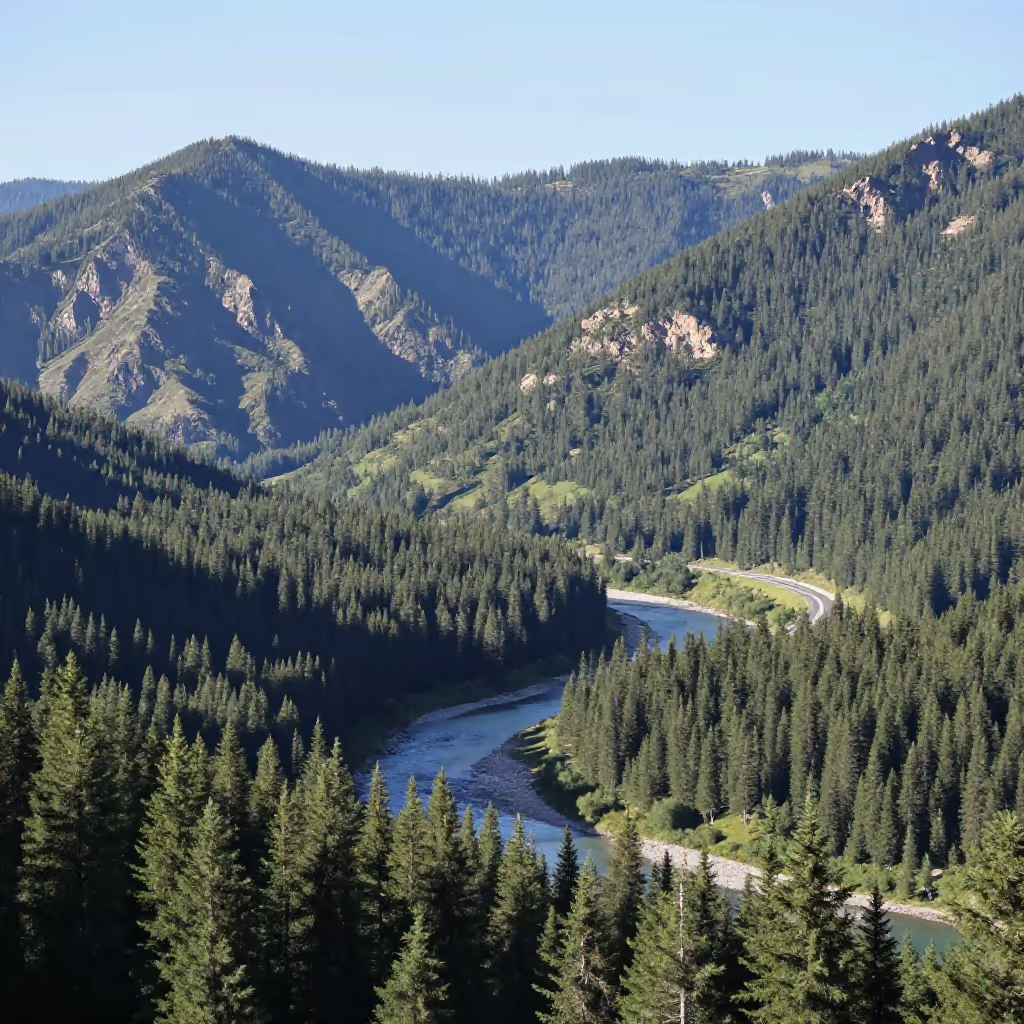
Die Rehe suchen in der Wildbahn nach Nahrung und Schutz.
The deer look for food and shelter in the wild.
Die Wanderer verbrachten mehrere Tage ohne Häuser in der Wildnis.
The hikers spent several days in the wilderness, without any houses around.