

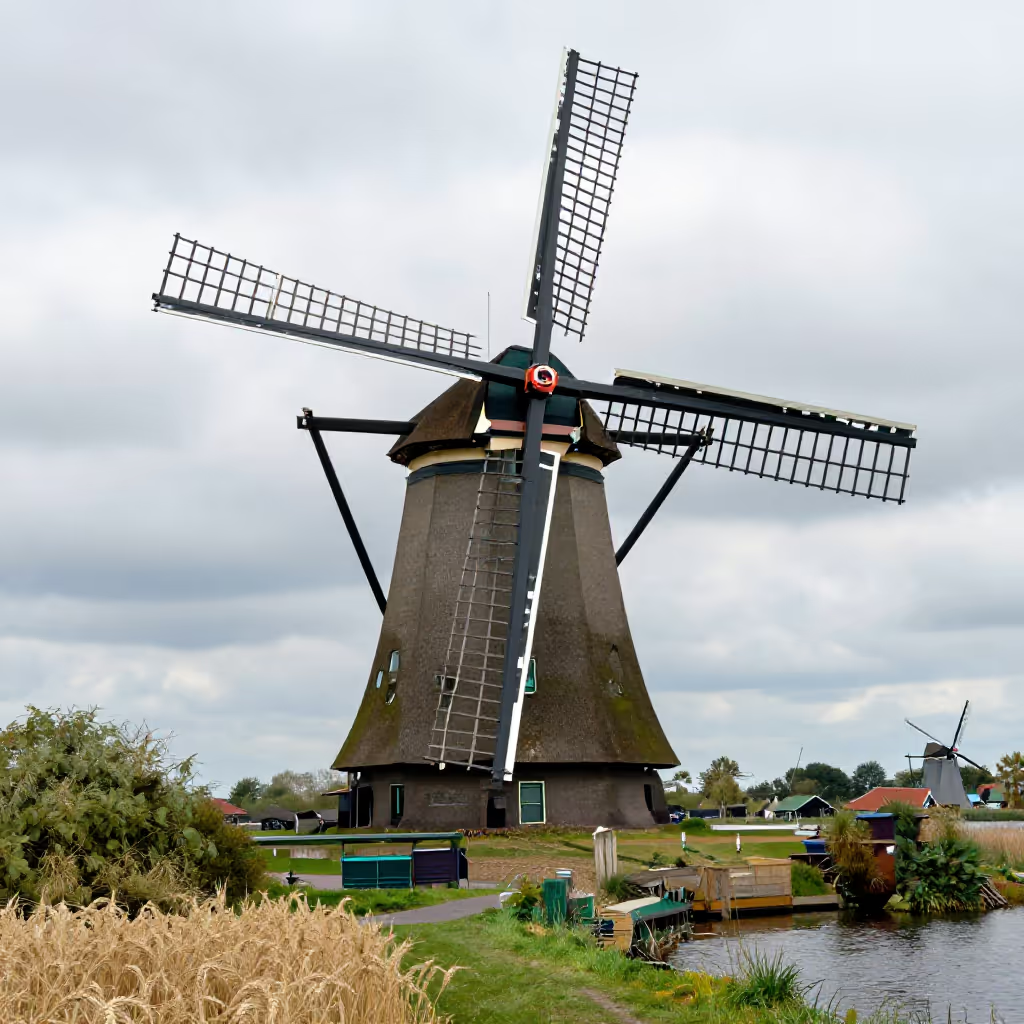
die Windmühle
windmill
A building with sails or blades that are driven by the wind, for example to grind grain or pump water.
EXAMPLE
In Holland kann man viele historische Windmühlen besichtigen.
In Holland, you can visit many historic windmills.
windmill
Loading your saved state.
windmill
A building with sails or blades that are driven by the wind, for example to grind grain or pump water.
In Holland kann man viele historische Windmühlen besichtigen.
In Holland, you can visit many historic windmills.

to tilt at windmills
An idiom meaning to fight a pointless battle against imagined or overwhelmingly powerful opponents.
Mit seinem Protest gegen den globalen Konzern kämpfte er gefühlt gegen Windmühlen.
With his protest against the global corporation, he felt as if he were tilting at windmills.
The word is a clear compound of 'der Wind' (the wind) and 'die Mühle' (the mill). So it describes a mill that is powered by the force of the wind.
Die Flügel der Windmühle drehten sich langsam im Wind.
The sails of the windmill turned slowly in the wind.
The idiom 'gegen Windmühlen kämpfen' (to tilt at windmills) means to fight a hopeless battle, often against an overwhelmingly powerful or merely imagined opponent. The structure is fixed.
Sein Versuch, die Bürokratie allein zu ändern, war ein Kampf gegen Windmühlen.
His attempt to change the bureaucracy all by himself was like tilting at windmills.
This idiom comes from the famous novel 'Don Quixote' by Miguel de Cervantes. In it, the main character mistakes windmills for giants and attacks them. Knowing this origin helps you understand the meaning.
Wie Don Quijote kämpfte er gegen Windmühlen, die nur in seinem Kopf existierten.
Like Don Quixote, he tilted at windmills that existed only in his head.
You can almost always recognize the idiomatic meaning by the verb 'kämpfen' (to fight) and the preposition 'gegen' (against). In all other contexts where the building itself is meant, the literal meaning is intended.
Wir haben eine alte Windmühle zu einem Wohnhaus umgebaut.
We converted an old windmill into a house.
wind turbine / pinwheel
For a traditional mill, Windrad refers only to the large wheel with blades. Windmühle, by contrast, refers to the entire building, including its wind-powered function. Use Windrad for the visible part with the blades, and Windmühle for the complete installation.
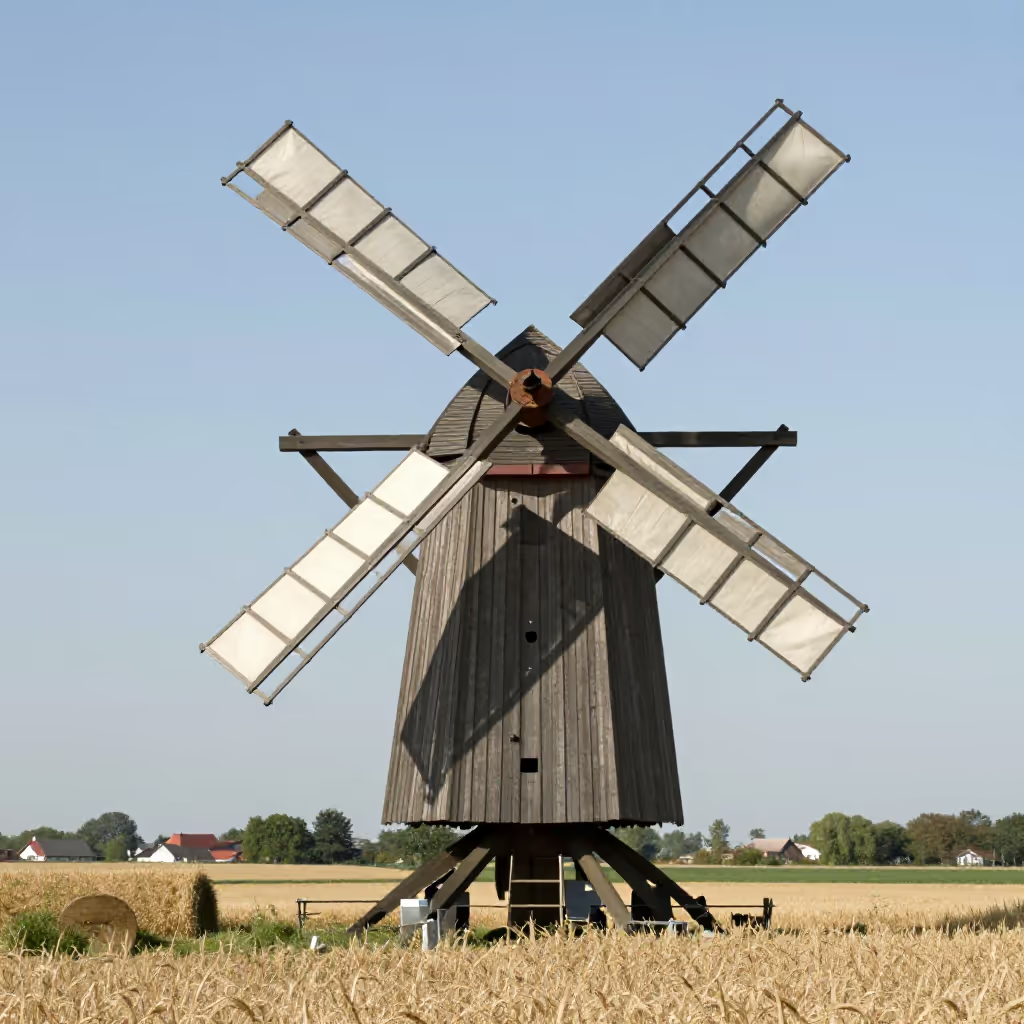
Der Sturm hat die alte Windmühle mit ihren Flügeln beschädigt.
The storm damaged the old windmill with its sails.
Der Sturm hat das Windrad der alten Mühle beschädigt.
The storm damaged the windmill wheel of the old mill.