

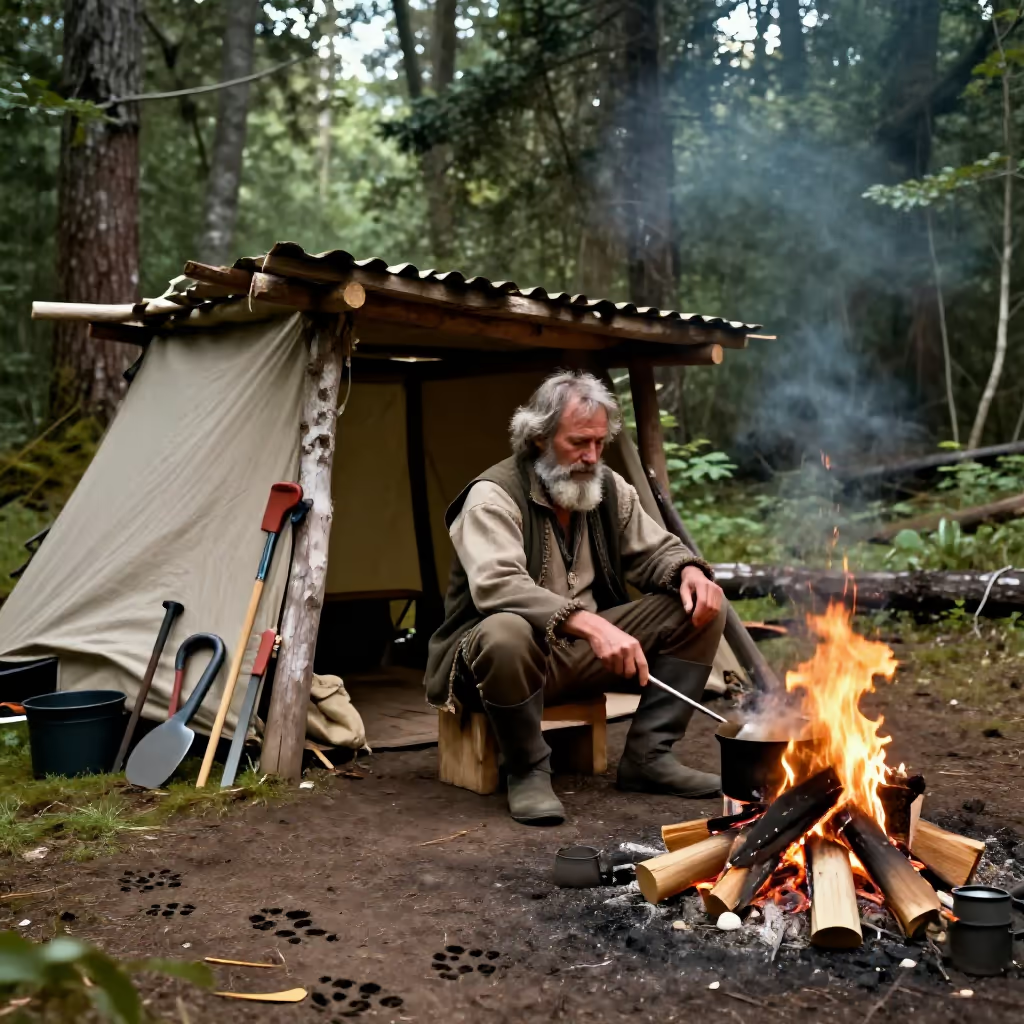
A person who lives outside civilization and is often viewed as uncultured or primitive. The term can be derogatory.
example
In alten Abenteuerromanen treffen die Helden oft auf vermeintliche Wilde im Dschungel.
In old adventure novels, the heroes often encounter supposed savages in the jungle.

Usage tips
Word structure
The word 'Wilder' (savage / wild person) is a substantivized adjective derived from the word 'wild' (wild). It describes a person who has the quality of being 'wild' (wild).
EXAMPLE
Er lebt wie ein Wilder in den Bergen.
He lives like a savage in the mountains.
Adjective declension
Since 'Wilder' (savage / wild person) is a substantivized adjective, it is also declined like an adjective. The form changes depending on the article and case.
EXAMPLE
Die Geschichte handelt von einem Wilden.
The story is about a savage.
Style and register
In the meaning of an uncivilized person, the term is often considered outdated and derogatory today. It is mainly found in older texts or historical contexts.
EXAMPLE
In dem alten Abenteuerfilm werden die Ureinwohner als Wilde dargestellt.
In the old adventure film, the Indigenous people are portrayed as savages.
Typical use
When a person is called 'Wilder' (wild child / wild person), it often refers to an impetuous child. The phrase 'ein kleiner Wilder' (a little wild child) is often used affectionately or jokingly.
EXAMPLE
Dein Sohn ist ja ein richtiger kleiner Wilder!
Your son really is a proper little wild child!
Compare with
near_synonym · confusable
Wilder vs Barbar
barbarian
'der Barbar' and 'der Wilder' can both sound derogatory because they portray people as uncultured or uncivilized. 'Barbar' can mean a crude or cruel person and also has a historical use from antiquity. 'Wilder' more often means someone who is seen as living outside civilization, or colloquially a person, especially a child, who behaves in a very uncontrolled way. The words can be confused because both contain old and derogatory ideas of 'civilization'. Today, you should be especially careful with them when referring to real groups of people.
Wilder
Nach dem Fußballtraining rannte der Junge durch den Flur wie ein Wilder.
After soccer practice, the boy ran through the hallway like a wild child.
Barbar
Im Geschichtsbuch wurde erklärt, warum die Römer fremde Völker Barbaren nannten.
The history book explained why the Romans called foreign peoples barbarians.